- Image by incendiarymind via Flickr
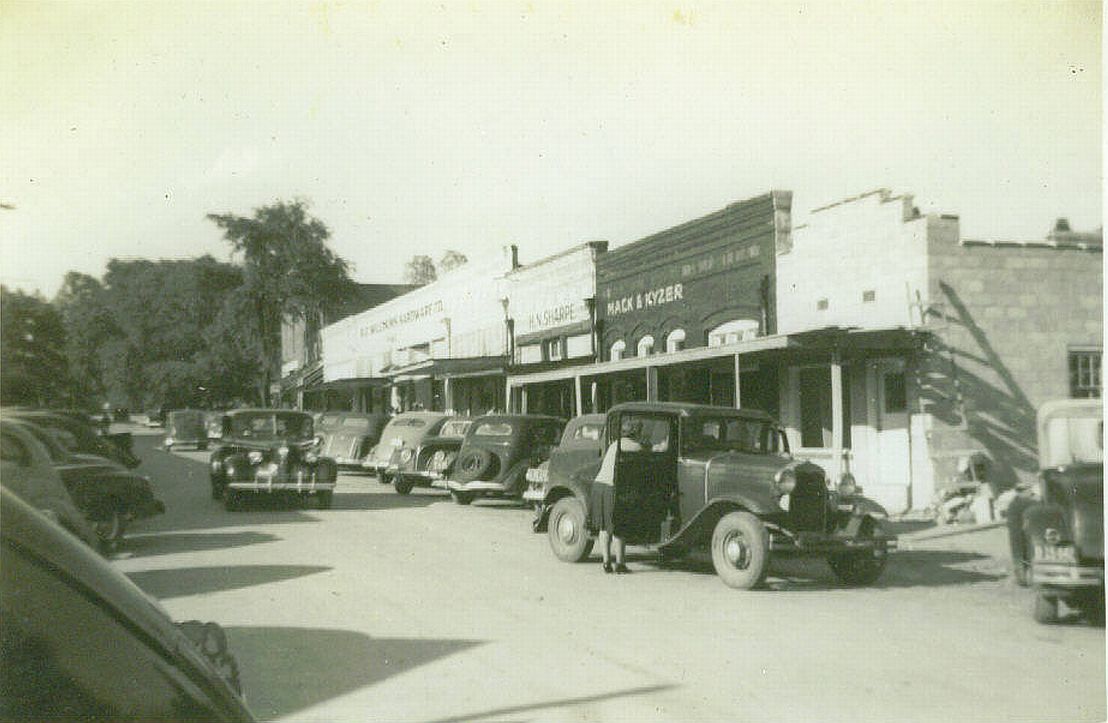
My good friend Susan Murphy wrote an interesting post yesterday, about how small towns are social networks. She points out that small towns have led the way for years when it comes to networking and seeing social leaders rise to the top. It’s a really good read and I highly recommend it.
It reminded me of something I’ve been thinking of for a while – how to involve the offline community more with the online one. While the likes of Twitter, Friendfeed and other social media tools are in the ascendancy, they’re still only used by a relatively small number of users, personal and professional.
So how do we change this?
How about we offer real-world and relevant use to offline communities so the online ones would experience growth and understanding? If we gave examples – workable examples – and led the way in showing users how to benefit from these self-same examples?
A conversation I had with my friend and PR person extraordinaire Lizz Harmon led me to think that this can be easier than many might think.
Imagine for a minute that you’re looking to travel somewhere for your vacation. Generally, you go by what the travel agent tells you. Now, unless you’re one of the very few lucky ones who’ve had great travel agents, the information you receive often doesn’t tell the whole story. Unfinished hotels, work sites just off the beach, sewer problems – and that’s just the good stuff.
I don’t blame the travel agent completely – after all, their job is to sell you a vacation and that’s where they make their money. I just wish for a little more honesty.
Now, imagine if you’re the same person looking to go on vacation and you get your information from a town or city’s Tourist Information Bureau – but via Twitter. Customer service representatives cover the account 24/7 and are able to answer any questions you might have. They’re not on commission so there’s no need for any imaginative descriptions.
They give you up-to-date information on places to stay and visit, local events and much more. By interacting with the future visitor, the tourist information office is doing everything right when it comes to placing its town or city in a positive light. And for small towns, it lets them keep up with their city equivalents and encourages tourism into their little part of the world.
Why stop there? Why not have councillors or Chambers of Commerce online and answering concerned citizens or incoming businesses respectively? Restaurants or movie theaters could offer discounts and incentives to anyone that brings in a printed deal from Twitter, Facebook or similar.
There’s a multitude of ways that businesses in particular can encourage the online and offline communities to come together. Our job is to help them get there. Who would you want to see online and what services would you use?
If you enjoyed this post, please consider leaving a comment and subscribe to my RSS feed or via email to ensure you can enjoy the latest post(s).
Enjoy this post? You might also like:
- The HEART of Social Media
- Are We Turning into Social Media Snobs?
- Decluttering Your Networks is Part Two of 7 Days to Turn Your Blog Into a Social Media Hub
More from across the web:
- 3 Ways Facebook is Killing Your Website (Convince & Convert)

![Reblog this post [with Zemanta]](http://img.zemanta.com/reblog_e.png?x-id=3b7b14b9-8f65-42b8-91fe-8fe559defe01)


Twitter: ariherzog
The irony of reading your thoughts, Danny, is I’m in development of a model like that in my own community. Nothing public yet (am creating an example model online, and will write a “letter to the editor” announcing it) but my idea being that it’s not the task of the government or tourist bureau but their backing and the task of the people. Let the people tell other people.
Ari Herzog´s last blog post..My Top 12 Blog Posts from 2008
That was one of my thoughts as well (at least it sounds similar) – using the Twitter search feature to connect with people from a particular town or city and asking about its pluses and minuses. Can’t get much better than from the horse’s mouth, right?
Really interesting concept that I know some businesses in Portland, Ore., are beginning to take part in. Portland’s travel bureau (Travel Portland) began tweeting just this month and they’ve engaged other Tweeps who mention travels to Portland in their feeds.
@PortlandTravel tweets about Portland news, of course, like power outages, Blazers’ stats and the official declaration of the city’s doughnut. Their most recent tweet to @ViciousVictoria was a response to the Southern Californian’s trip to the Rose City. And local businesses, like New Seasons Market (@newseasons) gives free grocery delivery to customers who mention the store’s use of Twitter.
This example tied in with your post demonstrates how chambers of commerce and travel bureaus can engage and lure audiences via Twitter. Twitter search terms related to their town can be used to initiate inviting dialogue with potential visitors, and also maintain communication with folks who live in the area.
Since Portland is the largest city in Oregon, I’m not surprised @PortlandTravel is up and running. I’m sure many big cities and recognizable towns are on Twitter. It’s just a matter of time before smaller, more rural towns adopt the microblogging tactic to draw tourists.
This is an interesting concept and something which could grow. The one concern would be what about the external noise factor of people posing as experts and offering information which is just wrong. You could almost think of it as Springfield vs. Shelbyville to take an example from the Simpsons.
Another concern would be the purpose of the Tourist Information Bureau of Chamber of Commerce is to indeed promote the city, destination or what not to bring in revenue to the local businesses. A lot of times these are the people offering free trips to the writers, photographers, travel agents and such in order to give them the information they need to write, publish or sell the locale.
As @ariherzog mentioned bringing into the role of the people does seem to make a better use and it will be interesting to see what he is working on as mentioned above.
Neil Corman´s last blog post..Democratic National Convention – August 2008
@ Scott. That’s encouraging to hear, and I’ll certainly be checking out the Twitter profiles you mentioned. As you say, I’m sure there could be a lot of towns and cities using social media in this way – certainly food for thought for a future post. Small towns in particular would definitely benefit from the use in order to keep up with the budget advantages that cities often have.
@ Neil. This is where Twitter and other applications would benefit from working closely with the towns and cities in question. Have some form of authorizing process in place to confirm identity, as well as hold relevant profile names aside for these places.
With regards the “sweeteners”, if it’s the official Tourist Board or Chamber of Commerce handling the profiles, the fear of false information wouldn’t be there. Of course, you will always have paid profiles singing the praises of a place, but that’s probably already happening and wouldn’t affect the official profiles.
The point you hit on here, Danny is profound. Make social media relevant to the average person by using it for real world benefits. It’s time we all went beyond the bubble.
Taking social media to the next level requires going back to basics…find the fundamental usefulness of the medium by finding out what people really need.
They don’t need more shilling. They don’t need more blatant advertising. They do need real information that makes sense to their needs.
Find the ways to do that in your communities…and the real benefits will become blatantly clear.
Susan Murphy´s last blog post..How Small Towns Are Social Networks
Danny and Susan -
It was great to see the original Suzemuse post on Small Towns, particularly with the last few days’ wrangling over “authority”, and to see Danny explore how SM can benefit the town, and visitors.
For the last couple of years, we have been exploring how the participants in all of our communities, whether geographic, relationship or affinity, can become better informed and individually stronger, which will result in stronger communities. We call the effort C3 – Complete Community Connection, and have been charting progress at http://cpetersia.wordpress.com
The comments so far raise concerns we also share – relevance, context, accuracy, timeliness, etc.
So, we think it is our job to create the “elegant organization”, championed by at least Jeff Jarvis, to allow individuals in our region to make sense of what is happening, and to get exactly the information they need, when and where they need it.
We are looking for all the help we can get!
Thanks for the perspectives.
Chuck Peters
The Gazette Company
Cedar Rapids, Iowa
Chuck Peters´s last blog post..Relationship = Attention x Trust
Reading through these great comments, I was thinking that it would be great to see an all-in-one social networking site for travel, backed by tourist bureaus and chambers of commerce, where one could get all the information they need (hotels, restaurants, attractions, etc) without having to check several different websites or Twitter streams. One place where all the information related to your travel destination is aggregated from several sources (including reviews and recs from your network), PLUS local businesses, tourism bureaus, and chambers of commerce could join and get involved and feature themselves in some way by offering special discounts.
So much can be done here…I’m beginning to see a few good sites that could really take these ideas to the next level, like Viscape and TripAdvisor.
@Kari has a great idea. In addition to this content that could be featured on the social network, you could also include Twitter feed that travelers, bureaus, companies, and chambers of commerce can subscribe to. This would allow easy access to popular travel conversations as it’s happening. The agency I work for is including this feature on the relaunching of its Web site. The feed will include employees’ tweets on the main page. I’ve never seen it done before. Of course, I would love to see examples from others who may have.
@ Chuck. That sounds like an interesting project you have going there, and I’d love you to check back in and let us know how it’s going (goes).
@ Kari. That’s the beauty of it, Kari – the ideas you mention are so simple to implement and keep up-to-date with, it’s surprising that it’s not more widespread at the minute. I feel that if just one of the bigger sites you mention ran with it, we could see something very special happen.
@ Scott. Again, another great idea and one that I’d love to be kept up-to-date with on progress, so look forward to seeing how you implement it.
This is the reason I say that the comments are frequently better than the post itself – the ideas and forward looking that you guys keep coming up with is immense. Thank you.
This post kind of just blew my mind. Think about what something like this could do for accountability! City council members, school board trustees, even company presidents being more available to answer questions or address concerns. Provided, of course, that there are no "impostors” or misinformation mongers out there, as mentioned above by Neil Corman.
This is a great concept. I’ve been trying for years to figure out how best to integrate my groups of real-life friends, online friends and business connections. There’s so much potential for great things to happen; it’s just hard to envision getting to that point. The best I’ve come up with so far is a massive social event, but that’s so impractical, for the most part… I’d love to hear about other people’s successes!
That's the great thing about social media, Jessie – the tools, applications and people using it can offer so much to the offline world it's surprising more hasn't been done. I do see signs that this is changing – large and small brands becoming more active online – but at the moment it's still in the minority.
This is where it's up to us to help encourage the change and highlight the companies and brands that are doing it well, so that others may follow suit. I intend to offer a follow-up on this topic soon. Hopefully I'll see you back here to share your views again.