• Skip to primary navigation
  • Skip to main content
Danny Brown

Danny Brown

podcaster - author - creator

  • About
  • Podcasts
  • Journal

Archives for December 2008

How to Sell Twitter to a Client (Or Even Your Own Boss)

Sell, Sell, Sell album cover
Image via Wikipedia

It’s one of the current axioms doing the rounds online – “I love Twitter but how do I sell it to my client or boss?”.

You can see the benefits because you use it every day, but just how do you transfer that message to those who wonder where the benefit of 140-character conversations are found?

Perhaps that’s not the question to ask – instead, how about asking why you even have to justify it at all.

Think about it for just a moment – your client or your boss’s success has probably had a lot to do with business relationships built up over the years.

Additionally, being aware of the business market around their industry will also have played a large part in their success. And you can be pretty sure that both these reasons are continuously worked on and monitored to sustain that success.

Now think of why Twitter is so beneficial to you.

Are you building relationships with great contacts? Are you keeping abreast of the latest news in the industry because people are talking about it in their Twitter stream? Are you finding content and advice that helps you grow both personally and professionally because of the information you’re a part of through your Twitter contacts and the information from their contacts?

I’d hazard a guess that the answer to all of these questions is a fairly comprehensive “Yes.” So why should it be any different for your client, boss or anyone else you’re trying to extol the virtues of Twitter to?

The next time you want to get your client involved in Twitter, or your boss dismisses it as nothing more than a fad for people having banal conversations, ask them a couple of simple questions:

  • How do the majority of your customers find you?
  • How do they then communicate with you?

You’ll probably find that the majority of the answers to the first question are “Via Google” and the majority of the answers to the second question will be, “They’ll call us or email us an inquiry.”

In short, they’re looking for specific goods or services and want to open up a dialogue with the hope of fulfilling that need.

The next step is usually a customer service representative calling back, or perhaps even a member of the sales team calling to discuss the (potential) client’s needs. Then, with a bit of luck (and sometimes depending on the skills and motivation of the person calling them back), that potential client may turn into a physical one.

But that’s the NORMAL practice.

What if it wasn’t down to luck? What if it was down to the interaction and genuine interest you showed in conversing with that client? Instead of just seeing them as another dollar bill through the business doors, they actually felt important to your business? That’s what Twitter offers.

Finding a company on Google (or any other search engine) is no different from finding that same company using the search feature on Twitter. And the inward communication regarding their needs? Imagine if the (potential) client could open up a two-way dialogue that was instantaneous and could cover everything in one conversation?

Instead of the customer service representative putting the caller on hold to ask sales a question, or check marketing’s latest offer, that department could be instantly engaged in the conversation with a Twitter “@ message”. And with the functionality of Twitter, even getting hold of someone out of the office is easy enough with Twitter alerts by cellphone.

Of course, there might be an argument that this is too simple a suggestion – there would still be the problem of the caller in question not being on Twitter. If so, put yourself in their shoes for a moment.

If you were a potential customer of a company and you were faced with a customer service line that may be engaged or a Twitter stream that costs nothing and is always open, which would you prefer? I know which I’d go for.

Of course, this is for the future – the immediate need is to convince your client or boss of Twitter’s value. So just ask them what offers more value than knowing what your customer base is thinking. What offers more value than answering concerns or questions that their customer base may have?

And perhaps most importantly of all, what offers more value than being able to answer these questions before your competitors answer for you?

The answer(s) should be simple.

Paid Blogging and the Art of Transparency

kosmic blogging in samsara (redux)
Image by ~C4Chaos via Flickr

I couldn’t help but notice that there’s a little bit of a discussion going on at Twitter at the moment with regards paid blogging.

As with any discussion, there are two sides that are equally as vociferous when it comes to their views on the topic.

The reason a lot of the discussion started was due to leading social media blogger Chris Brogan writing a sponsored post for K-Mart.

The gist of the argument on Twitter is whether Chris has lost any “value” because he wrote a review that was paid for. K-Mart gave Chris a $500 gift voucher and asked him to figure out what was cool to buy with it at their store, and then write about it. Seems straightforward enough, particularly when Chris himself even mentioned on the blog itself that it was a sponsored post, although all the views were his own.

As I said, where it gets interesting on Twitter is that there have been a few people that feel let down by Chris, and have either stopped following him or made their feelings clear that they’re disappointed. So it got me thinking about paid blogging, and if it does actually lose the reviewer any authority or credence because they’re being paid for what they’re writing.

Honestly, I don’t see what the problem is.

I’m a blogger myself, and I write pretty regularly. But I don’t do it for the money (if I did I’d be bankrupt!) – I do it because I enjoy the conversations that can then take place afterward. I love to write and when someone joins in and adds to the conversation via the comments after each post, then that’s one of the most satisfying parts of blogging. After all, I’m just the conduit – many of the comments are even more interesting than the post itself. It’d be nice to get paid, but that’s not why I’m here.

So I can see why paid blogging could be so attractive. After all, you’re still doing the same thing you’re always doing – writing – with the only real difference being that you’re actually receiving some financial outlay for it. And with the economy like it is, isn’t the ability to make some more money for your family – or, in Chris’s case, buy some Christmas gifts – worth it?

As long as the blogger is upfront and transparent about the post being sponsored, then I don’t have an issue with paid blogging. The bloggers I read, I’ve read for a while – you get to know their writing style and I’d soon spot if Chris (or anyone else) was writing BS. And if I thought that was the case, I’d be the first to call him on it.

But the fact that it was called as sponsored and there was no heavy sales pitch in the post itself? If people can make money on their blogs by writing sponsored posts yet still keep it honest, more power to them.

And for anyone that feels let down by sponsored blogging? I liken it to the indie band syndrome – the band’s great while they’re your secret, but the moment success and money becomes involved, you don’t want to know. Which begs the question – were you really a fan in the first place?

Discussing Social Media with… Amani Channel

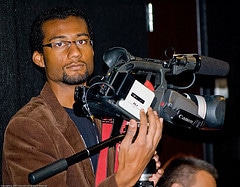
amani_and_camA little while back, I sent out a request via Twitter asking if anyone would be interested in being interviewed for a discussion on social media. With the medium meaning so many different things to so many people, as well as how it can be used, I was interested to hear the views of the people I connect with.

My original plan was to run a ?round table? style of blog post – raise the questions and then have a mix of views as the responses. However, the answers I received back were all excellent, and showed why social media is the mix of interesting people and views that it is. So, I decided individual posts would be far more effective in an on-going series of interviews.

Sharing his views today is Amani Channel, Senior Producer at Visual Eye Media, a full-service video relations company providing media consulting and professional High Definition video production for individuals, non-profits and corporations. My sincere thanks to Amani for taking the time to reply and share his views. To connect with Amani, or find out more about him, please visit his My Urban Report blog.

If someone was to ask you for your definition of social media, what would it be?

Social media is interactive nature of the Internet that allows individuals, businesses, and organizations to engage in conversations (communicate), and build relationships. It includes blogs, wikis, communities, and sites like Twitter.

What is your reason for using social media?

I use social media for a variety of reasons. I use it to stay in touch with family and friends. I use social media to share information about news, and events that are of interest to me, and I use it to promote and build business relationships.

Do you feel that social media is being used to its maximum effect?

Social media is very time consuming, and can be overwhelming. I do my best to maximize my presence, and personal brand. Some people do a great job, others just add chatter.? I believe those who engage in industry specific conversations, share timely links, and focus on community building, will have positive results.

What social media tools or applications do you use? Why these ones in particular?

I use Twitter, which feeds my MySpace, and Facebook status updates, and Twitter updates are on my My Urban Report blog. I also use video extensively with my blog and blip.tv, and tubemogul is very useful especially for mass distribution. I also have a blog on my video production company website – however, I don’t update as frequently as I should.

Back to Twitter, I have two separate accounts.? One for Visual Eye Media and one for My Urban Report. I try to keep my tweets relevant to my brands. For urbanreporter I try to focus on sharing urban news links, and personal updates. For Visual Eye Media, I try to focus on social media, and online & video production information.

Where do you see the future of social media, both in general and for you?

Many of those currently engaged in social media are early adopters, and we certainly have a heard start on others who are just getting involved in social media. I hope to continue to use social media to inform, educate, and build my brands.

Are businesses effectively using social media? If not, what can they do to improve?

As a journalist, I find that many news organizations are doing a poor job of using social media. Twitter is a great utility for reporters to build followers and keep online users up to date with news developments. Many corporate news organizations have tight rules about reporters use of social media.? Also, I haven’t seen many popular brands on Twitter though many independent, and small business owners are catching on.

As far as improving a social media presence, I would say roll up your sleeves and jump in. You can’t understand social media unless you try it.

What do you feel are the best and worst features/uses of social media?

It seems we’re approaching a saturation point in terms of social media. Between my blogs, Twitter, Facebook, MySpace, blip.tv, YouTube, it’s hard to be engaged in all sites (and it seems more are popping up each day). I like the transparency, the community building, and communication that social media allows.

  • You can find more ?Discussing Social Media with?? interviews here.

If you enjoyed this post, please consider leaving a comment and subscribe to my RSS feed or via email to ensure you can enjoy the latest post(s).

Thank You’s and Apologies

Thank you everyone!
Image by J. Star via Flickr

THANK YOU.

Over the last few days, my time has been taken up by trying to get the 12for12K Challenge out of the starting blocks. When I first came up with the idea, I knew it was ambitious but I guess I didn’t realize how ambitious until getting down to the nitty gritty of pushing it. But it needs to be ambitious or what’s the point, right?

You’re always worried when you take on something like this that it will fall flat on its face – but that’s the risks you take when you want to effect change. But thanks to you, 12for12K is becoming less a dream and more a reality every day. The Facebook group is growing; the website is taking shape; and there are some fantastic people offering their services to help – and I truly want to thank you all for becoming involved so soon.

It’s just under three weeks to the main launch and the charities that will benefit are starting to take shape. This is just the beginning – I’m glad you’re here with me.

APOLOGIES.

Which kind of leads me on to my next point. Because I’m looking at various angles to make 12for12K as successful as possible, I’m probably ignoring people I shouldn’t be. It’s not that I mean to, believe me – and if it feels that way, I’m sorry, truly. Obviously the charity is taking up a lot of my time, but that doesn’t mean I don’t want to spend some with you either. You’re the people that inspired it and are making it happen, after all.

So all I ask is please be patient. I respect and cherish all the connections I’ve made over the last few months, and I look forward to making many more. I guess it’s like the old saying, “Normal service will be resumed shortly.”

In the meantime, keep sharing all that you do – it’s what keeps me going. Thanks, guys.

If you enjoyed this post, please consider leaving a comment and subscribe to my RSS feed or via email to ensure you can enjoy the latest post(s).

Reblog this post [with Zemanta]

Human Rights, Business and the List No-One Should Be On

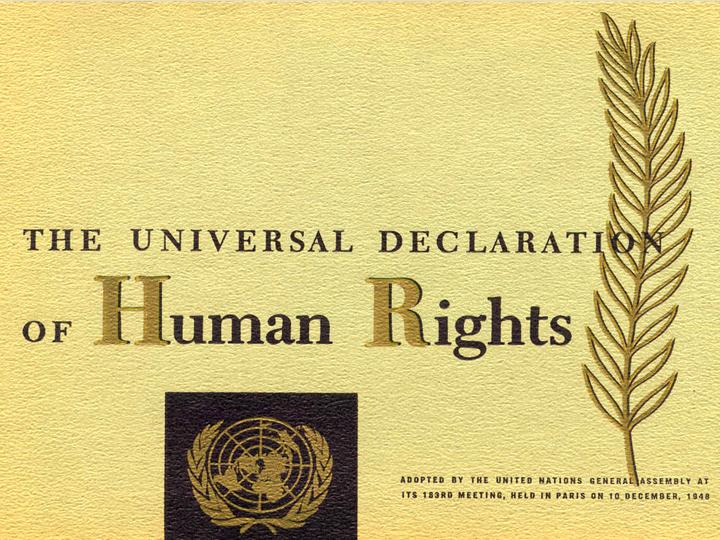
ARTICLE 21 - Universal Declaration of Human Ri...
Image by art makes me smile via Flickr

This post originally appeared on my PR agency blog and is reprinted here as celebration of the 60th Anniversary of the Universal Declaration of Human Rights.

Human rights and businesses may seem like odd bed-fellows. Yet there are many companies (large and small) who, while they may not appear to be breaching human rights themselves, actively support countries whose human rights records are less than admirable.

You would have thought that in this day and age, to still be speaking about human rights – and the violation of them – would have been a thing of the past.

Indeed, with both the Universal Declaration on Human Rights in 1948 and the 1993 Vienna World Conference both reiterating the rights of human beings in all countries, surely we shouldn?t still be discussing this 60 years later? Yet, again, sadly we are. This is where businesses can make a difference.

One of the grey areas for years has been how businesses have circumnavigated the contentious matter of human rights – whether it?s actually in the workplace, or by supporting other businesses or Governments that have a poor track record in human rights.

We may feel all smug in the West, pronouncing that we look after our citizens and offer human rights to all, but this is a blatantly false belief. We only need to look at Guantanamo Bay for an example of how great our human rights are on a personal level, and the likes of Nike and similar for their (alleged) sweatshop practices.

Or how about Wal-Mart?s employee ?pay structure? (and I use that term loosely) – after all, this is a company whose own Annual Report in 2006 stated that it had received 57 wage and hour lawsuits, and was also successfully sued for $172 million in damages for failing to provide meal breaks for almost 116,000 workers in December 2005.

The Olympics in Beijing resulted in extra scrutiny on businesses and human rights transgressions, when China came under attack for its ongoing poor record in human rights over the years.

These include the persecution of anyone that dares to oppose the Chinese government, the continuing crackdown in Tibet, the violations against media freedom and much, much more. You would have thought that with all this controversy going on, businesses would have wanted to stay well away, right? You would have thought so.

Instead of using the Beijing Olympics to make a stand and show they actually care about people as opposed to just money, there were still many businesses happy to sponsor the Olympics. According to The Olympic Partner Programme (TOP), created and managed by the International Olympic Committee, the 12 TOP sponsors of this year?s Olympics were:

1. Coca-Cola

2. Atos Origin

3. GE

4. Johnson-Johnson

5. Kodak

6. Lenovo

7. Manulife

8. McDonald?s

9. Omega

10. Panasonic

11. Samsung

12. VISA

Looking at some of the names on that list, you might be surprised they were happy to be associated with a Government that ignores so many forms of human rights.

After all, Johnson-Johnson prides itself on being ?your family company?. And GE?s own Human Rights policy states that ?GE seeks to advance human rights by leading by example – through our interactions with customers and suppliers, the products we offer and our relationships with communities and governments.? Perhaps they only mean that if there are big tainted bucks involved.

Although many of the world?s most influential leaders made their feelings clear on China and her human rights record leading up to the games, these companies in the TOP 12 list stayed silent. Their excuse? They didn?t want to become involved in politics. Right?

Therefore, it stood to reason that by paying millions in sponsorship money they were letting their greed do the talking instead – and that allowed people to answer back with their views.

I wonder how much longer these companies would stay silent if people spoke with their wallets, and stopped buying their goods or services? Or let their voices be heard in other ways, such as the outcry and furore that followed the Olympic flame everywhere it went prior to its arrival in China.

Would these companies be shamed into withdrawing their support that is so out of tune with reality? Possibly, possibly not. However, one thing is certain – this isn?t something that?s going to go away.

Today there are thousands of bloggers publicizing the Universal Declaration of Human Rights by blogging about its 60th anniversary and continued abuses worldwide. The Human Rights Watch also has a Take Action campaign that offers advice on how you can try and effect change in the minds of businesses everywhere.

If you?re a business owner yourself, take a look at who you deal with and whether this needs to change. We might not make a difference overnight, but we can make a difference, and that?s the most important thing of all.

“All human beings are born free and equal in dignity and rights.? Universal Declaration of Human Rights.”

If you enjoyed this post, please consider leaving a comment and subscribe to my RSS feed or via email to ensure you can enjoy the latest post(s).

Reblog this post [with Zemanta]
  • « Go to Previous Page
  • Page 1
  • Page 2
  • Page 3
  • Page 4
  • Page 5
  • Go to Next Page »
© 2026 Danny Brown - Made with ♥ on Genesis