It’s Not All About The Blog


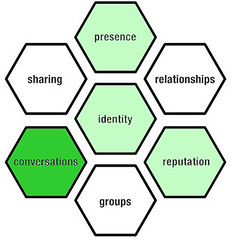
Blogs and the Honeycomb Model
Image by magia3e via Flickr

Should I have a blog? It’s one of the questions I’m asked most frequently when I sit down with a new client to discuss their online presence.

They’ve seen other blogs – personal and professional – and they’re wondering if they should be part of the party. The answer isn’t always what they expect.

Are you ready to blog?

Okay, so I cheat and ask another question instead of giving them an immediate answer – but sometimes questions are answers.

Blogging is something that you really want to do – it’s not always just about the need. Especially for business blogs. Yes, it’s a great tool for offering a more personal voice to your business. And for building community, it’s priceless.

But only if it’s done with the passion and time it needs.

Look at the most successful capitalist on the planet. Bill Gates has made billions of dollars and built the business he started into one of the leading software companies today. Yet he doesn’t blog, nor does it look like he will anytime soon. (People were asking as far back as 2004 when Gates would start blogging – we’re still waiting).

Of course, you could say that Gates is different from most business owners because of his outreach. And that’s true. Still, if you have the product or service that talks for itself, size is irrelevant – word-of-mouth will spread your message.

So no, you don’t always need a blog. There are many ways to tell the world about you and your product – blogging is just one of them. The biggest mistake to make is to have one because your contemporaries or competitors do.

Getting your message out is key – but how key is it if the words are diluted?

Get my latest posts straight to your inbox!


DannyBrown.me runs on the Genesis Framework

Genesis Framework

Genesis empowers you to quickly and easily build amazing websites with WordPress.

Whether you're new to WordPress or an advanced developer, Genesis provides the secure and search-engine-optimized foundation that takes WordPress to places you never thought it could go. It's that simple - start using Genesis now!


Genesis comes with 6 default layout options, comprehensive SEO settings, rock-solid security, flexible theme options, cool custom widgets, custom design hooks, and a huge selection of child themes ("skins") that make your site look the way you want it to. With automatic theme updates and world-class support included, Genesis is the smart choice for your WordPress website or blog.

Post comment as twitter logo facebook logo
Sort: Newest | Oldest

Bill Gates built his business before blogs existed. He did quite well without them - why should he start now?

But what if Bill were just starting out today? Would it be to his advantage to blog about his revolutionary new product, with the goal of building an enthusiastic community of adopters? Or would the model that worked for him in the '70s and '80s be just as effective now?

It's a valid point, although I guess you could also ask if they had been around, would he have used them? Gates and Jobs both did a great job of using the tools of the time to get the word out. With his company offering even more tools to help bloggers in their approach today, perhaps he would have been one of the key leaders?

My guess is yes, if the current tools had been around when Gates and Jobs were starting out, they would have taken full advantage of them, and probably done so in unique, transforming, and highly effective ways. I'm sure their methods would have differed - the Gates model would have been to buy up the best blogs and bloggers out there, slap the Microsoft logo on them, and co-opt them to serve his ends, while Jobs would have developed some completely new blogging paradigm that got everybody talking about how innovative he and his company were, while they rushed to copy him.

But let's re-frame the original question: Imagine the 1975 Bill Gates has hired you & asked whether or not he needed a blog (assuming today's blogging tools had been available then). What would you tell him?

Oh, I see what you did there... ;-)

I'd advise the same as I do with each client - are you ready to engage it properly? Do you have the resources to put into it to make it work? Is your audience the type that reads a blog?

Just getting the feel for how serious he'd be and if he is serious, making sure he's not wasting resources that could be better spent elsewhere.

Really great Post Danny. So many start up a blog because they think they've gotta have it but never have time to give it the love and attention it needs to be successful. Then everybody looks bad and "social media is a waste of time". It's important to evaluate time, skill and need before committing to a blog or any other form of social media.

The challenge I run into with some clients is they want to create a blog, and they have good content, and have crafted a well thought out reason for blogging. But they want to stop there.

They fall into that "If I build it...they will come," mentality. They often realize it takes time to build up a blog's following and increase in Google page rank, both of which would grow faster, and lead to more conversions and customers if they engaged in judicious social networking. But some of them perceive that as frivolous, a waste of time.

I am gathering stats of social media success stories, and showing them competitors who are engaging their audience, and reaching out. I'm slowly making headway, but to me, the synergy (to use a good, if overused, word) between a blog, and the right social networking platforms for each client - are a powerful mix. Not everyone should have a fan page on Facebook, not every company should be using LinkedIn, not every client needs to be on twitter, but a little bit of time spent on the right one or combination can go a long way.

That is one of the major problems, Cathy - the "if I have it, it will work" syndrome. There's a lot more work goes on behind the scenes that isn't always obvious.

One of the biggest problems is wrong (or poor) advice being given out. Newly-labeled social media consultants, gurus and experts (usually self-proclaimed) instructing clients to have a presence everywhere, regardless if they're ready for even just one platform or not.

As you say, find what works for you and build upon that - better being tightly focused than thinly spread.

Hey Danny,

This post is spot on. Since I've become a community manager / "social media guy" at a new organization I hear requests for a "blog" all the time. It makes me cringe about the misuse of blogs. I think since it's explosion in popularity a lot of misguided individuals see that blogs are instant "publicity".

Keep up the good work.

You're exactly right. Too many companies are looking to use the latest tools because "everyone else is". This should never be a reason to do anything.

As you say, blogging takes a lot of time and thought. Contrary to popular belief, blogging is not a "cheap" way to boost SEO or business.

Love your blog bud!

It's like press release, Tim - the amount of times I've heard of companies asking for a press release just to boost the links to their site... You know, it still has to be newsworthy and read well.

As you say, it's not always the most popular approach that's the right one.

Hey Danny,
Again, I fear that this all boils down to the dreaded Social Media Checklist... Organisations are hearing these terms thrown around and are then adopting the instruments regardless of whether their customers are using them. Scary stuff.

Whilst it is fantastic that organisations are keen to get out there and talk with their customers, a targetted approach remains the best course of action. Creating a presence on each and every platform available is likely to leave the company too thinly spread. In such a case, the message is likely to become either diluted, or repetitive. Either outcome will reflect negatively on the organisation.

Focus your efforts and target your message where it is likely to be best heard.

TLR

Great post, Danny! It's so important that businesses NOT jump on the blogging bandwagon for the wrong reasons. Doing so ultimately hurts not just the blog, but the business in terms of their brand.

A business owner must also be prepared for the time and effort it takes to maintain the blog - just having one for the sake of having one won't do anyone any good.

Do you agree that nine times out of ten, if a company asks you, "Do you agree I should have a blog?" that the answer is negative?

I'm not sure if I'd go with such a high number, Ari, but I'd definitely agree that a vast majority of companies aren't "ready" for blogging. And that includes some current ones already live.

That question "Do you agree I should have a blog? reminded me of a former boss of mine, who was the VP of marketing at the company I worked at. He was quick to just jump on the next big thing without really thinking and then proceed to spend (or rather, waste) massive amounts of time on it - without results.

You have those who don't get it, so they avoid it, and you have those who don't get it but dive headlong into it anyway. Which group do you think is worse?

Danny,

Next time a client (or potential client) busts out the ol' "But my competitor has one" line, try asking them if they would release a press release just because their competitor did. Or do a major ad buy because their competitor did.

Actually, scratch that, a few of them might say yes.

Oh, I've had some of these as well... ;-)

It's the message that many seem to miss - just because it's being done doesn't mean it actually needs to be. Similar words but vastly different meanings.

Danny:
This is a great point, and one that many businesses forget when they want to jump on the social media bandwagon. Blogging is just one of the many tools of the trade, but it seems to get more publicity than the rest.

How does one measure wealth? Who's to say how many more people would have connected with Bill Gates if he would have maintained a blog? How would the economy have been impacted if Bill Gates or Warren Buffett, had the foresight to reach out to you and me via the written word, one-on-one? We'll never know.

Blogs are how we broadcast what is in our minds, our thoughts, our psyche at that particular moment. They are how we get to know our friends, acquaintences, customers. There is no more powerful tool, in my opinion.

Thanks for a great post and the opportunity to share.

wonderfully written.thanks for sharing.

wonderfully written.thanks for sharing.
via uberVU

wonderfully written.i really like this.thanks for sharing.

wonderfully written.i really like this.thanks for sharing.
via uberVU

yes i agree with you. but blog is not the way for business. well written.

yes i agree with you. but blog is not the way for business. well written.

yes i agree with you. but blog is not the way for business. well written.
via uberVU

this one is very well written., i appreciate it. i will look forward on it. thanks for sharing.
via uberVU

I agree 100%
I just do not have the time to keep up full time with ONE blog, let alone a blog for every website. I am ashamed to say I have many blogs started with the best intentions sitting with just a post or two :(

I agree 100%
I just do not have the time to keep up full time with ONE blog, let alone a blog for every website. I am ashamed to say I have many blogs started with the best intentions sitting with just a post or two :(
via uberVU

Oh, I see what you did there... ;-)

I'd advise the same as I do with each client - are you ready to engage it properly? Do you have the resources to put into it to make it work? Is your audience the type that reads a blog?

Just getting the feel for how serious he'd be and if he is serious, making sure he's not wasting resources that could be better spent elsewhere.
via uberVU

My guess is yes, if the current tools had been around when Gates and Jobs were starting out, they would have taken full advantage of them, and probably done so in unique, transforming, and highly effective ways. I'm sure their methods would have differed - the Gates model would have been to buy up the best blogs and bloggers out there, slap the Microsoft logo on them, and co-opt them to serve his ends, while Jobs would have developed some completely new blogging paradigm that got everybody talking about how innovative he and his company were, while they rushed to copy him.

But let's re-frame the original question: Imagine the 1975 Bill Gates has hired you & asked whether or not he needed a blog (assuming today's blogging tools had been available then). What would you tell him?
via uberVU

It's a valid point, although I guess you could also ask if they had been around, would he have used them? Gates and Jobs both did a great job of using the tools of the time to get the word out. With his company offering even more tools to help bloggers in their approach today, perhaps he would have been one of the key leaders?
via uberVU

Bill Gates built his business before blogs existed. He did quite well without them - why should he start now?

But what if Bill were just starting out today? Would it be to his advantage to blog about his revolutionary new product, with the goal of building an enthusiastic community of adopters? Or would the model that worked for him in the '70s and '80s be just as effective now?

It's a valid point, although I guess you could also ask if they had been around, would he have used them? Gates and Jobs both did a great job of using the tools of the time to get the word out. With his company offering even more tools to help bloggers in their approach today, perhaps he would have been one of the key leaders?

My guess is yes, if the current tools had been around when Gates and Jobs were starting out, they would have taken full advantage of them, and probably done so in unique, transforming, and highly effective ways. I'm sure their methods would have differed - the Gates model would have been to buy up the best blogs and bloggers out there, slap the Microsoft logo on them, and co-opt them to serve his ends, while Jobs would have developed some completely new blogging paradigm that got everybody talking about how innovative he and his company were, while they rushed to copy him.

But let's re-frame the original question: Imagine the 1975 Bill Gates has hired you & asked whether or not he needed a blog (assuming today's blogging tools had been available then). What would you tell him?

Oh, I see what you did there... ;-)

I'd advise the same as I do with each client - are you ready to engage it properly? Do you have the resources to put into it to make it work? Is your audience the type that reads a blog?

Just getting the feel for how serious he'd be and if he is serious, making sure he's not wasting resources that could be better spent elsewhere.

Really great Post Danny. So many start up a blog because they think they've gotta have it but never have time to give it the love and attention it needs to be successful. Then everybody looks bad and "social media is a waste of time". It's important to evaluate time, skill and need before committing to a blog or any other form of social media.

Bill Gates built his business before blogs existed. He did quite well without them - why should he start now?

But what if Bill were just starting out today? Would it be to his advantage to blog about his revolutionary new product, with the goal of building an enthusiastic community of adopters? Or would the model that worked for him in the '70s and '80s be just as effective now?
via uberVU

Really great Post Danny. So many start up a blog because they think they've gotta have it but never have time to give it the love and attention it needs to be successful. Then everybody looks bad and "social media is a waste of time". It's important to evaluate time, skill and need before committing to a blog or any other form of social media.
via uberVU

That question "Do you agree I should have a blog? reminded me of a former boss of mine, who was the VP of marketing at the company I worked at. He was quick to just jump on the next big thing without really thinking and then proceed to spend (or rather, waste) massive amounts of time on it - without results.

You have those who don't get it, so they avoid it, and you have those who don't get it but dive headlong into it anyway. Which group do you think is worse?
via uberVU

I'm not sure if I'd go with such a high number, Ari, but I'd definitely agree that a vast majority of companies aren't "ready" for blogging. And that includes some current ones already live.
via uberVU

The challenge I run into with some clients is they want to create a blog, and they have good content, and have crafted a well thought out reason for blogging. But they want to stop there.

They fall into that "If I build it...they will come," mentality. They often realize it takes time to build up a blog's following and increase in Google page rank, both of which would grow faster, and lead to more conversions and customers if they engaged in judicious social networking. But some of them perceive that as frivolous, a waste of time.

I am gathering stats of social media success stories, and showing them competitors who are engaging their audience, and reaching out. I'm slowly making headway, but to me, the synergy (to use a good, if overused, word) between a blog, and the right social networking platforms for each client - are a powerful mix. Not everyone should have a fan page on Facebook, not every company should be using LinkedIn, not every client needs to be on twitter, but a little bit of time spent on the right one or combination can go a long way.

That is one of the major problems, Cathy - the "if I have it, it will work" syndrome. There's a lot more work goes on behind the scenes that isn't always obvious.

One of the biggest problems is wrong (or poor) advice being given out. Newly-labeled social media consultants, gurus and experts (usually self-proclaimed) instructing clients to have a presence everywhere, regardless if they're ready for even just one platform or not.

As you say, find what works for you and build upon that - better being tightly focused than thinly spread.

Do you agree that nine times out of ten, if a company asks you, "Do you agree I should have a blog?" that the answer is negative?
via uberVU

That is one of the major problems, Cathy - the "if I have it, it will work" syndrome. There's a lot more work goes on behind the scenes that isn't always obvious.

One of the biggest problems is wrong (or poor) advice being given out. Newly-labeled social media consultants, gurus and experts (usually self-proclaimed) instructing clients to have a presence everywhere, regardless if they're ready for even just one platform or not.

As you say, find what works for you and build upon that - better being tightly focused than thinly spread.
via uberVU

Hey Danny,

This post is spot on. Since I've become a community manager / "social media guy" at a new organization I hear requests for a "blog" all the time. It makes me cringe about the misuse of blogs. I think since it's explosion in popularity a lot of misguided individuals see that blogs are instant "publicity".

Keep up the good work.

You're exactly right. Too many companies are looking to use the latest tools because "everyone else is". This should never be a reason to do anything.

As you say, blogging takes a lot of time and thought. Contrary to popular belief, blogging is not a "cheap" way to boost SEO or business.

Love your blog bud!

It's like press release, Tim - the amount of times I've heard of companies asking for a press release just to boost the links to their site... You know, it still has to be newsworthy and read well.

As you say, it's not always the most popular approach that's the right one.

The challenge I run into with some clients is they want to create a blog, and they have good content, and have crafted a well thought out reason for blogging. But they want to stop there.

They fall into that "If I build it...they will come," mentality. They often realize it takes time to build up a blog's following and increase in Google page rank, both of which would grow faster, and lead to more conversions and customers if they engaged in judicious social networking. But some of them perceive that as frivolous, a waste of time.

I am gathering stats of social media success stories, and showing them competitors who are engaging their audience, and reaching out. I'm slowly making headway, but to me, the synergy (to use a good, if overused, word) between a blog, and the right social networking platforms for each client - are a powerful mix. Not everyone should have a fan page on Facebook, not every company should be using LinkedIn, not every client needs to be on twitter, but a little bit of time spent on the right one or combination can go a long way.
via uberVU

Hey Danny,

This post is spot on. Since I've become a community manager / "social media guy" at a new organization I hear requests for a "blog" all the time. It makes me cringe about the misuse of blogs. I think since it's explosion in popularity a lot of misguided individuals see that blogs are instant "publicity".

Keep up the good work.
via uberVU

Trackbacks

  1. [...] or service that talks for itself, size is irrelevant – word-of-mouth will spread your message.It’s Not All About The Blog, Jan [...]

  2. Blogging is One of Many Tools for Business…

    And, I couldn’t agree with Danny Brown’s recent post, discussing why a blog is not always a necessity for business — especially if you can’t commit the time and invest in it.  Some key points raised, that I think need to be hig…

  3. [...] for visiting!And, I couldn’t agree more with Danny Brown’s recent post, discussing why a blog is not always a necessity for business — especially if you can’t commit the time and invest in it. Some key points raised, [...]