Can I Buy You?

3 Shares 3 Shares ×

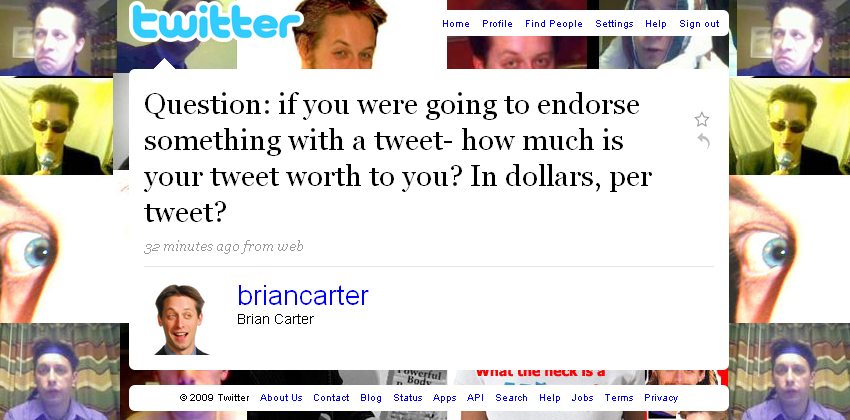
Brian Carter, a guy I admire immensely, raised an interesting question on Twitter today. He asked:
bcartertweetendorse

My own answer was, “It’s a moot point. If I like something enough to endorse it, I’d do it anyway for free. I wouldn’t sell my trust away.” Yet even as I said that, I wondered if I was looking at Brian’s question properly. Is an endorsement any different from a recommendation, or sponsorship?

Looking at the answers that Brian received, there was a definite mixed bag:

These are just some examples of the mixed reception the question got. (And I’m not saying any of them are right or wrong – these are just some typical examples of the mix). The fact that opinion seems to be evenly split is what makes me question when, or if, paid endorsement breaks the trust barrier?

To me, endorsing something is because you’ve used a product, service or person and you’re completely sold on it. You’re so taken with the results that you’ll wholeheartedly recommend it or them to your friends, family and colleagues. It’s the ultimate compliment – “It’s so good that I’m happy to use it.”

It’s the trust measurement that people who know and respect you will use when making decisions. So would a blind endorsement break that trust?

The fallout can be intensive when someone’s seen to have broken that trust measurement. You only need to look at the recent Izea sponsored posts outcry as an example. Trust is one of our most prized commodities and often it’s what separates us from contemporaries.

But is endorsing something in your Twitter stream for monetary gain any different from advertising on your blog? My own view says there is a difference. Usually you’re not approached by advertisers for a space on your blog (unless it’s a hugely popular one). I’m guessing paid endorsements would see vendors proactively buying your Twitter advertising space more than they might blog space.

Yet with the economy making things hard for people everywhere, should we question people’s rights to make money where they can? After all, we’re sensible enough to make our own decisions on whether a recommendation or endorsement is worth acting on, no?

What’s your take? Is your view for sale?

Join over 11,000 smart subscribers

Get my latest updates delivered straight to your Inbox as soon as they're published (I respect your privacy and will never spam you)

3 Shares Twitter 1 Facebook 1 Google+ 0 Buffer 0 Buffer LinkedIn 1 Email -- Email to a friend 3 Shares ×
About Danny

Danny Brown is Chief Technologist at ArCompany and an award-winning marketer and blogger. His blog is recognized as the #1 marketing blog in the world by HubSpot. Danny is also co-author of Influence Marketing: How to Create, Manage and Measure Brand Influencers in Social Media Marketing.

55 comments
Danny Brown
Danny Brown

It's a valid point, Jen. Corporations and agencies obviously use Twitter for branding themselves and their clients (I'm one of these users), as well as connecting with people "normally". If that tweet results in a traffic spike which results in a product sale, then the user has benefited financially.

It'd be hard to work out, but I'm all for premium fees for businesses that are using Twitter mainly as a sales or marketing channel. By all means, let the monthly fee pay for a more enhanced account, but have some form of business cost involved. LinkedIn does it pretty successfully - why not Twitter?

Thanks for stopping by and sharing your view, appreciate it.
via uberVU

JenMitch
JenMitch

This is a great post Danny. Thank you for raising the subject. It's a conversation I have with my peers often- what is the value of a Tweet? I don't know that there is a price that can be placed on a Twitter endorsement yet. Are you an individual, or are you a Corporation? Do you have a large and relevant following that will re:tweet your message? Are you including a link, or no?

Initially, I think the best way to handle this is to put some form of fee on Corporate accounts. Corporations (including brands and agencies) send endorsements that theoretically impact their ROI. If their endorsements have been effective thus far, it would make sense that a monthly/annual flat usage fee would be reasonable. For those who have not yet tested Twitter to see if it works, I think there are plenty of case studies that show the benefits.

As others have said, endorsements are often not suitable for individual accounts. This is why initially, I think there needs to be a distinction. Corporate accounts cost (a small) chunk of change. Individual accounts don't.

Perhaps a model such as this could even reduce the number of accounts wherein there is endorsement abuse; promotional link after link with little reader value?

There is clearly some monetary value for a promotional tweet. It will be interesting to see what Twitter decides that is.

Danny Brown
Danny Brown

It's a valid point, Jen. Corporations and agencies obviously use Twitter for branding themselves and their clients (I'm one of these users), as well as connecting with people "normally". If that tweet results in a traffic spike which results in a product sale, then the user has benefited financially.

It'd be hard to work out, but I'm all for premium fees for businesses that are using Twitter mainly as a sales or marketing channel. By all means, let the monthly fee pay for a more enhanced account, but have some form of business cost involved. LinkedIn does it pretty successfully - why not Twitter?

Thanks for stopping by and sharing your view, appreciate it.

JenMitch
JenMitch

This is a great post Danny. Thank you for raising the subject. It's a conversation I have with my peers often- what is the value of a Tweet? I don't know that there is a price that can be placed on a Twitter endorsement yet. Are you an individual, or are you a Corporation? Do you have a large and relevant following that will re:tweet your message? Are you including a link, or no? Initially, I think the best way to handle this is to put some form of fee on Corporate accounts. Corporations (including brands and agencies) send endorsements that theoretically impact their ROI. If their endorsements have been effective thus far, it would make sense that a monthly/annual flat usage fee would be reasonable. For those who have not yet tested Twitter to see if it works, I think there are plenty of case studies that show the benefits. As others have said, endorsements are often not suitable for individual accounts. This is why initially, I think there needs to be a distinction. Corporate accounts cost (a small) chunk of change. Individual accounts don't. Perhaps a model such as this could even reduce the number of accounts wherein there is endorsement abuse; promotional link after link with little reader value? There is clearly some monetary value for a promotional tweet. It will be interesting to see what Twitter decides that is.

Danny Brown
Danny Brown

It's a valid point, Jen. Corporations and agencies obviously use Twitter for branding themselves and their clients (I'm one of these users), as well as connecting with people "normally". If that tweet results in a traffic spike which results in a product sale, then the user has benefited financially. It'd be hard to work out, but I'm all for premium fees for businesses that are using Twitter mainly as a sales or marketing channel. By all means, let the monthly fee pay for a more enhanced account, but have some form of business cost involved. LinkedIn does it pretty successfully - why not Twitter? Thanks for stopping by and sharing your view, appreciate it.

JenMitch
JenMitch

This is a great post Danny. Thank you for raising the subject. It's a conversation I have with my peers often- what is the value of a Tweet? I don't know that there is a price that can be placed on a Twitter endorsement yet. Are you an individual, or are you a Corporation? Do you have a large and relevant following that will re:tweet your message? Are you including a link, or no?

Initially, I think the best way to handle this is to put some form of fee on Corporate accounts. Corporations (including brands and agencies) send endorsements that theoretically impact their ROI. If their endorsements have been effective thus far, it would make sense that a monthly/annual flat usage fee would be reasonable. For those who have not yet tested Twitter to see if it works, I think there are plenty of case studies that show the benefits.

As others have said, endorsements are often not suitable for individual accounts. This is why initially, I think there needs to be a distinction. Corporate accounts cost (a small) chunk of change. Individual accounts don't.

Perhaps a model such as this could even reduce the number of accounts wherein there is endorsement abuse; promotional link after link with little reader value?

There is clearly some monetary value for a promotional tweet. It will be interesting to see what Twitter decides that is.

Danny Brown
Danny Brown

It's a valid point, Jen. Corporations and agencies obviously use Twitter for branding themselves and their clients (I'm one of these users), as well as connecting with people "normally". If that tweet results in a traffic spike which results in a product sale, then the user has benefited financially.

It'd be hard to work out, but I'm all for premium fees for businesses that are using Twitter mainly as a sales or marketing channel. By all means, let the monthly fee pay for a more enhanced account, but have some form of business cost involved. LinkedIn does it pretty successfully - why not Twitter?

Thanks for stopping by and sharing your view, appreciate it.

JenMitch
JenMitch

This is a great post Danny. Thank you for raising the subject. It's a conversation I have with my peers often- what is the value of a Tweet? I don't know that there is a price that can be placed on a Twitter endorsement yet. Are you an individual, or are you a Corporation? Do you have a large and relevant following that will re:tweet your message? Are you including a link, or no?

Initially, I think the best way to handle this is to put some form of fee on Corporate accounts. Corporations (including brands and agencies) send endorsements that theoretically impact their ROI. If their endorsements have been effective thus far, it would make sense that a monthly/annual flat usage fee would be reasonable. For those who have not yet tested Twitter to see if it works, I think there are plenty of case studies that show the benefits.

As others have said, endorsements are often not suitable for individual accounts. This is why initially, I think there needs to be a distinction. Corporate accounts cost (a small) chunk of change. Individual accounts don't.

Perhaps a model such as this could even reduce the number of accounts wherein there is endorsement abuse; promotional link after link with little reader value?

There is clearly some monetary value for a promotional tweet. It will be interesting to see what Twitter decides that is.
via uberVU

Danny Brown
Danny Brown

But regular Joe's are what make professionals take note :)

I agree - as I mention to Kendra, 140 characters just doesn't allow you to offer a view when your space is taken up with ads or endorsements. At least, not the full view. And that seems to be what the main issue would be about.
via uberVU

Ian Brown
Ian Brown

Danny- I'll split it 50/50 with you if you send the idea over tto Twitter. I'm sure you saw the mashable.com Top 40 corporate brands on Twitter? Maybe interesting for others.... certainly different from blogger/influencers (or maybe not...). gotta be a way for Twitter to monetize these, surely? http://mashable.com/2009/01/21/best-twitter-brand...text right here!
via uberVU

Danny Brown
Danny Brown

I hear you and agree, Hendry. Say the account is just an affiliate account or one that's been set up to complement/replace a mailing list. Then you're going to expect ads and endorsements (much like these God-awful 1500 word sales letters...).

But if it's a bona-fide account that you interact with, and you've built up trust in that person and vice versa, then suddenly seeing endorsements that seem out of place would make me think about the relationship. I know it's not that way for everyone, and that's fair play, as I mentioned in the post.

With regards Chris, that whole episode was laughable. It wasn't on his normal blog, it was clearly stated (numerous times) it was sponsored, and it wasn't a kiss-ass review. And I wonder how many people that laid into it saw the follow-up about how the gifts were given away?

Thanks for sharing your view, always appreciated Hendry. :)

Danny Brown
Danny Brown

I hear you and agree, Hendry. Say the account is just an affiliate account or one that's been set up to complement/replace a mailing list. Then you're going to expect ads and endorsements (much like these God-awful 1500 word sales letters...). But if it's a bona-fide account that you interact with, and you've built up trust in that person and vice versa, then suddenly seeing endorsements that seem out of place would make me think about the relationship. I know it's not that way for everyone, and that's fair play, as I mentioned in the post. With regards Chris, that whole episode was laughable. It wasn't on his normal blog, it was clearly stated (numerous times) it was sponsored, and it wasn't a kiss-ass review. And I wonder how many people that laid into it saw the follow-up about how the gifts were given away? Thanks for sharing your view, always appreciated Hendry. :)

Danny Brown
Danny Brown

I hear you and agree, Hendry. Say the account is just an affiliate account or one that's been set up to complement/replace a mailing list. Then you're going to expect ads and endorsements (much like these God-awful 1500 word sales letters...).

But if it's a bona-fide account that you interact with, and you've built up trust in that person and vice versa, then suddenly seeing endorsements that seem out of place would make me think about the relationship. I know it's not that way for everyone, and that's fair play, as I mentioned in the post.

With regards Chris, that whole episode was laughable. It wasn't on his normal blog, it was clearly stated (numerous times) it was sponsored, and it wasn't a kiss-ass review. And I wonder how many people that laid into it saw the follow-up about how the gifts were given away?

Thanks for sharing your view, always appreciated Hendry. :)

Danny Brown
Danny Brown

I think that's the main difference, Kendra - with a blog, you have ample space to expand your views on any given endorsement or sponsored post. 140 characters is simply a broadcast and doesn't tell the whole story. And thanks for the vote of confidence - I'll try not to let you down if it ever happens :)

Danny Brown
Danny Brown

I think that's the main difference, Kendra - with a blog, you have ample space to expand your views on any given endorsement or sponsored post. 140 characters is simply a broadcast and doesn't tell the whole story.

And thanks for the vote of confidence - I'll try not to let you down if it ever happens :)

Danny Brown
Danny Brown

I think that's the main difference, Kendra - with a blog, you have ample space to expand your views on any given endorsement or sponsored post. 140 characters is simply a broadcast and doesn't tell the whole story.

And thanks for the vote of confidence - I'll try not to let you down if it ever happens :)

Hendry Lee
Hendry Lee

That depends on the purpose of the Twitter account. If like an email list, I want the content and agree to receive endorsements every so often, then definitely you can buy "ad spots".

With Twitter, this may be different. I agree, some followers don't think about this as a medium to communicate, but just another content channel to get what they want. If my audience comprises of mostly this type of people -- perhaps more appropriately called subscribers -- then I think this is more acceptable. Transparency and honesty are still keys here though.

On the other hands, if Twitter is a way for me to keep in touch with people who I treat as friends and partners, perhaps paid endorsements are not suitable. I mean, do you hang out with friends and in the middle of the party suddenly sell tupperware? Even if your friends know that is an endorsement, it simply is not appropriate.

It's more or less like the pay per post model. I used to think it was a bad thing and it would ruin the whole blogging thing. In its simplest form, blogger talks about a product or brand and gets paid for it. This is nothing but pollution from the search engine perspective because with it more and more people are going to discover untrusted content.

However, with the new model that taps into the community around or behind a blog instead of just "buying links and getting a brand mentioned" this is entirely different. (I refer to recent sponspored post in Chris Brogran's daddy blog.)

Hendry Lee
Hendry Lee

That depends on the purpose of the Twitter account. If like an email list, I want the content and agree to receive endorsements every so often, then definitely you can buy "ad spots".

With Twitter, this may be different. I agree, some followers don't think about this as a medium to communicate, but just another content channel to get what they want. If my audience comprises of mostly this type of people -- perhaps more appropriately called subscribers -- then I think this is more acceptable. Transparency and honesty are still keys here though.

On the other hands, if Twitter is a way for me to keep in touch with people who I treat as friends and partners, perhaps paid endorsements are not suitable. I mean, do you hang out with friends and in the middle of the party suddenly sell tupperware? Even if your friends know that is an endorsement, it simply is not appropriate.

It's more or less like the pay per post model. I used to think it was a bad thing and it would ruin the whole blogging thing. In its simplest form, blogger talks about a product or brand and gets paid for it. This is nothing but pollution from the search engine perspective because with it more and more people are going to discover untrusted content.

However, with the new model that taps into the community around or behind a blog instead of just "buying links and getting a brand mentioned" this is entirely different. (I refer to recent sponspored post in Chris Brogran's daddy blog.)

Hendry Lee
Hendry Lee

That depends on the purpose of the Twitter account. If like an email list, I want the content and agree to receive endorsements every so often, then definitely you can buy "ad spots". With Twitter, this may be different. I agree, some followers don't think about this as a medium to communicate, but just another content channel to get what they want. If my audience comprises of mostly this type of people -- perhaps more appropriately called subscribers -- then I think this is more acceptable. Transparency and honesty are still keys here though. On the other hands, if Twitter is a way for me to keep in touch with people who I treat as friends and partners, perhaps paid endorsements are not suitable. I mean, do you hang out with friends and in the middle of the party suddenly sell tupperware? Even if your friends know that is an endorsement, it simply is not appropriate. It's more or less like the pay per post model. I used to think it was a bad thing and it would ruin the whole blogging thing. In its simplest form, blogger talks about a product or brand and gets paid for it. This is nothing but pollution from the search engine perspective because with it more and more people are going to discover untrusted content. However, with the new model that taps into the community around or behind a blog instead of just "buying links and getting a brand mentioned" this is entirely different. (I refer to recent sponspored post in Chris Brogran's daddy blog.)

Lindsay McLeod
Lindsay McLeod

I agree with Kendra, and others, on the upfront acknowledgement of a paid gig in the blogosphere being fine with my sensibilities, especially if the writer is free to give an honest opinion (writing that makes me smile!).
With 140 characters/Tweet I'm turned off immediately. At this stage I would probably unfollow.

Just thought I'd pitch in with my non-professional, regular Jo response.

Danny Brown
Danny Brown

But regular Joe's are what make professionals take note :)

I agree - as I mention to Kendra, 140 characters just doesn't allow you to offer a view when your space is taken up with ads or endorsements. At least, not the full view. And that seems to be what the main issue would be about.

Lindsay McLeod
Lindsay McLeod

I agree with Kendra, and others, on the upfront acknowledgement of a paid gig in the blogosphere being fine with my sensibilities, especially if the writer is free to give an honest opinion (writing that makes me smile!). With 140 characters/Tweet I'm turned off immediately. At this stage I would probably unfollow. Just thought I'd pitch in with my non-professional, regular Jo response.

Danny Brown
Danny Brown

But regular Joe's are what make professionals take note :) I agree - as I mention to Kendra, 140 characters just doesn't allow you to offer a view when your space is taken up with ads or endorsements. At least, not the full view. And that seems to be what the main issue would be about.

Lindsay McLeod
Lindsay McLeod

I agree with Kendra, and others, on the upfront acknowledgement of a paid gig in the blogosphere being fine with my sensibilities, especially if the writer is free to give an honest opinion (writing that makes me smile!).
With 140 characters/Tweet I'm turned off immediately. At this stage I would probably unfollow.

Just thought I'd pitch in with my non-professional, regular Jo response.

Danny Brown
Danny Brown

But regular Joe's are what make professionals take note :)

I agree - as I mention to Kendra, 140 characters just doesn't allow you to offer a view when your space is taken up with ads or endorsements. At least, not the full view. And that seems to be what the main issue would be about.

Danny Brown
Danny Brown

I hear you and agree, Hendry. Say the account is just an affiliate account or one that's been set up to complement/replace a mailing list. Then you're going to expect ads and endorsements (much like these God-awful 1500 word sales letters...).

But if it's a bona-fide account that you interact with, and you've built up trust in that person and vice versa, then suddenly seeing endorsements that seem out of place would make me think about the relationship. I know it's not that way for everyone, and that's fair play, as I mentioned in the post.

With regards Chris, that whole episode was laughable. It wasn't on his normal blog, it was clearly stated (numerous times) it was sponsored, and it wasn't a kiss-ass review. And I wonder how many people that laid into it saw the follow-up about how the gifts were given away?

Thanks for sharing your view, always appreciated Hendry. :)
via uberVU

Danny Brown
Danny Brown

I think that's the main difference, Kendra - with a blog, you have ample space to expand your views on any given endorsement or sponsored post. 140 characters is simply a broadcast and doesn't tell the whole story.

And thanks for the vote of confidence - I'll try not to let you down if it ever happens :)
via uberVU

Hendry Lee
Hendry Lee

That depends on the purpose of the Twitter account. If like an email list, I want the content and agree to receive endorsements every so often, then definitely you can buy "ad spots".

With Twitter, this may be different. I agree, some followers don't think about this as a medium to communicate, but just another content channel to get what they want. If my audience comprises of mostly this type of people -- perhaps more appropriately called subscribers -- then I think this is more acceptable. Transparency and honesty are still keys here though.

On the other hands, if Twitter is a way for me to keep in touch with people who I treat as friends and partners, perhaps paid endorsements are not suitable. I mean, do you hang out with friends and in the middle of the party suddenly sell tupperware? Even if your friends know that is an endorsement, it simply is not appropriate.

It's more or less like the pay per post model. I used to think it was a bad thing and it would ruin the whole blogging thing. In its simplest form, blogger talks about a product or brand and gets paid for it. This is nothing but pollution from the search engine perspective because with it more and more people are going to discover untrusted content.

However, with the new model that taps into the community around or behind a blog instead of just "buying links and getting a brand mentioned" this is entirely different. (I refer to recent sponspored post in Chris Brogran's daddy blog.)
via uberVU

Lindsay McLeod
Lindsay McLeod

I agree with Kendra, and others, on the upfront acknowledgement of a paid gig in the blogosphere being fine with my sensibilities, especially if the writer is free to give an honest opinion (writing that makes me smile!).
With 140 characters/Tweet I'm turned off immediately. At this stage I would probably unfollow.

Just thought I'd pitch in with my non-professional, regular Jo response.
via uberVU

Kendra_Kellogg
Kendra_Kellogg

This is the trend I hope we will see eventually. Companies have to rethink advertising not as the need for buying endorsements or space in which they get a certain degree of controll over the message, but to open the idea of advertising to risk- such as in paying someone to write an honest review of a product for better or worse. Blogs are meant to be honest comentary- keep them that way and make the companies open their doors to the chaos of voices of the internet. If the company has a good product then they have nothing to fear. There are unlimited ways that a company can let people chime in about them. If you, Danny, wrote a paid review on occasion, stated at the beginning that it was a paid gig, and then hated or loved the company/product- I would have absolutely no issue with trust at all.

Kendra_Kellogg
Kendra_Kellogg

This is the trend I hope we will see eventually. Companies have to rethink advertising not as the need for buying endorsements or space in which they get a certain degree of controll over the message, but to open the idea of advertising to risk- such as in paying someone to write an honest review of a product for better or worse.

Blogs are meant to be honest comentary- keep them that way and make the companies open their doors to the chaos of voices of the internet. If the company has a good product then they have nothing to fear. There are unlimited ways that a company can let people chime in about them.

If you, Danny, wrote a paid review on occasion, stated at the beginning that it was a paid gig, and then hated or loved the company/product- I would have absolutely no issue with trust at all.

Kendra_Kellogg
Kendra_Kellogg

This is the trend I hope we will see eventually. Companies have to rethink advertising not as the need for buying endorsements or space in which they get a certain degree of controll over the message, but to open the idea of advertising to risk- such as in paying someone to write an honest review of a product for better or worse.

Blogs are meant to be honest comentary- keep them that way and make the companies open their doors to the chaos of voices of the internet. If the company has a good product then they have nothing to fear. There are unlimited ways that a company can let people chime in about them.

If you, Danny, wrote a paid review on occasion, stated at the beginning that it was a paid gig, and then hated or loved the company/product- I would have absolutely no issue with trust at all.

Kendra_Kellogg
Kendra_Kellogg

This is the trend I hope we will see eventually. Companies have to rethink advertising not as the need for buying endorsements or space in which they get a certain degree of controll over the message, but to open the idea of advertising to risk- such as in paying someone to write an honest review of a product for better or worse.

Blogs are meant to be honest comentary- keep them that way and make the companies open their doors to the chaos of voices of the internet. If the company has a good product then they have nothing to fear. There are unlimited ways that a company can let people chime in about them.

If you, Danny, wrote a paid review on occasion, stated at the beginning that it was a paid gig, and then hated or loved the company/product- I would have absolutely no issue with trust at all.

Kendra_Kellogg
Kendra_Kellogg

This is the trend I hope we will see eventually. Companies have to rethink advertising not as the need for buying endorsements or space in which they get a certain degree of controll over the message, but to open the idea of advertising to risk- such as in paying someone to write an honest review of a product for better or worse.

Blogs are meant to be honest comentary- keep them that way and make the companies open their doors to the chaos of voices of the internet. If the company has a good product then they have nothing to fear. There are unlimited ways that a company can let people chime in about them.

If you, Danny, wrote a paid review on occasion, stated at the beginning that it was a paid gig, and then hated or loved the company/product- I would have absolutely no issue with trust at all.
via uberVU

Harold Shaw
Harold Shaw

Danny what happens if a "famous" person is paid to endorse Wheaties and then posts it to Twitter instead of a TV commercial. Celebrities get paid to endorse things, so I guess you are now a celebrity :) But seriously, sooner or later, if not already people will/are monetize their celebrity in the Social Media world with Commercial endorsements beyond what we are seeing now. I am sad that that day is rapidly approaching but, where people can make money people will make money. "I will miss the "old" day of social media and the free and open exchange of idea and what we think of things, after all I have been doing this for a year now" :). A feeble attempt at humor. Really it will be sad if over-Commericalization comes to Social Media and leads to less honest reviews and more "plugs" for products.

Danny Brown
Danny Brown

That's the main concern, I feel, Harold. With "celebrities", we already know that if they endorse something it's usually for a big fat fee and not an honest opinion, so we adjust accordingly. And it's not as if we've actually built any trust in that particular celebrity, either. With people we respect, however, it's a different ball-game. While we're aware people need to make a living, is it at the expense of transparency? I guess that's down to the individual. Ian makes an interesting suggestion in his view that percentage deduction could go back into the community (Twitter) for any interruption to other people's stream. Maybe that's an "acceptable" endorsement? Although, to be honest, I still think my view would be a questioning one.

Harold Shaw
Harold Shaw

Danny what happens if a "famous" person is paid to endorse Wheaties and then posts it to Twitter instead of a TV commercial. Celebrities get paid to endorse things, so I guess you are now a celebrity :)

But seriously, sooner or later, if not already people will/are monetize their celebrity in the Social Media world with Commercial endorsements beyond what we are seeing now. I am sad that that day is rapidly approaching but, where people can make money people will make money.

"I will miss the "old" day of social media and the free and open exchange of idea and what we think of things, after all I have been doing this for a year now" :). A feeble attempt at humor.

Really it will be sad if over-Commericalization comes to Social Media and leads to less honest reviews and more "plugs" for products.

Danny Brown
Danny Brown

That's the main concern, I feel, Harold. With "celebrities", we already know that if they endorse something it's usually for a big fat fee and not an honest opinion, so we adjust accordingly. And it's not as if we've actually built any trust in that particular celebrity, either.

With people we respect, however, it's a different ball-game. While we're aware people need to make a living, is it at the expense of transparency? I guess that's down to the individual. Ian makes an interesting suggestion in his view that percentage deduction could go back into the community (Twitter) for any interruption to other people's stream. Maybe that's an "acceptable" endorsement?

Although, to be honest, I still think my view would be a questioning one.

Harold Shaw
Harold Shaw

Danny what happens if a "famous" person is paid to endorse Wheaties and then posts it to Twitter instead of a TV commercial. Celebrities get paid to endorse things, so I guess you are now a celebrity :)

But seriously, sooner or later, if not already people will/are monetize their celebrity in the Social Media world with Commercial endorsements beyond what we are seeing now. I am sad that that day is rapidly approaching but, where people can make money people will make money.

"I will miss the "old" day of social media and the free and open exchange of idea and what we think of things, after all I have been doing this for a year now" :). A feeble attempt at humor.

Really it will be sad if over-Commericalization comes to Social Media and leads to less honest reviews and more "plugs" for products.

Danny Brown
Danny Brown

That's the main concern, I feel, Harold. With "celebrities", we already know that if they endorse something it's usually for a big fat fee and not an honest opinion, so we adjust accordingly. And it's not as if we've actually built any trust in that particular celebrity, either.

With people we respect, however, it's a different ball-game. While we're aware people need to make a living, is it at the expense of transparency? I guess that's down to the individual. Ian makes an interesting suggestion in his view that percentage deduction could go back into the community (Twitter) for any interruption to other people's stream. Maybe that's an "acceptable" endorsement?

Although, to be honest, I still think my view would be a questioning one.

Ian Brown
Ian Brown

Very interesting- if you tell people up-front that you are endorsing something, they have little problem with that. Here's an idea for twitterers. If you leave a tweet, it should earn you a percentage of your followers on a sliding scale, ie more followers, bigger %... and twitter could then claim half your takings, thereby creating a much needed revenue stream (and face off facebook). Biz, you listening? 1% of all endorsement tweets, that's all I ask as an 'adoption fee'.

Danny Brown
Danny Brown

That's not a bad idea, Ian - it means that that those that wish to earn from Twitter (even if it interrupts other people's streams) have to "give back" to the community. Which may help douse any potential flames from non-participants.

Interesting, thanks for sharing your view.

Ian Brown
Ian Brown

Danny- I'll split it 50/50 with you if you send the idea over tto Twitter. I'm sure you saw the mashable.com Top 40 corporate brands on Twitter? Maybe interesting for others.... certainly different from blogger/influencers (or maybe not...). gotta be a way for Twitter to monetize these, surely? http://mashable.com/2009/01/21/best-twitter-brand...text right here!

Ian Brown
Ian Brown

Very interesting- if you tell people up-front that you are endorsing something, they have little problem with that. Here's an idea for twitterers. If you leave a tweet, it should earn you a percentage of your followers on a sliding scale, ie more followers, bigger %... and twitter could then claim half your takings, thereby creating a much needed revenue stream (and face off facebook). Biz, you listening? 1% of all endorsement tweets, that's all I ask as an 'adoption fee'.

Ian Brown
Ian Brown

Danny- I'll split it 50/50 with you if you send the idea over tto Twitter. I'm sure you saw the mashable.com Top 40 corporate brands on Twitter? Maybe interesting for others.... certainly different from blogger/influencers (or maybe not...). gotta be a way for Twitter to monetize these, surely? http://mashable.com/2009/01/21/best-twitter-brand...text right here!

Danny Brown
Danny Brown

That's not a bad idea, Ian - it means that that those that wish to earn from Twitter (even if it interrupts other people's streams) have to "give back" to the community. Which may help douse any potential flames from non-participants.

Interesting, thanks for sharing your view.

Ian Brown
Ian Brown

Very interesting- if you tell people up-front that you are endorsing something, they have little problem with that. Here's an idea for twitterers. If you leave a tweet, it should earn you a percentage of your followers on a sliding scale, ie more followers, bigger %... and twitter could then claim half your takings, thereby creating a much needed revenue stream (and face off facebook). Biz, you listening? 1% of all endorsement tweets, that's all I ask as an 'adoption fee'.

Danny Brown
Danny Brown

That's not a bad idea, Ian - it means that that those that wish to earn from Twitter (even if it interrupts other people's streams) have to "give back" to the community. Which may help douse any potential flames from non-participants. Interesting, thanks for sharing your view.

Ian Brown
Ian Brown

Danny- I'll split it 50/50 with you if you send the idea over tto Twitter. I'm sure you saw the mashable.com Top 40 corporate brands on Twitter? Maybe interesting for others.... certainly different from blogger/influencers (or maybe not...). gotta be a way for Twitter to monetize these, surely? http://mashable.com/2009/01/21/best-twitter-brand...text right here!

Danny Brown
Danny Brown

That's the main concern, I feel, Harold. With "celebrities", we already know that if they endorse something it's usually for a big fat fee and not an honest opinion, so we adjust accordingly. And it's not as if we've actually built any trust in that particular celebrity, either.

With people we respect, however, it's a different ball-game. While we're aware people need to make a living, is it at the expense of transparency? I guess that's down to the individual. Ian makes an interesting suggestion in his view that percentage deduction could go back into the community (Twitter) for any interruption to other people's stream. Maybe that's an "acceptable" endorsement?

Although, to be honest, I still think my view would be a questioning one.
via uberVU

Trackbacks

  1. [...] thing that’s continuously mentioned when talking about social media is the trust factor. Some call it transparency; some call it authenticity; but it boils down to the same thing – [...]


3 Shares Twitter 1 Facebook 1 Google+ 0 Buffer 0 Buffer LinkedIn 1 Email -- Email to a friend 3 Shares ×