
How Social Media Can Help Save Lives

arik-hansonThis is a guest post from communications professional Arik Hanson.

I’ve come to respect and know Arik pretty well over the last couple of months and I was curious how his work in the health-care sector could benefit from social media. Here Arik kindly obliges with his views.

When you work in PR in most industries, you go home at the end of the day and wonder, “How did I make a difference today?”

The answer, unfortunately, most often is you helped sell more widgets. Or, you helped the stock price go up just a bit (not lately, obviously). Or, you helped shape public perception or attitudes around an important issue or problem.

Very rarely, do you get to say, “I helped save a life.”

But in the health care industry, you have the opportunity to do just that. OK, usually, it’s not a direct correlation and you don’t actually “save lives”, but the point is you work for an organization that makes a huge difference—each and every single day.

You work with physicians, nurses and other patient care staff that DO save lives—and our work as PR professionals is to support them, help them tell their stories and assist them in communicating more effectively with their key stakeholders. In my book, that means I play a part in saving lives (even if it is a small one).

Now, that’s a big deal. I think most in the health care industry take that pretty damn seriously. And most days, I think we feel like we’re doing a pretty good job. But, here’s the thing: we could be doing so much more.

We could be doing more to connect with and educate our patients.

We could be doing more to share the tremendous stories that originate from within our hospitals and clinics.

And we could be doing more to help our patients with their basic health care needs and questions they have before, during and after they visit our facilities.
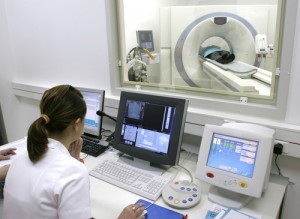
thinkpanamahealthcareHere’s an idea. What if we changed the model using social media and online tools?

What if, to complement our existing health care model, we used these tools to help us develop a completely new model of care?

One that would not only be more convenient and potentially more effective than the care models of today—it might actually cost less.

That’s right, by using some of these tools, I’m convinced we can create a model that will allow us to provide quality health care outcomes for our patients at less cost. Sound crazy? Hear me out:

  • What if you had online access to a cadre of physicians that you could ask questions of for basic needs? You could connect with these docs online via instant messaging or video (Skype calls, perhaps?) and get practical, real-time advice on your immediate health care concerns and issues. I broke my pinkie in December—how great would it have been to connect with a doc in real-time on my Mac, show him my pinkie via Web cam and get some quick advice on a best course of action? Now, that’s meeting my needs and being patient-centered.
  • What if clinics and hospitals responded to patient questions and concerns in a different way online in real time? Twitter might be a good solution. Couldn’t health care organizations use Twitter the same way Comcast and others use it to address patient concerns before they escalate and start to affect their perceptions and attitudes of your hospital or clinic? The tool could even be used to direct patients to the more appropriate facilities for care—for example, instead of visiting the ER for that sore throat, you could visit your neighborhood clinic for a quick throat culture (you might be surprised what some folks use the ER for these days).

facebook-logo

  • What if health care organizations used sites like Facebook and blogs to enable patients to share their stories with the thousands of others who may be about to undergo that painful procedure or may have critical concerns about their cancer diagnosis? Wouldn’t that be helpful—and comforting—to patients and drive stronger brand awareness and loyalty to your particular hospital or clinic? (Just ask Lee Aase at Mayo Clinic).
  • What if clinics created a completely new model for care where patients, instead of coming to a brick-and-mortar facility, visited with their physician in a virtual world (think Second Life five years from now)? Once these virtual world tools evolve and advance (and I believe they will), this will open up a whole different opportunity for clinics. Again, health care costs should go down—after all, it must be more cost-effective to visit a virtual clinic than one that’s paying utilities, leasing space and maintaining the facility, right? And, it would be conceivable to think patient satisfaction scores would skyrocket because patients could visit with their doctor from the comfort of their own home instead of trudging out into the cold and battling traffic.

We might be a few years away from this scenario, but it has the opportunity to completely transform the way physicians deliver care–and the way patients receive it.

Clearly, we’re at a crossroads with health care. Patients are demanding more, while hospitals are cutting budgets, asking staff to work longer hours and take on additional duties all while public scrutiny increases. We need to start making changes—radical, transformational changes. We can no longer settle for the status quo or incremental change. Now is our opportunity to act.

What other opportunities do you see us having to change the current health care model with the plethora of new online tools available to us?

Disclaimer: I work for Fairview Health Services, the second largest health care organization in Minnesota. The views and opinions in this post in no way reflect the thoughts, opinions or policies or Fairview Health Services.

  • Arik Hanson is a savvy communications professional focusing on issues in internal communications, marketing communications, public relations and social media. He currently works for the second-largest health care system in Minnesota. He also has a part-time consulting business, ACH Communications. You can read more at his blog or connect with Arik on Twitter.

Creative Commons License photo credit: ThinkPanama


Related Posts with Thumbnails

If you enjoyed reading this post, please feel free to share with your networks using the social icons above. You can also leave your thoughts in the comments below and/or subscribe to danny brown to ensure you receive the latest updates.

16 Responses to How Social Media Can Help Save Lives
  1. WorldofHiglet
    February 17, 2009 | 10:26 am

    “When you work in PR in most industries, you go home at the end of the day and wonder, “How did I make a difference today?”

    The answer, unfortunately, most often is you helped sell more widgets. Or, you helped the stock price go up just a bit (not lately, obviously). Or, you helped shape public perception or attitudes around an important issue or problem.

    Very rarely, do you get to say, “I helped save a life.”

    But in the health care industry, you have the opportunity to do just that. OK, usually, it’s not a direct correlation and you don’t actually “save lives”, but the point is you work for an organization that makes a huge difference—each and every single day….”

  2. Tom Stitt
    February 17, 2009 | 1:23 pm

    See my comments in response.

  3. Joel Swanson
    February 17, 2009 | 9:50 am

    I love Arik’s explanation of why the health care industry excites some of us. Especially in Minnesota, where health care providers and insurers are required to operate as nonprofits, health care seems to attract mission-driven people. Complicated, often frustrating industry, but very rewarding. I still get comments from people on how much they were encouraged by Blue Cross’s “do.” campaign and the commercial of the guy dancing in the physician’s office — and I haven’t worked at Blue Cross in almost two years.

    The area of using online tools to better share stories is exploding. With consumers/employees increasingly responsible for their own health care costs, it’s become a need; not just a nice-to-have element. In fact, Fairview is treading into that space as we speak. Also, check out http://www.healthcarescoop.com (put up by Blue Cross, but sponsored by Mayo Clinic and Fairview, among others).

  4. Phil Baumann
    February 17, 2009 | 9:54 am

    Arik,

    Health care definitely could benefit from the proper use of communication and collaboration technologies and communities.

    Since health care represents a wide range of services and needs, the pliancy of various social media lends itself to enhancing the quality of patient-provider relationships, collaboration among healthcare professionals and enabling the availability of authoritative, validated and meaningful online content.

    We need to flush out all of the opportunities and dangers of social media in provision of safe and effective health care. Our helathcare system is fast appoaching a catastophic collapse. We need more doctors and nurses and administrators and others involved in getting up to speed with an understanding of how the Web works, and how it doesn’t.

    Quality of care not only involves direct patient-provider contact: it involves remarkable communication among all parties involved. Services like Twitter (or more secure analogues) could certainly provide better follow-up care for patients who have established relationships with providers and could radicalize the way professionals accomplish their goals.

    HIPAA will need to be reformed. We will need to re-visit the issue of privacy in a world where technologies are making it harder every day to maintain privacy.

    We have a long way to go before social media can be used in the ways that it aught to be used, but my I think as awareness grows of the technologies and communities that are sprouting, healthcare will take a needed look at social media.

    Above all, efforts to incorporate social media into health care must focus on the safe and effective uses of the various technologies, without being fearful of change.

    Glad to see interesting in health care communication and collaboration technologies waxing. It’s time.

  5. Danny
    February 17, 2009 | 10:10 am

    @Joel. That’s one of the reasons I was more than happy to offer Arik the space here – his thoughts make a lot of sense and they’re desperately needed in current climes. :)

    @Phil. These are some great points you make. Much like any industry, the health care one is far behind the times in more ways than just physical funding and resources. Many countries are near collapse, like you say. The sooner newer approaches and methods are used, and relevant training and support given, the better for all concerned.

  6. Alexandra Carmichael
    February 17, 2009 | 10:47 am

    Great future scenarios! I would add, What if the medical system were crowdsourced? Jeff Howe talked about this here – http://crowdsourcing.typepad.com/cs/2008/09/crowdsourcing-m.html

    And while sharing stories is a great source of support, What if patients shared data directly with each other? CureTogether and PatientsLikeMe are early experiments.

    Social media definitely can save lives – thanks for posting this inspiring perspective.
    Alexandra Carmichael
    Co-Founder, CureTogether.org

  7. Candee
    February 17, 2009 | 11:22 am

    A big hurdle is changing how doctors and other health professionals view various communication tools. Many still believe you only need a yellow pages ad (bigger the better) and a few billboards around town (of course, along their commute pattern) and patients should flow in.

    I would love to see marketing and customer service basics required for health care professionals while they’re still in school. I see that happening a bit more. I work in the dental field and many of our younger dentists are the ones who best understand the value of communication tools, including social media.

    Change in health care is most often a slow road. More support from medical schools and associations could help speed efforts.

  8. Tom Stitt
    February 17, 2009 | 11:46 am

    Ari

    Terrific ideas.

    As you know, I’m generally a fan of “wisdom of crowds” and social media based approaches to addressing challenges facing health care. While I’m skeptical about pure patient-driven “patient heal thyself” approaches that some advocate, your ideas for using social media as a new online clinic for health care strike the right balance between empowering patients and providing effective community moderation by licensed clinicians. I see challenges being raised immediately by providers and payers around the usual compliance, billing (what’s the billing code for a Skype video consult about your pinkie? charge more for HD than SD video? extra if images are saved with comments to your PHR?) and privacy issues.

    I agree with Phil that we need to do a much better job of explaining where HIPAA is and isn’t relevant to deploying social media in health care. HIPAA myths that block effective care and patient empowerment need to be busted. Patient and medical record privacy also needs to be preserved, especially given the financial incentives for rapid adoption of EHR by physicians and providers. If we could get a clear handle on where HIPAA applies to social media scenarios (and doesn’t), the billing and compliance issues could be addressed by experts.

    What could be done today? Basic uses of social media could address patient education, improve outcomes and support patient satisfaction objectives with minimal provider resource investment or the need to address HIPAA, billing or compliance issues.

    - Tracking medication compliance through social media coupled with patient education has the potential to save lives, deliver billions of dollars in cost savings and reduce stress on emergency departments. One large retail pharmacy is already committed to providing a medication adherence service that patients could access through social media.

    -The other short-term opportunity is service recovery (known as customer service in most other segments outside health care.) Getting real time feedback from patients and addressing their (often non-clinical) service concerns quickly would convince many patients that health care organizations are listening. E.g., Palo Alto Medical Foundation (@PAMF) is making it easy for patients to see wait times for urgent care service clinics using online social media. If one person, like @comcastcares on Twitter, can convince customers that a cable tv operator is listening and addressing their concerns, imagine what could be accomplished for health care service recovery using online social media.

  9. Arik Hanson
    Twitter: arikhanson
    February 17, 2009 | 9:34 pm

    Great points and ideas by all. Thanks for sharing and adding to the conversation. We need more crucial conversations like this to push some of these great ideas through to tranform our current health care models.

    Phil–I agree with your point about privacy. We need to take a long, hard look at our privacy laws and how the impact the way we care for our patients in this new Web 2.0 world. Many of these laws and policies were put in place years ago and need to be reviewed with a lens for the current state of business.

    Alexandra–Great ideas, thanks for sharing. I especially like the ideas around patients sharing data directly. I plan on looking into both of those example more in-depth.

    Candee–Interesting perspective about integrating marketing/PR into the cirriculum for physicians/dentists. We both know the younger professionals are using and embracing these tools–we just need to bring along the Gen Xers and boomers now.

    Tom–Completely agree with your take that customer service is a huge opportunity. We have a tremendous opportunity in the next few years to use these tools to educate our patients about the health care system and to deliver basic care. I think patients are ready for this, too. Just look at Frank and Comcast–people will find and utilize the new channels, just give them a chance.

  10. Katie Adams
    February 17, 2009 | 9:52 pm

    Arik,

    Great post. It got me thinking about University of Chicago Medical Center’s recent decision to do pre-care triage in their ED to refer people to less expensive community hospitals for ER services. The Chicago Tribune article reported that U. of C. found 40% of all ED patients did not need their services and could receive the care they needed – for less money – closer to home. That, in itself, is a pretty bold move, but what if they took it further – like you suggested – and leveraged social media tools to do the pre-care triage at home before patients even arrived on scene? They could do an initial assesment and diagnosis, share that information with the hospital they refer the patients to, thereby saving (1) patients an unnecessary drive to U. of C. and (2) the community hospital some time/work at intake.

    Thanks for keeping the fires of social media innovation & healthcare burning!
    - Katie Adams (@katieisawriter)

  11. Danny
    February 17, 2009 | 10:28 pm

    Fantastic conversation, everyone, and something that deserves a wider stage than a blog. Arik has definitely opened up a great can of ideas (thank you, good sir) and this could have the basis of an interesting hashtag conversation on Twitter.

  12. Albert Maruggi
    February 18, 2009 | 9:50 am

    Preface to my comments: 1) I am a trained journalist, native New Yorker and spent a good bit of time in politics, this makes me a cynic. 2) spent time in the 90s at VC firm working on forward looking technologies including desktop telemedicine apps so I have scars to prove that I know the difference between vision and hallucinations Anything that speeds communication can save a life, heck, “Watson come in here I need you.” Whether Bell’s words were fact or fiction when it is claimed he uttered them into the telephone to summon his assistant Watson for help, they proved that communication technology can deliver a result.

    I just spent the weekend in Haleyville, AL, the location of the first 911 emergency call and that technology has saved millions of lives. So I am not so quick to say social media is “All That” regarding life saving milestones.

    It is however, undisputed, that social media allows for rich information sharing. When that happens, people become smarter, more confident, more comfortable and can make better decisions about their healthcare. Will those characteristics save lives? sure. Social media enables people to overcome time and geography. But clearly there were plenty of cancer support groups long before social media. I caution those that think a Second Life is a replacement for a doctor’s office. In the case of the routine lab report result, to me email or a web portal will do just fine,

    Second Life, graphics and 3D worlds are overkill. In the case of disclosing when a patient has a life threatening sickness, nothing beats in-person, or in the situation of a combined team of specialists around the world, I like the video option with someone that is trusted and caring with the patient. Sure I advocate social media in applications that are appropriate, but I also would ask why a few times before making the statement that social media is a must for healthcare.

Trackbacks/Pingbacks
  1. How Social Media Can Save Lives | danny brown | Social Blogged
  2. Gosh - I'm Up For an Award? | danny brown
Leave a Reply


Wanting to leave an <em>phasis on your comment?

Trackback URL http://dannybrown.me/2009/02/17/how-social-media-can-help-save-lives/trackback/
One of 546 websites proudly supporting Earth Hour. On WordPress? Get the plugin.
View in: Mobile | Standard