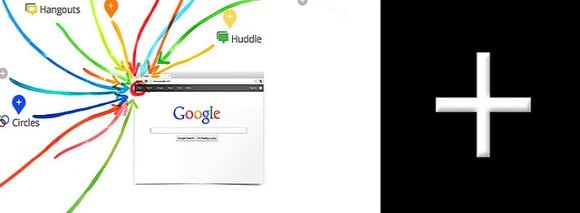
Google+ Is the Social Network That’s All About Search

138 Shares 138 Shares ×

Google Plus

This is a guest post by Sean McGinnis.

Did you hear that Google launched a social network called Google+? Of course you did!

In the past, Google took a stab at social by purchasing Orkut. Later, they launched both Google Buzz and Google Wave with little success. Now comes Google+.

Kinda seems like Google is the Elizabeth Taylor of the social world, doesn’t it? They’re going to keep trying until they get it right. Given those four trips down the social aisle, and the fact that employee bonuses are tied to getting social right this year, it’s pretty clear Google is borderline obsessed about social.

I wonder why that is?

So have a lot of other people.

In fact, there’s been a lot of handwringing and hypothesizing about why Google launched Google+. Some believe it is designed to kill Facebook; others that it will kill Twitter; still others view it as a play to move everything into the cloud and take on Microsoft and Apple.

I’m not convinced.

I think Google+ is a forward thinking play to keep search market share. Coincidentally, it also opens up billions and billions of new real estate to sell Google ads against, but that’s secondary (believe it or not).

Google Makes Money By Selling Ads

You see, Google has one objective; to sell advertising. Google brought in over 28 billion dollars in ad revenue in 2010 – 96% of total revenue for the year; and that number is already growing roughly 30% this year.

One of the things we all know is that you make more money when more people see your ads, whether that’s a TV show or a Google paid click within a search result.

Google AdWords

Google’s goal of selling ads is directly served by making services that are as valuable as possible. But, what’s valuable in the context of search?

Think about search for a minute. You ask a question…you expect an answer; a correct answer. That is why you go to a search engine, isn’t it? I know that’s why I go to a search engine. I’m looking for something and I need to find it. So, the more accurate the search results, the more people will want to use a given search engine.

The question is how does one go about creating a better search engine?

One Question. One Answer.

Think about it for a minute. If Google were God (not to stretch credulity too far or anything), you’d ask one question and get one perfect answer. They wouldn’t need to serve you 10 or more possible answers to your question. They would know exactly what you were looking for, even if you were unclear in how you presented your question.

I mean, God would know your intent, right? God would know exactly what you were looking for. I’m really not trying to compare Google to the Omnipotent One, but I am suggesting that in a perfect world they (along with every other search engine) would like to be able to divine what you were looking for and present it to you as fast as possible, maybe even before you asked for it.

(But maybe make you click through an ad in order to get the answer). 

Even more importantly, they would know that what I was looking for may not be what you were looking for.

Enter Personalized Search

The quest for search perfection began long ago. Google made great strides in this direction by including the concept of authority into their algorithm. By indexing the link structure of the web and calculating the value of the structure, Google (unlike many other early search engines) was able to eliminate a lot of spam from their search results.

But it wasn’t enough.

Website owners became wise to the value of links to influence search results and backroom deals, link purchases and other unsavory activities began unduly influencing search results. So, in 2005, Google released a feature called Personalized Search.

Personalized Search

It was a new and shiny object at the time. It represents (to me) the first push down the slide we are accelerating down today. Google started to present back to you (provided you were signed into your Google account when you ran a search) results that were marginally different from other users. They started to personalize those result to you.

Think about that for a minute. What better way to ensure a search engine could answer your question?

In 2009 Google extended Personalized Search to all users, whether logged into their Google account or not.

Over the past 6 years personalized search has improved some of the search experience, but only on the margins. There’s a number of reasons why Google and Bing chose to move slowly in the area of personalization, but that’s fodder for a different post.

A New Dawn for Personalized Search

Here’s the thing about personalized search. The more Google knows about all of us, the more they know about our like, dislikes, profession, connections, friends, enemies, content types, areas of influence, etc… the more they can customize the search experience.

In addition to Google+ giving all that information and more to Google, the introduction and proliferation of the +1 button allows Google to gather signals across the web of what you like and don’t like.

When we use Google+, we are creating data, all of which is within the Google network. No longer is Google relying on facebook or twitter data to learn more about you. That’s why it is so critical that Google get social right. Because social is where the data action is. It’s where we freely give up information about ourselves; where we create the connection nodes that Google can learn from and serve up a better search experience.

So while Google+ may represent a number of things tactically, the business strategy behind it is, in my view, directly correlated to their core business – search.

More eyeballs means more ad revenue, and the best way to secure eyeballs is to have a near flawless search experience; intuitive, fast and predictive. The only way that happens is when a search engine LEARNS your tendencies – and social is the best way to glean those tendencies.

That and it creates a few billion extra pages to sell ads against.

What do you think?

Sean McGinnisAbout the Author: Sean McGinnis consults with businesses on digital customer acquisition and loyalty programs at 312 Digital. Sean spent much of the last decade leveraging his law degree and 12 years of digital marketing experience by assisting law firms across the country create compelling online marketing programs. He is also co-founder of the group blog 12 Most. Sean currently serves as Managing Director and CMO of Multistate Edge, an online bar exam preparation company. You can find Sean on Twitter at @SeanMcGinnis.

Join over 11,000 smart subscribers

Get my latest updates delivered straight to your Inbox as soon as they're published (I respect your privacy and will never spam you)

138 Shares Twitter 124 Facebook 0 Google+ 14 Buffer 0 Buffer LinkedIn 0 Email -- Email to a friend 138 Shares ×
About Danny

Danny Brown is Chief Technologist at ArCompany and an award-winning marketer and blogger. His blog is recognized as the #1 marketing blog in the world by HubSpot. Danny is also co-author of Influence Marketing: How to Create, Manage and Measure Brand Influencers in Social Media Marketing.

91 comments
GrowMap
GrowMap

Excellent analogy because wanting to be God is the intention of the power hungry. Fortunately for us Google is NOT God and I for one prefer to make my own choices, thank you. Anyone who doesn't see how dangerous Google is to free choice, small business and freedom, period, is not paying attention or thoroughly conditioned and brainwashed.

GrowMap
GrowMap

Excellent analogy because wanting to be God is the intention of the power hungry. Fortunately for us Google is NOT God and I for one prefer to make my own choices, thank you. Anyone who doesn't see how dangerous Google is to free choice, small business and freedom, period, is not paying attention or thoroughly conditioned and brainwashed.

Blake McGillis
Blake McGillis

I think the longer I have my own business, the less irritated I am by ads. A company that doesn't charge for its services still needs to make money somehow, and at least Google provides good services. However, I am a little perturbed by the idea of so much of my information being obtained by companies, especially after hearing that Facebook has (at least allegedly) been giving information to the government. They've only done it in an effort to help apprehend criminals, but it's still disturbing.

Blake McGillis
Blake McGillis

I think the longer I have my own business, the less irritated I am by ads. A company that doesn't charge for its services still needs to make money somehow, and at least Google provides good services. However, I am a little perturbed by the idea of so much of my information being obtained by companies, especially after hearing that Facebook has (at least allegedly) been giving information to the government. They've only done it in an effort to help apprehend criminals, but it's still disturbing.

Blake McGillis
Blake McGillis

I think the longer I have my own business, the less irritated I am by ads. A company that doesn't charge for its services still needs to make money somehow, and at least Google provides good services. However, I am a little perturbed by the idea of so much of my information being obtained by companies, especially after hearing that Facebook has (at least allegedly) been giving information to the government. They've only done it in an effort to help apprehend criminals, but it's still disturbing.

ajkohn
ajkohn

@Sean McGinnis Yes, there is a lot of untapped opportunity in personalized search. (Allergic avoidance, I like that.) Unfortunately, now they have to deal with folks like Eli Pariser telling them that personalization is evil. Though to be fair, I wouldn't mind more transparency on when and how my searches are personalized. As for authorship, you're right about the need for wider usage and adoption. Google is very interested in this, having already streamlined the rel="author" markup and making it relatively clear than they equate authorship with trust. I believe they're already thinking of creating their own home grown influence metric but are probably using Klout and PeerIndex as potential control numbers. I'd welcome a more ... nuanced application of influence. It'll be interesting to see where it all leads.

Sean McGinnis
Sean McGinnis

@ajkohn Agreed AJ. While I wish Google would get more aggressive with personalized search they have shown an almost allergic avoidance to doing so, which I find disappointing frankly. There is so much untapped opportunity there... alas. Author quality is a very likely outcome of some of this activity, but they will need a high adoption rate among the digerati and publishers (and high usage, not just adoption) to be able to determine that, I think. I like your analogy of sifting author quality as similar to the Panda exercise. How long before they start taking Klout scores of authors into account, I wonder.....

Sean McGinnis
Sean McGinnis

@PhilipNowak It's interesting. In principle I agree with you that I prefer ads that are targeted. In practice, it still feel creepy as hell - like we're giving over an awful lot of privacy. I suppose its a balancing act (isn't everything?) Even though I'd prefer targeted ads over un-targeted ones, wouldn't we all prefer NO ads over targeted ads? Going back to Godin, an ad is still an interruption - and one we'd all prefer not to have to deal with if given that option (not that it's par of this analysis or opinion, mind you - just an observation and reaction to your comment about targeted ads). No doubt G needs to turn a profit. In the end I agree with you that ultimately it has the potential to be a good thing. Anything they can do to maximize value for all their stakeholders (including customers) is a good thing. Then again, I'm a firm believer that the first thing they should do to accomplish that is kill the Google Network program entirely (which is 30% of their revenue, so its not likely to happen). The minute I see Google adwords on a blog, I run the other way.

GrowMap
GrowMap

@Sean McGinnis@PhilipNowak No, I don't prefer no ads over targeted ads. I LIKE targeted ads especially when I'm looking for something and I want small businesses to be able to make sure we find them. I even wrote a post about monetizing social networks pointing out that StumbleUpon is entirely missing the boat not making their keyword targeted pages easy to find and putting relevant ads on those pages. They could give Google a run for their money if they did. (How many even know there are pages at StumbleUpon containing the top content about any subject AND featuring the Stumblers who share about that topic? I can share the syntax or the roundabout way I get to them if anyone wants to know.) Google is continually moving to limit our choices to big brands and make sure we don't find alternatives like all the small businesses. You said as much in this post: "If Google were God (not to stretch credulity too far or anything), you’d ask one question and get one perfect answer." and I guarantee that perfect answer IS going to be one of their favored big brands. Google is limiting our choices and I can prove it. See the specific examples in my post about how Google slapped competitors in the Panda update and how few choices they offer us compared to other shopping sites - which they ALSO slapped in the Panda update. What you see on a blog is Google AdSense (not AdWords - AdWords is what advertisers BUY; AdSense is what publishers display). The thing about AdWords/AdSense is that although they can generate income for blogs and Web sites that kind of content advertising is usually a waste of money for advertisers. While I know how to generate income from AdSense (my first site made over $400 a month and if I had a similar site today it could make far more), I choose not to use AdSense on my blogs. Serious bloggers often refer to it as "blogger welfare".

PhilipNowak
PhilipNowak like.author.displayName 1 Like

Sean, I think you're right and I don't necessarily view it as a bad thing. First and foremost, Google is a business and has to make money. The constant demands of being a public company and growing shareholder value forces companies to innovate. Secondly, I don't mind being served up ads as long as they are relevant. I completely ignore ads that have nothing to do with me, so I welcome Google using information that I choose to publish publicly on social layers like Google+ to personalize my experience.Your Google = God scenario made me laugh, but I agree. I use search engines to find the answer to a question I have in the shortest amount of time possible. :-)

This comment has been deleted

GrowMap
GrowMap

@deleted_91832_Sean McGinnis@PhilipNowak No, I don't prefer no ads over targeted ads. I LIKE targeted ads especially when I'm looking for something and I want small businesses to be able to make sure we find them. I even wrote a post about <a href="http://www.growmap.com/twitter-advertising/:>monetizing social networks</a> pointing out that StumbleUpon is entirely missing the boat not making their keyword targeted pages easy to find and putting relevant ads on those pages. They could give Google a run for their money if they did.

(How many even know there are pages at StumbleUpon containing the top content about any subject AND featuring the Stumblers who share about that topic? I can share the syntax or the roundabout way I get to them if anyone wants to know.)

Google is continually moving to limit our choices to big brands and make sure we don't find alternatives like all the small businesses. You said as much in this post: "If Google were God (not to stretch credulity too far or anything), you’d ask one question and get one perfect answer." and I guarantee that perfect answer IS going to be one of their favored big brands.

Google is limiting our choices and I can prove it. See the specific examples in my post about how <a href="http://www.growmap.com/farmer-update-google-competitors/">Google slapped competitors</a> in the Panda update and how few choices they offer us compared to other shopping sites - which they ALSO slapped in the Panda update.

What you see on a blog is Google AdSense (not AdWords - AdWords is what advertisers BUY; AdSense is what publishers display). The thing about AdWords/AdSense is that although they can generate income for blogs and Web sites that kind of content advertising is usually a waste of money for advertisers.

While I know how to generate income from AdSense (my first site made over $400 a month and if I had a similar site today it could make far more), I choose not to use AdSense on my blogs. Serious bloggers often refer to it as "blogger welfare".

PhilipNowak
PhilipNowak

Sean, I think you're right and I don't necessarily view it as a bad thing. First and foremost, Google is a business and has to make money. The constant demands of being a public company and growing shareholder value forces companies to innovate. Secondly, I don't mind being served up ads as long as they are relevant. I completely ignore ads that have nothing to do with me, so I welcome Google using information that I choose to publish publicly on social layers like Google+ to personalize my experience.Your Google = God scenario made me laugh, but I agree. I use search engines to find the answer to a question I have in the shortest amount of time possible. :-)

ajkohn
ajkohn like.author.displayName 1 Like

While I agree that G+ is largely about ensuring the continuing sustainability of search and advertising, I think the goal goes beyond just personalization.

Clearly, G+ gives Google a primary source of social data. If it succeeds they'll no longer have to rely on Twitter and Facebook for this vital piece of the puzzle.

Personalized search will be the short-term benefactor, but Google seems hesitant to radically change the rankings on search results based on your social graph. No doubt it'll increase the amount of personalization but we're not getting completely different results on searches based on this signal.

I think the more interesting play for search is on identity and the potential for AuthorRank.

http://www.blindfiveyearold.com/google-plus-identity-and-seo

The Internet is bursting at the seems with an explosion of digital content. Much of it is ... not very good. Google has a GIGO problem.

Google needs a better way to sift through and determine quality in an age where content can be produced and distributed with such ease.

Instead of going from the document level and building up, what if you used an ‘author’ filter? Google’s Panda update created an A and B pile for site quality. Google could do the same for author quality.

To me, this is the long-term goal of G+, to understand the reputation and influence of content creators (which includes comments) and use that to better inform search results.

This comment has been deleted

ajkohn
ajkohn

@deleted_91832_Sean McGinnis Yes, there is a lot of untapped opportunity in personalized search. (Allergic avoidance, I like that.)

Unfortunately, now they have to deal with folks like Eli Pariser telling them that personalization is evil. Though to be fair, I wouldn't mind more transparency on when and how my searches are personalized.

As for authorship, you're right about the need for wider usage and adoption. Google is very interested in this, having already streamlined the rel="author" markup and making it relatively clear than they equate authorship with trust.

I believe they're already thinking of creating their own home grown influence metric but are probably using Klout and PeerIndex as potential control numbers. I'd welcome a more ... nuanced application of influence.

It'll be interesting to see where it all leads.

ajkohn
ajkohn

While I agree that G+ is largely about ensuring the continuing sustainability of search and advertising, I think the goal goes beyond just personalization. Clearly, G+ gives Google a primary source of social data. If it succeeds they'll no longer have to rely on Twitter and Facebook for this vital piece of the puzzle. Personalized search will be the short-term benefactor, but Google seems hesitant to radically change the rankings on search results based on your social graph. No doubt it'll increase the amount of personalization but we're not getting completely different results on searches based on this signal. I think the more interesting play for search is on identity and the potential for AuthorRank. http://www.blindfiveyearold.com/google-plus-identity-and-seo The Internet is bursting at the seems with an explosion of digital content. Much of it is ... not very good. Google has a GIGO problem. Google needs a better way to sift through and determine quality in an age where content can be produced and distributed with such ease. Instead of going from the document level and building up, what if you used an ‘author’ filter? Google’s Panda update created an A and B pile for site quality. Google could do the same for author quality. To me, this is the long-term goal of G+, to understand the reputation and influence of content creators (which includes comments) and use that to better inform search results.

Adam | Customer Experience
Adam | Customer Experience like.author.displayName like.author.displayName 2 Like

Sean, you have nailed the larger strategy of Google with G+. The mission is consumer data and ad sales based on that data. Search combined with social is currently the best way to get there.

If you're on G+ anytime soon, I just posted a picture of two different google searches -- one logged into G+ and the other logged out. It's pretty interesting how G+ is already being used to affect search results.

Enjoyed the post!

adamtoporek
adamtoporek

Sean, you have nailed the larger strategy of Google with G+. The mission is consumer data and ad sales based on that data. Search combined with social is currently the best way to get there. If you're on G+ anytime soon, I just posted a picture of two different google searches -- one logged into G+ and the other logged out. It's pretty interesting how G+ is already being used to affect search results. Enjoyed the post!

ExpatDoctorMom
ExpatDoctorMom like.author.displayName 1 Like

Very clever of Google! I would have to agree the way you present. It makes sense. Although I can see the benefit of a personalized search, it seems a bit devious... Hmm.

I have noted the power of Google+ from other posts I.e. One of @thesaleslion 's recent posts so will soon be venturing there.

Thanks,Rajka

ExpatDoctorMom
ExpatDoctorMom

Very clever of Google! I would have to agree the way you present. It makes sense. Although I can see the benefit of a personalized search, it seems a bit devious... Hmm. I have noted the power of Google+ from other posts I.e. One of thesaleslion 's recent posts so will soon be venturing there. Thanks,Rajka

lotusscaffolding
lotusscaffolding

Hi I read all posting to your site. Good keep it up. Why you are not updating the business news. My work is full of <a href = "http://www.lotusscaffolding.com/services.html"> Aluminium Scaffolding Rental </a> and <a href = "http://www.lotusscaffolding.com/">Boom lift Scaffolding </a>. You try to publishing different new is most favour to different kind of people to share your news. Thanks i did for this. I share to your posting to my <a href = "http://www.lotusscaffolding.com/">Scaffolding services</a> team. All the Best to your bright future

snouraini
snouraini

@Sean McGinnis You are correct, we are. I made similar arguments (with respect to "relevance" being the center point) when Facebook page owners were angry at Facebook for messing with the Facebook page status updates so it would no longer be chronological. I would love to hear your thoughts on this article http://bit.ly/pRv7Oc Thanks in advance.

Sean McGinnis
Sean McGinnis

@snouraini We are of one minds on this, or so it seems. :)

snouraini
snouraini like.author.displayName 1 Like

I totally agree with your point, and I always thought the most powerful feature of G+ is personalization of search at a more deeper level. That is what makes Facebook ads so effective (when done right): incorporation of relevance. Most people are more inclined to buy something if the trusted people in their network endorse them. It is the digitized form of the old "word of mouth". I am glad someone finally is talking about this. I was starting to wonder if I am the only one who sees the power and purpose of G+ from the search angle. Most conversations around G+ centers around how better it is compared to Facebook and Twitter, when that is not really the point.

This comment has been deleted

snouraini
snouraini

@deleted_91832_Sean McGinnis You are correct, we are. I made similar arguments (with respect to "relevance" being the center point) when Facebook page owners were angry at Facebook for messing with the Facebook page status updates so it would no longer be chronological. I would love to hear your thoughts on this article

http://bit.ly/pRv7Oc

Thanks in advance.

snouraini
snouraini

I totally agree with your point, and I always thought the most powerful feature of G+ is personalization of search at a more deeper level. That is what makes Facebook ads so effective (when done right): incorporation of relevance. Most people are more inclined to buy something if the trusted people in their network endorse them. It is the digitized form of the old "word of mouth". I am glad someone finally is talking about this. I was starting to wonder if I am the only one who sees the power and purpose of G+ from the search angle. Most conversations around G+ centers around how better it is compared to Facebook and Twitter, when that is not really the point.

Sean McGinnis
Sean McGinnis

@bdorman264@HowieSPM I think I love Howie almost as much as @ginidietrich does.... Ahhh. maybe not. :)

bdorman264
bdorman264

@Sean McGinnis No, it was really more from a perspective of not spending a lot of time in it or trying to make a determination on what the true purpose is; more from an 'uneducated' perspective. Obviously, your audience was ready to go toe to toe with you on this one. Especially that @HowieSPM , but he's smart like that anyway.

Wajam
Wajam

@Kristi Hines I'm experiencing the same thing. Now more than ever, I'm seeing the same ads over and over again. My guess is that they are playing around with different tweaks to their search algorithm, based on your interest profile, who your friends are and your search/browsing history, and right now they're failing at serving us relevant ads we haven't seen yet. Customizing search using your social graph is a daunting task, but at the same time, it's an exciting space to be in. I'm sure we'll see much innovation in the coming months from both the tech giants and scrappy startups who are racing to solve this problem. Alain Wong Communtiy Manager Wajam: breaking news in social search

Kristi Hines
Kristi Hines like.author.displayName 1 Like

If Google is the one that is personalizing ads based on sites we visit, then they may not be hitting the mark. I keep getting ads for sites that I already buy from everywhere I go thanks to recommending it via email and on Google+. I can see how that would work if I hadn't purchased from the, but now instead of me seeing new ads and brands, I'm just seeing the same one. Unless it's meant for brand loyalty instead of clicks, because I might be tempted to go back to their site and order something new, but I wouldn't do that by clicking on the ad again.

Wajam
Wajam

@Kristi Hines I'm experiencing the same thing. Now more than ever, I'm seeing the same ads over and over again.

My guess is that they are playing around with different tweaks to their search algorithm, based on your interest profile, who your friends are and your search/browsing history, and right now they're failing at serving us relevant ads we haven't seen yet.

Customizing search using your social graph is a daunting task, but at the same time, it's an exciting space to be in. I'm sure we'll see much innovation in the coming months from both the tech giants and scrappy startups who are racing to solve this problem.

Alain Wong

Communtiy Manager

Wajam: breaking news in social search

Kristi Hines
Kristi Hines

If Google is the one that is personalizing ads based on sites we visit, then they may not be hitting the mark. I keep getting ads for sites that I already buy from everywhere I go thanks to recommending it via email and on Google+. I can see how that would work if I hadn't purchased from the, but now instead of me seeing new ads and brands, I'm just seeing the same one. Unless it's meant for brand loyalty instead of clicks, because I might be tempted to go back to their site and order something new, but I wouldn't do that by clicking on the ad again.

Mark Longbottom
Mark Longbottom

@Sean McGinnis Pleasure to meet you, now my eyes need to leave the screen, will check back and read more of your posts interesting stuff. One day soon will open a few more hours to get properly active on G+ too. Have to thank Danny for putting you in the right place :)

Mark Longbottom
Mark Longbottom

@Sean McGinnis Pleasure to meet you, now my eyes need to leave the screen, will check back and read more of your posts interesting stuff. One day soon will open a few more hours to get properly active on G+ too. have to tanks Danny for putting y ou inthe right place :)

Sean McGinnis
Sean McGinnis

@Mark Longbottom Gotcha! I never log out.... ;) Explains why I haven;t seen that message. LOL Great to meet you Mark. I'm off to make sure we're connected on Twitter an G+ now.... ;)

Mark Longbottom
Mark Longbottom

@Sean McGinnis Exactly my point we will click on those we have engaged with and buil relationships with as has happened over the years bringing Facebook above Google in Interent useage, hence Google coming up with something to replicate that type of activity = Google +. Once G+ Business pages appear similar to facebook pages there will be more possibility for sharing and building rather than pushng through ads as discussed. I am not saying Ads don't work, just think some people could use their money far mroeeffectively to develop a connected community that genuinely shares information and provides a far mroe authentic brand awareness.*Everytime i log in or out of facebook i get a floating or static invite to make FB my home page.

Sean McGinnis
Sean McGinnis

@Mark Longbottom I actually haven't seen Facebook's push to make them the home page. I think ad blindness is a pretty common problem, no matter the ad type or location. As soon as we get acclimated to where an ad will be and what an ad will look like, we block it mentally. That's one of the questions I ask during every presentation - "When's the last time you clicked on an ad? On purpose?" People ALWAYS laugh out loud. NOBODY does it. But we do click once there is some element of social proof. If @DannyBrown or @ginidietrich reviews a product I'm far more likely to consider a purchase, especially if it's in an area where they have some expertise. Heck, i thought about scrapping the design of http://12most.com in favor of a custom built skin around the Genesis framework after watching Danny's walk-thorough and comparison of the frameworks a few weekends ago - and that blog is only 2 months old! LOL! I think that's where we're headed. Much more social proof to drive behavior. It won't be long before +1's are included in PPC ads or just product pages that PPC links are linking to - all in the name of enhanced performance.

Justicewordlaw
Justicewordlaw

@Sean McGinnis Yeah, I would say until one of the major companies like Pepsi Co, Best Buy, or Target get their marketing dollars together then they will be offering space to these people. Either they're going to start before the major shopping season or right for the beginning of the new year. With Myspace Tom giving them so much love you never know.

Sean McGinnis
Sean McGinnis

@SoloBizCoach Agreed. I view this as totally defensive as well.... But in my view it;s defensive against the Facebook Bing alliance in addition to a defensive move against Facebook search. I can honestly say I've never used Facebook as a Google replacement. I'd like to see data that indicates how many people do that (whether consciously or unconsciously).... Bing results are getting very good and the integration of Facebook data is helping with that. But for the awfulness that is Bing image search, I may have actually switched to Bing permanently (I used Bing as an experiment for 30 days not too long ago).

Sean McGinnis
Sean McGinnis

@Justicewordlaw I wonder how long it will take before they start to monetize those pages.It may be a while, but it's nice to know you have a few bilion pages in inventory to pull the trigger against whenever things start slowing down in your core business, eh?

Sean McGinnis
Sean McGinnis

@bdorman264 Bill - don't take my good-natured ribbing for bull-headedness. I'm interested in hearing your perspective! Please share. I'm totally open to being proven the asshat most people think I am... :) Congrats on your son passing the bar! That's terrific news. Florida is certainly no cakewalk.

Sean McGinnis
Sean McGinnis

@margieclayman You bring up a good point Margie. I;d like to see some data around how many people use social platforms for searching behavior. I also think we need to invent and agree on some terminology to describe the differences. There really is a conversion happening in some respects and we need to have words that describe these various different things: 1. Using social platforms (like facebook) as a search replacement to find what you are looking for. 2. The new influence that social signals have over normal search results (think Google counting links from within twitter inside the Google algorithm) 3. The social PROOF that is bring offered within regular search results to make you more trusting of a search result or to increase click thru rate from within that search result (think small avatars appearing within search results - imaging you ran a search and saw that Shelly Kramer had +1'd one of the results within Google - how would that affect your interaction with that link?) 4. The new integration of social content within normal search results (think the former Twitter real time feed within Google search results) 5. Then there's the whole larger concept of "semantic search" or web 3.0 which is really a sort of umbrella concept that includes much of what i wrote above. It truly is an amazing and interesting time to be involved in search. :)

Snehashis
Snehashis

This is a very good article. Google is my all time favorite and and now Google+.

The <a href=” http://www.ejobmailer.com/ ” target="_blank">EJobMailer</a> scans the job listings categorically which are found on Elance, oDesk, Guru and/or vWorker, autonomously. It does it on a customizable time interval, and then selects the jobs that match your specific search criteria. It does that while one is being productive - or even better - while is having fun enjoying stuff. Either way, EJobMailer gives the users access to tens of thousands current expert and freelance jobs - each and every day! Please visit our site http://www.ejobmailer.com

Mark Longbottom
Mark Longbottom like.author.displayName 1 Like

Hi Sean, you seem to be spot on with your analysis of Google and Google+ one thing i have yet to do though is click on a Google Ad when using it's searches, never see the ads on the right and always ignore hose paid for at the top. I lied there I once in 2008 had a Ning community and paid to have Ads make me money so i clicked some ads, waste of time and never since have I done that. Same with Facebook Ads never see them because i focus on the facebook walls I am on. So what's my point, similar to yours Google knows where people have begun to search more and that’s Facebook or should we say share more, so Google+ is as you say more about search, but within communities or circles of people we are loyal to and trust. Therefore we are happier to share what we have searched for liked to those we have engaged with.

Simple human nature really we have always communicated and built communities and therefore share information with those we trust. now Google and Facebook have begun to understand how people communicate and are building what they do around that, we never bought cars because we saw them in the ad break of a soap or a major sports event but they were always pushed in front of us. Time to move on and realise the social is stronger than the ad world, have you noticed how Facebook are trying to encourage people to have them as their browser home page rather than a certain search engine we all know?

This comment has been deleted

Mark Longbottom
Mark Longbottom like.author.displayName 1 Like

@deleted_91832_Sean McGinnis Exactly my point we will click on those we have engaged with and buil relationships with as has happened over the years bringing Facebook above Google in Interent useage, hence Google coming up with something to replicate that type of activity = Google +. Once G+ Business pages appear similar to facebook pages there will be more possibility for sharing and building rather than pushng through ads as discussed. I am not saying Ads don't work, just think some people could use their money far mroeeffectively to develop a connected community that genuinely shares information and provides a far mroe authentic brand awareness.*Everytime i log in or out of facebook i get a floating or static invite to make FB my home page.

Mark Longbottom
Mark Longbottom

@deleted_91832_Sean McGinnis Pleasure to meet you, now my eyes need to leave the screen, will check back and read more of your posts interesting stuff. One day soon will open a few more hours to get properly active on G+ too. Have to thank Danny for putting you in the right place :)

Mark Longbottom
Mark Longbottom

Hi Sean, you seem to be spot on with your analysis of Google and Google+ one thing i have yet to do though is click on a Google Ad when using it's searches, never see the ads on the right and always ignore hose paid for at the top. I lied there I once in 2008 had a Ning community and paid to have Ads make me money so i clicked some ads, waste of time and never since have I done that. Same with Facebook Ads never see them because i focus on the facebook walls I am on. So what's my point, similar to yours Google knows where people have begun to search more and that’s Facebook or should we say share more, so Google+ is as you say more about search, but within communities or circles of people we are loyal to and trust. Therefore we are happier to share what we have searched for liked to those we have engaged with. Simple human nature really we have always communicated and built communities and therefore share information with those we trust. now Google and Facebook have begun to understand how people communicate and are building what they do around that, we never bought cars because we saw them in the ad break of a soap or a major sports event but they were always pushed in front of us. Time to move on and realise the social is stronger than the ad world, have you noticed how Facebook are trying to encourage people to have them as their browser home page rather than a certain search engine we all know?

SoloBizCoach
SoloBizCoach

Great article @deleted_91832_Sean McGinnis! I definitely think that Google's goal with G+ is search. However, I also think there is a defensive play as well. While Google is the dominant search engine, more and more searches are taking place in Facebook. If this trend continues to grow, Google's market share of search will be affected by this. Therefore, I think Google needs a way to attract social search traffic.

SoloBizCoach
SoloBizCoach

Great article @Sean McGinnis! I definitely think that Google's goal with G+ is search. However, I also think there is a defensive play as well. While Google is the dominant search engine, more and more searches are taking place in Facebook. If this trend continues to grow, Google's market share of search will be affected by this. Therefore, I think Google needs a way to attract social search traffic.

Justicewordlaw
Justicewordlaw like.author.displayName 1 Like

I can already see down the line that Google is going to try and focus a lot of attention on monetizing the site for ad placements as they know more people are using Facebook ads more now with those specific features. If they want to make more money all their going to have to do is just giving their users more access to reach specific target niches of people instead of the broader form. Google+ is nice and that's it.

Trackbacks

  1. [...] around right now, but not many are quite like this post by Sean McGinnis. Sean submits that the real deal with Google Plus is that Google is extending, in a natural way, the growth of personal…. They are extending ways to make revenue off AdWords. It’s a fascinating look at Google Plus [...]

  2. [...] Plus defines an era of disruption at a moments notice Six Tips For Using Google+ Google+ Is the Social Network That’s All About Search 15 Google+ Resources for ‘power users’ Social Media Showdown: Twitter vs Facebook vs [...]

  3. [...] Google+ Is the Social Network That’s All About Search New social network Google+ is being touted as a Facebook killer, or a Twitter killer. But is this really the goal Google has with Google+? Source: dannybrown.me [...]

  4. [...] the Facebook List with a Circle. The concept – other than to attract folks to its cloud and gather data to perfect search, sell ads - I think is to give me control so I [...]

  5. [...] Google+ Is the Social Network That’s All About Search New social network Google+ is being touted as a Facebook killer, or a Twitter killer. But is this really the goal Google has with Google+? Source: dannybrown.me [...]

  6. [...] coexist, both strong. Because I’m sure there are many people like me. And I totally agree with Sean McGinnis that after all, there is only so much time, a person can spend in social networks. The time people [...]

  7. [...] about Google+ for business is abound, but other than the SEO benefits, arguments for a pro offering have not been compelling. In reality, there is no formal business [...]


138 Shares Twitter 124 Facebook 0 Google+ 14 Buffer 0 Buffer LinkedIn 0 Email -- Email to a friend 138 Shares ×