• Skip to primary navigation
  • Skip to main content
Danny Brown

Danny Brown

podcaster - author - creator

  • About
  • Podcasts
  • Journal

Archives for March 2012

The Race for Mobile Supremacy and How It Affects Your Business Strategy

Who wins the smartphone war

Who wins the smartphone warIf social media was the big thing in 2010 and 2011, then mobile is clearly leading the charge for the hearts and minds of both businesses and consumers in 2012.

While QR codes and push marketing via SMS campaigns have started the flow, the recent uptake in smartphone adoption across all parts of the globe means this year is going to be huge for mobile marketing and commerce.

A?recent report from comScore?emphasizes this point more than ever, and offers business owners and marketers an overview into the strategy they need to be preparing for the coming year.

Analyzing the Data

Some of the key findings from the report include:

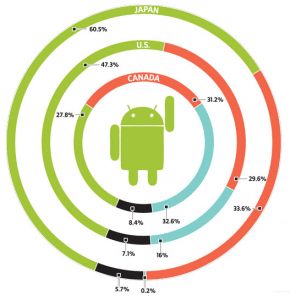
  • Where mobile use was initially strong in the U.S. (and continues to be with 42% of the mobile market there on smartphones), Europe is now leading the charge, with 44% of users in France, Germany, the U.K., Italy and Spain using smartphones.
  • The clear leaders in the field are Apple and Google, with their iPhone and Android platforms respectively. Android continues to be the lead platform, with almost half of U.S. users on it, and capturing 60% of the five countries mentioned above in Europe.
  • Shoppers are using smartphones much more when in-store, using apps and search to compare prices and offers, as well as scanning barcodes for reviews and comparisons prior to making a purchase.

These are just some of the stats that jump out immediately. The report also looks at how mobile is driving the amount of interaction on social sites like Twitter and Facebook, as well as cross-platform use between smartphones and tablets.

Simply put, the biggest message coming from the report is that you need to have a mobile strategy more than ever, and sooner rather than later.

So how can your business adapt to the findings if you haven?t already?

Measure, Adapt, Implement

While it can be easier for smaller businesses to adapt than larger ones, due to red tape and the approval process, the need to be adaptable is key across all businesses, regardless of size.

It?s why RIM is currently struggling in the smartphone market after leading it for so long. Poor leadership and products that lagged behind a hungrier competition saw the BlackBerry make fall from grace in a way not seen since Yahoo took a dive in the search market.

So, if a market leader like RIM can fall so bad, it shows the need for your business to be on top of its game ? especially in the mobile world we?re increasingly living in.

Looking at some of the stats from the report, there are a few ways that you can use the information to ramp up your mobile strategy and build successful campaigns around them.

  • Look at your website analytics?and see how many of your visitors are coming in via mobile browsing (whether that?s smartphone or tablet use). Then look at your site and see if that?s been?mobile-optimized or, at the very least, if it?s mobile-friendly. If it isn?t, that needs to become a priority to resolve.
  • Take the expense hit and create a simple mobile app?that visitors to your site or offline properties can download. This can be an overview of products; a simple e-commerce app; an inventory checker; a mobile loyalty card; a fun media app; or a number of other solutions. Encourage use of the app by giving special offers or discounts to those app users (you can?track the uptake and success of these by?something like Google Campaigns in your analytics set-up).
  • Market to your market.?This might sound a lot like common sense, but you?d be surprised how many businesses lack it? Looking at your analytics, as well as monitoring how your content is being shared (are users tweeting about you from an iPhone app versus an Android one, for instance), you can tailor content and landing pages to the preferred platform. iPhone users may prefer a less cluttered design, while Android users may prefer being able to save a sale inside their Google Calendar directly from their smartphone.
  • Optimize the experience for the experience of the user.?As the comScore report shows, the demographics of smartphone use are very different from standard mobile browsing. Take advantage of this, and build offers, mobile promotions and more around the language and purchase cycles of your demographic. Can you tie a fun, QR-code led promotion for surfers during Spring Break, for example? Or a movie tie-in?special using mobile-exclusive codes for the Twilight saga, and have SMS specials delivered to moviegoers who text your number for the offer?

Again, these are just some basic ideas on how you can measure your audience; adapt on the fly to time-sensitive opportunities; and implement quickly and smartly (no pun intended) to the smartphone crowd.

The opportunities are pretty much endless. And smartphone users have shown that they?re open to offers, especially if they?re well-planned and executed properly.

But with the information available to businesses from a variety of sources, that should now be the easy part. You just need to make sure you?re in the mobile game to start with.

This post originally appeared on the Jugnoo blog. It offers insights into marketing, mobile and social media trends – subscribe here to get our latest posts.

Jack of All Trades, Master of… The Problem with Google

what does google want to be

what does google want to be

So, it looks like Google is entering the comment system fray.

Never mind that it smacks of yet another “let’s copy Facebook” move. Nor that there are already excellent comment systems out there at the minute – the awesome Livefyre (used on this very blog), Disqus and IntenseDebate to name just some of the third-party options.

Google’s clearly taken a look at how Facebook Comments tie the user into Zuckerberg’s network, and wants a piece of that pie to go along with their recent abandonment of their “don’t be evil” mantra.

While it’ll no doubt attract its fans and users – especially the Google+ aficionados – I can’t help but feel the announcement is just another indication of why Google is struggling when it comes to social.

We Think We Want To Be…

One of the problems Google faces is it doesn’t seem to know what it wants to be. It was a lot easier in its early days, when search was the be all and end all of the Google equation.

But search only gets you so far (in Google’s case, being #1 means you kind of have nowhere else to go). Cue growth time.

Google Ads; PageRank; Google Earth; Blogger; YouTube; Feedburner; Google Voice; Gmail; Google Labs and more. From the small beginning of a search idea between two friends, Google became a fully-fledged multimedia company.

And it seems to be confusing them.

While Google was busy adding cool stuff to its repertoire, it wasn’t really making that cool stuff particularly sticky with the general public. Yes, they own the search space – but think of their real success stories, and they’re mostly external projects.

YouTube, they bought. Android, they bought. Google Earth, they bought. Google Voice, they bought. In fact, when you really think about it, the biggest success story for Google internally is its very first product.

And maybe that grinds them, when they see what Facebook has achieved since its inception back in the middle of the last decade.

  • It got the everyday user buy-in that most Google products haven’t (yet).
  • It made the web fun.
  • It appealed to all ages.
  • It attracted brands as well as consumers.
  • It’s continued to innovate internally.

Yet, perhaps more importantly, Facebook has managed to do all this without really needing the search strength of Google to achieve its popularity and success (just ask yourself how many other businesses don’t care about where they rank on Google’s algorithm).

Google PlusTo combat this, Google launched Google+, their own social network and the one that Google is pinning a lot of its hopes on in its battle with Facebook, especially after the abysmal failures of Buzz and Wave.


Early indications are good – 100 million users and reports of the network’s importance to search.

Although numbers aren’t everything – Google forces you to create a Google+ profile?whenever you open a new Google product account, so that immediately adds to installed user base.

And when questioned recently at South by Southwest, the Google representative admitted that they class “active use” of Google+ something as miniscule as clicking the little alert button in your Gmail account, without even going through to the main Google+ site.

So take the numbers with a huge pinch of salt.

And now there’s the news of the Google comments system. Talk about throwing everything but the kitchen sink at the wall…

Too Many Google Pies

As I mentioned earlier, it’s easy to see why Google is going this route. With their recent “One Privacy” announcement, Google are looking to bake all their products into a more cohesive offering.

By doing this, they’ll (hopefully) make it such an integrated experience that you won’t need – or want – to use any other provider. From email to videos, business applications to smartphones, search, social networking and e-commerce, Google wants to be be the kingpin.

The problem is, they’re not doing a very good job of it so far.

If they really wanted to integrate, they’d already be making Google+ the centrepiece for their users, and a simple one at that. Unfortunately, that’s not coming across (currently) in the user experience.

Let’s say I wanted to create a promo video with customer testimonials, for example.

I should be able to grab images from my storefront on Google+ (the one they don’t really provide), collate them into a slideshow, add a voiceover, create a Hangout with some of my best customers, get testimonials, edit into the video, polish and then publish direct to YouTube.

Then I should be able to work in Google Docs to create a promo kit, call up my Circles of journalist friends, and send an invitation to the media kit as well as embedded video for them to watch. Voila, an instant interactive release.

Could this be on the way? Maybe – but if Google really wants Google+ to be truly adopted, they need to be doing this now. Instead, they’re just adding more things and, by doing so, adding to the problem.

Take the Google comments system. Let’s say that’s adopted as Google’s standard system – what happens to all the comments left on a Blogger blog post? Or a YouTube video? How do these get integrated – do they, or are they just cast aside, which seems to be Google’s usual way (just look at Picnik).

And the problem when you can’t merge old platforms or designs with new ones doesn’t always go over well (just ask YouTue users who got pissed at that channel’s makeover, and how it messed up their feeds).

One World or One Success at a Time?

There’s no doubt Google has the resources to take on Facebook and other platforms and businesses they want to compete with. Their Android platform is going head-to-head with the Apple machine and doing very well for itself.

But social seems to escape them, for some reason. Do we really need another comments system, even one that’s baked into Google’s core products? Will that be enough to see Facebook users – or at least the ones used to using their comments system – add Google+ to their repertoire?

Despite their early success, the jury’s still out on Google+ in general, and what Google actually wants to be as a company.

The latest comment news doesn’t really answer any questions; instead, it just poses more. And no matter what company you are, get too many users asking too many questions about who you really are, and that’s never a good thing…

Your thoughts? Is Google over-extending itself, or simply laying the bricks for an unassailable foundation?

Evolutions and Revolutions

Evolutions and revolutions

Evolutions and revolutions

There?s only one letter difference between the words ?evolution? and ?revolution? but there?s a whole world of difference ? yet many businesses fail to see it (or ignore it altogether).

When something grows naturally, it?s an evolution. When something grows through a huge dose of innovation and forced change, it?s (usually) a revolution.

Look at some of the biggest changes in the last few years.

James Dyson looked at vacuum cleaners, and how poor filtration and dust-filled bags meant your carpet or floor was never fully clean. Not only that, your health could suffer because of sinuses and allergies.

So he created the self-named Dyson, a bagless vacuum cleaner that worked on cyclone power. Sales went ballistic, and the way we looked at vacuum cleaning changed overnight. That was revolution.

Or look at the Flip video camera. Taking the functionality of video cameras priced at 2-3 times more, the Flip turned a static industry into one that a generation of YouTubers flocked to. Now you could buy a high-definition video camera for under $200 ? a major drop in price.

But the Flip wasn?t revolutionary ? it merely evolved what was already there.

Your Evolution

Look at your life. Personally or professionally ? both tie into each other anyway, so you can look at both. How are you evolving?

How are you taking what you learn and evolving what you?re doing? How are you using the time you have to fill the time you have left? Are you using it, or are you abusing it?

We all have a limited shelf life ? there are a ton of things we can do to make it as fulfilling as we want it to be. For yourself, you could:

  • Write a book. It?s said everyone has at least one great book in them ? are you writing yours? It doesn?t matter if you?re not a great writer ? there are a ton of resources and people available that can make you better.
  • Achieve your business goals. A lot of people say that to really be happy in business, you need to own your own. Not necessarily ? you can make your business your career at a company. Look at where you want to be in 1, 2, 5 and 10 years, and look at what you need to do to get there. Then keep pushing yourself to do so.
  • Be loved and love back. You don?t have to be married or in a relationship to love and be loved ? you can do anything to meet your love quota. Help with a charity; have a pet; be a schoolteacher; volunteer at a food bank. You have the opportunity to offer love in so many ways without ever being with another person ? are you using it?

Evolution and revolution are two words. In business, we often have the chance to use either, or both. In life, we pretty much only have the chance to use one.

Two words. One letter difference, but a world apart.

How will your evolution be told?

image: lamont_cranston

It Just Takes One

Bargain bin

You’re in business – you have competitors. They make a similar product, similar price – how can you separate?

How about great service, great follow-up, great proactivity? How about attracting the non-fans through acknowledging the other service as a solid competitor?

People watch; take notes, mental and physical. People remember. They remember how you work; how you react; how you talk.

Professionalism is more than just being professional to the person directly in front of you; it also means being professional about who’s around you.

People watch; take notes. It just takes one note to start a book on your approach.

Want to be a bestseller or a bargain-bin leftover?

Let’s Talk About Social Business

Social business or social crm

Social business or social crm

This post is by Joey Strawn?from Social CRM Insider.

There?s an old example many of my teachers used growing up to display a number of different points.

My teacher would show a jar on a table surrounded by a plethora of different-sized rocks. The task is to get all of the rocks into the one jar. No matter how you try, the only way that works is to put all the big rocks in first, then the medium-sized rocks, then fill the rest of the space with the pebbles.

The point of the exercise is to show the importance of priorities and how to organize your life.

Priorities are key to school, life and, of course, business. We?re going to talk about a major rock today that you need to have an understanding of if you?re going to be bringing in a Social CRM to your company or brand: Social Business.

We?re putting our normal curriculum aside today to address the issue of Social Business which, as you?ll find out, I feel is a larger goal than purely Social CRM.

Building a Business That?s Social

In her book Get Bold, Sandy Carter defines a ?Social Business? as the following:

At its core, a Social Business is a company that is engaged, transparent, and nimble. A Social Business is one that understands how to embrace social technology, use it, get value from it, and manage the risk around it. A Social Business embeds social tools in all its processes, and for both employees and clients?the entire ecosystem. A leadership company explores the social techniques that really matter to its business with a sympathetic approach, by creating a bold, unique Social Business agenda.

That?s one of the best definitions I?ve ever read and I highly suggest Sandy?s book to anyone who cares about creating a business that works with its customers. I?m not going to fill more in with what she said, but I am going to give you a couple seconds to read it again and take it all in??..

??..good.

Social Business is important and it?s vital to your brand surviving the next 15-20 years intact. I?m not going to dispute the fact that everyone needs to be paying attention to this phenomenon, but does Social Business makes Social CRM obsolete?

Social CRM vs Social Business?

A few weeks back, Michael Brito had a wonderful post focusing on this very question. Does the importance and eventual necessity of Social Business negate the need for a focus on Social CRM, or should it all be wrapped up into the same idea and eventually just be called ?business as usual??

Honestly, I agree with Michael?s post in almost every way, even though it seems at first glace we would be in disagreement.

While I may not totally agree completely on every single semantic, I think we will get to a point where Social CRM in the larger context of a Social Business is not only necessary, but expected. If you aren?t starting now with your plans, you will be left behind and a Social CRM is part of that emerging business.

Where Michael and I differ is that I believe it?s not as important to shift focus away from the components that make up a Social Business, with Social CRM being a part of that. Just as 50-60 years ago marketing was a new idea, 60 years before that the telephone was a new idea – but both?are now ?standard operating procedure? in successful companies.

We will always have to understands the components of what we do for the good of our brands and users, while at the same time understanding the larger pictures that encompass all those little things.

Social CRM may be a little component at this point and in the future be a natural aspect of all companies, but we?ll still be supplying top-notch Social CRM advice, innovations, trends, topics and strategies to help your businesses understand it now and in the future.

What do you think? Is there still a place to discuss smaller components of Social Business? Do you agree with Michael that Social Business will eventually be just ?business?? Where does Social CRM fit in?

Thoughts?

  • This post originally appeared on Social CRM Insider, part of the Jugnoo family of apps and publications to help people and businesses make the social web simple, accessible and monetizable. Joey Strawn is the Blogger in Residence at Social CRM Insider. You can read more posts here, and make sure to subscribe for the latest updates from Joey.
  • Page 1
  • Page 2
  • Page 3
  • Go to Next Page »
© 2026 Danny Brown - Made with ♥ on Genesis