Back in 2010, I published a blog post about the choices bloggers gave when it came to how readers consumed their content.

The gist of the post was simple: should it be via RSS, or email?

My own take was bloggers should offer both (remember, this was at a time when RSS was still the #1 choice for bloggers to distribute their content). In the comments section after the post, the majority of commenters thought email was the better option too.

– I’m with you 100%! The blogs I never, ever want to miss (including yours) are ones I subscribe to via email. In addition to making sure I don’t miss anything this also allows me to read at my leisure and if I get swamped for a week or so I know which posts I still have to read. Michelle Mangen.

– Maybe it’s the Boomer in me, but I only read–on a daily basis–the blogs of those to whom I can subscribe via email, or perhaps on a blog roll. I realize, of course, that I may be missing out on some good reads; but the blogger is missing me as a subscriber. Ken Jacobs.

Even back then, both bloggers and readers were seeing the value of email, and (perhaps) the diminishing return of RSS. The thing is, though, it didn’t seem to matter – Google Reader was king and RSS feeds were the currency of any blog worth its salt.

Man, how times do change.

Alas, Google Reader, I Knew Thee Well

In March 2013, Google announced it was closing down its Reader service. For most content creators who had built a healthy subscriber base via RSS, this came as a bit of a shock.

In Google’s own words, however, perhaps it shouldn’t have been as big a shock.

We know Reader has a devoted following who will be very sad to see it go. We’re sad too. There are two simple reasons for this: usage of Google Reader has declined, and as a company we’re pouring all of our energy into fewer products. We think that kind of focus will make for a better user experience.

When the company behind the leading RSS solution says use of its product has declined, you know it marks a change in how we, as readers, consume content. Perhaps it’s the other part of the statement that says more, though: “We think that kind of focus will make for a better user experience.”

As a long-time user of Google Reader, both as a provider of content and a consumer of one, the user experience was a major pain in the ass. Yes, you could create folders based on topics and categories, but if you subscribed to a lot of blogs, even that minimal filtering option soon became overrun and clunky.

As content moved into a cleaner, richer experience – both on the web and (increasingly) on mobile – RSS feeds and the way they’re curated became less attractive.

For me, I’d even say RSS feeds are pretty much redundant, and not worth the effort of trying to grow.

Email = Investment, Trust and Loyalty

Think about the one area you spend most of your day, personally and professionally. It doesn’t matter what job you’re in, or what social media channel you prefer over the other, or what smartphone you use – the one thing we all have in common is email.

Our inboxes rule us. Whether it’s getting notifications about a friend’s update on Facebook, or confirming tickets, or replying to a question that can’t wait until you get to the office, our email inbox is still the most-used direct communication tool we use.

It’s one of the reasons I switched my commenting solution (and soon-to-be subscription solution) to Postmatic. If it doesn’t matter where and when people are accessing email, because it’s second nature and easy to do, doesn’t it make sense to use that as your primary content distributor, conversation starter and loyalty builder?

Why would you want to continue using a clunky, increasingly-irrelevant piece of technology like RSS feeds that offer less value and less return for your content investment?

Looking at my own analytics for the last 30 days, I had just under 16,500 sessions (Google’s new name for visitors). Of that, guess how many came via RSS? 10,000? 5,000? 1,000?

Chance would be a fine thing. What I actually got, you can see below.

Danny Brown RSS

A whopping 335 sessions, or just over 2% of all traffic for the 30 day period. Worse still, the bounce rate is atrocious – RSS readers are simply reading the article and leaving my site (when/if they actually visit).

While I’ve never really used my blog as a lead generator (so I’m not particularly bothered about bounce), for any content creator looking to use their blog as a business creator, that bounce rate would be a major stumbling block.

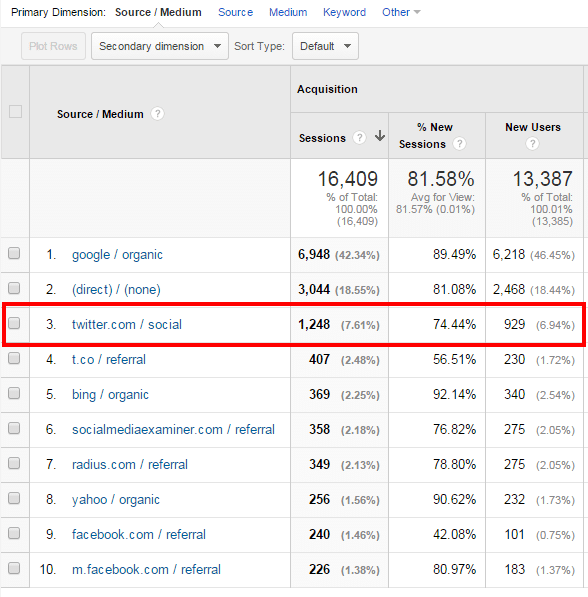
What makes this lack of traction stand out more is when you look at some of the other traffic drivers – in particular, Twitter (which is ironic, given a recent article about Twitter’s own lack of value for traffic).

Even in the image above, you can see automated Twitter feeds (where blog posts are aggregated by RSS-to-Twitter) accounts for almost the same amount of traffic as a dedicated RSS solution like Feedly.

When you dig a little more into the analytics, you can see Twitter actually blitzes RSS out of the water.
Danny Brown Twitter

Direct traffic from Twitter accounted for almost 1,250 visits – almost 10x the amount from my RSS subscribers. Add in the indirect traffic using Twitter’s link-shortener, and you can see why Twitter is a better RSS solution than actual RSS feeds themselves.

In the direct stats, almost 2,500 of the 3,044 total is from my email subscribers – beginning to see a pattern? If you want quality traffic and trust in your content, RSS is not going to get you it.

RSS = Really So-over-it Syndication

Okay, it’s a play on words for what RSS actually stands for (Really Simple Syndication), but for me personally so-over-it would be a better choice of words.

Anyone can subscribe to an RSS feed. One click of the mouse, done. And (more usually than not) forgotten. When I stopped using my reader account a few years back, I kid you not – I must have had about 500+ blog feeds in there. Do you think I regularly visited them all?

The best relationships are those one-to-one interactions RSS could never hope to achieve
Click To Tweet

Hell no – as Michelle Mangen mentions in her quote at the beginning of this post, the blogs I wanted to really subscribe to were done by email – and that’s been the way I’ve subscribed for the last 4-5 years.

There are multiple benefits to this:

  • Like I mention, anyone can subscribe by RSS. Doesn’t mean squat. Giving someone your email address, though, and trusting them not to take advantage of that? That’s the kind of investment you want in your content.
  • Email subscribers are more adaptive to change. When I recently changed my email and RSS subscription methods, I shared an update post via both email and RSS. 81% of my email subscribers updated their subscription – 81%. Guess how many RSS subscribers updated their feed? 9% – quite the difference.
  • The best relationships are those one-to-one interactions you get when someone replies to your blog post with an email about how it made them feel. I’ve had some of the most personal and powerful conversations via email after a post has gone live – RSS could never hope to achieve that.
  • When Google Reader closed its doors, I lost 6,500 subscribers overnight. 6,500! Now, given, many of them may not have visited anyway, but you take away 60% of a blog readership overnight and see what happens. Another reason I refocused my energy into email.

Content is changing. How we consume content is also changing. We don’t need “traditional” RSS anymore. We have social channels, as well as sites like This. and Flipboard, to aggregate and syndicate.

But they’re all external, and you’re competing for space with thousands of other like-minded souls. Email, on the other hand – you have these eyeballs, and they’ve chosen you over the competition already.

Now might just be the time you consider dumping that good old blog RSS feed for good or, at the very least, stop promoting it as an option to subscribe (you’ll see that I only offer email subscriptions in the box below this post).

After all, is it really doing you any good?

A version of this post originally appeared on the Wood Street Inc. blog.

Sign up for free weekly content

Subscribe to my newsletter and get a weekly email with the latest blog post, recommended reading, quick tips and more. I respect your privacy and will never spam you.

(Be sure to check your Inbox to confirm subscription - thanks!)

Enjoy this post? Share your thoughts below:

62 Comments on "Does Your Blog Really Need to Provide an RSS Feed Anymore?"


Ray
29 days 20 hours ago

Maybe I’m an oxymoron but I stopped getting email newsletters awhile ago. Just too much clutter and I found myself often deleting them without reading. I much prefer RSS (I use Unread on iPhone and ReadKit on OSX). It’s much more efficient for me (also love ability to segment feeds into topical folders) and yes I skim to see what’s worth reading but in my case your blog has much better odds of getting read this way rather than being unopened/deleted in email. ; )

Ari Herzog
29 days 8 hours ago

Agreed, Ray. I receive so much email already that I don’t want blog posts that way. I prefer following blogs by RSS.

P.S. Did you notice that if you “follow” a person or page on Facebook, that button has the RSS symbol?

29 days 8 hours ago

Hey there Ari, good to see you, mate.

Quick question – while I completely get why some folks still prefer RSS, the “too many emails” reason is one I’m curious about. If someone leaves a comment on your blog, there needs to be some form of email notification if they want to keep up-to-date with replies, either to their own comment or the conversation in general.

Doesn’t that negate the “too many emails” if you want to keep up with a conversation or topic you’re invested in?

29 days 19 hours ago

Hi there Ray,

See, for me it’s the complete opposite (although still using your methodology). I only allow emails into my Inbox from the blogs/sites I really want to keep up with, because of what they offer to my specific needs. This limits the amount of emails I’ve signed up to, and any others get thrown into a private Flipboard for reading later. Although, in fairness, few get read.

It’s simply a matter of time for me. I find I read email more than RSS, so that’s my preferred subscription option. With the likes of Postmatic offering subscription and commenting via email, it makes even less sense for me to subscribe by RSS (given it’s another hoop to jump through if I want to comment on a post).

But that’s the beauty of choice and data. I know my decision to remove proactive promotion of my RSS was driven by the data shared in this post – but it may be completely for others. Let the data help make that decision.
:)

Ray
29 days 13 hours ago

Humans will always be outliers when it comes to data. Thanks for keeping the RSS feed active.

Justin Butlion
1 month 6 days ago

This is a great post Danny and I agree with you that email outweighs RSS in both popularity and performance for most bloggers.

When my co-founder and I started Feedio about a year ago we wanted to build a service that helps bloggers manage and grow both of these types of subscribers. I agree with Max’s point that you simply don’t know who your RSS subscribers are and may be highly creative and influential individuals who can help grow your brand. It is for this reason we have provided support for both.

There hasn’t been much advancement in RSS analytics in the last few years but we feel that we can do some interesting things around RSS analytics thanks to our data model.

Some ideas in the works:

1. Breakdown of RSS subscribers by country (relevant for people using local RSS readers).
2. Support for as many services as possible. This will allow Feedio users to understand which readers their users are using.
3. Similar content overview – We will be able to show users other content from our network which belongs to blogs with common RSS subscribers.
4. More API integrations with services like Pocket, G2Reader, AOL Reader, Zapier, FTTT, and more.

1 month 6 days ago

Hey there Justin,

Thanks for jumping in here (and for the shared thoughts on Twitter) – as you’ll see, I’ve signed up to have a look at Feedio (though it’ll probably be one of the blogs I manage to test on for ow), looking forward to seeing what you’re doing.

It’s great to see the integration with other services – if they can pass detailed stats along to Feedio regarding their users, that could start to see RSS analytics catch up with email, always great to see for the heavy RSS user.

I think (for me, anyhoo) the stats that would really stand out are the lines of:

– Detailed demographic breakdown
– Technology most preferred
– Length of content most interacted with (long form, short form, written, rich media, etc)
– “Ambassadors” (who’s referring your feed the most)

These are just some early examples that you can easily get from email, but RSS fails short on. I understand the restrictions of the platform itself don’t help, but then that’s the premise of me removing my RSS feed from front-end promotion, and defaulting to email.

Justin Butlion
1 month 6 days ago

I’m looking forward to hearing your feedback on Feedio. Analytics are one of the pillars of our service and we want to be the best out there in this area.

We are planning on building a robust reporting engine which will allow users to dissect engagement, share counts and a number of other factors with length of their posts. I’ll keep you updated on these developments.

Paul Shapiro
1 month 7 days ago

Read this post via RSS reader 😛

1 month 7 days ago

Hi Paul,

Quick question – did you read the full post, or simply the headline and click over? I’m curious, as I only have headlines activated for RSS, to prevent scrapers.

Cheers.

jason1
1 month 7 days ago

Replying to your comment via email ; – )

1 month 7 days ago

And I’m watching it all take place via email and then replying via email. :)

Tobey Fusco
1 month 11 days ago

Hi Dan, I was not on social media when you had Google Reader, however, I do agree one-on-one via email is the best. The read is taking time out of their day to read your stuff. Why should we as writers be cocky enough to feel we should not respond one-on-one, the reader is valuable.

Additionally, I feel more gratification reading an email, the reader tends to share more knowing they are getting one-on-one attention. With this in mind, I get alot of more ideas on what to write about in the future. When I learn what a reader needs or is going through, it helps me direct my writing towards that group of folks. If there is one person who needs to hear a topic, there has to be more.

P.S. I tried so hard today to get onto the 3 way conversation, I got lost in the technology, I managed to register, but that was as far as I got. Is the 3 way interview stored somewhere so I can go back and read? I managed to see their introductions and You really brought wonderful speakers to learn from.

Thank You for that, Happy St. Patrick’s Day tomorrow. LOL

1 month 11 days ago

Hey there Tobey,

It’s so true – because you’re invited into someone’s inbox, it does feel more intimate and one-to-one communication. I know when I receive emails from subscribers about the message in my recent newsletter, or just saying they enjoyed one of the recommended reading links I send out, that makes me smile. That “touching” of someone’s emotions is all we can ask as content creators.

With regards the ReplyAll conversation, yeah, it’s a panel where I ask the questions and the three guests hop on over and share their answers. It’s not quite an “open view” (though I did suggest to the developers the option of having a social chat box, where followers of the conversation could maybe leave a question). You can hit the blue “subscribe” button at the end of the conversation window and have the complete discussion emailed to you.

Or, you can click this link and do the same:

https://www.replyall.me/futureofcontent/the-future-of-content-part-4-pure-blogging/

Chris Lang
1 month 12 days ago

OK Danny, I will take the other side of this coin… I myself am returning to Feedly and leaning out my time on social. Because I ask you this: How do you follow the great small blogs out there that do not have email forms Danny?

I am completely centered on people writing about email delivery these days. What is ironic is the best writing on the subject? Well those writers don’t have email lists.

At the same time, my niche is not on Google+. And Facebook is making it clear after banning JV ZOO links, unless you are paying for an ad, social is not the place to promote ANYTHING.

Sharing a link to my new -for mobile- whitelist generator on Facebook or Google+ gets exactly squat. It is never seen by my following and does not even pull one like or +1.

However one of the top dogs at Ontraport saw a link to my free tool on the Mail Chimp blog. PM me on Facebook to tell me how awesome he thought it was. Big deal for me…

So I ask you Danny, with the 90% filtering of what we post on Facebook, Google+ dying a bit ever day and the fact that following a blog on social depends on you first seeing the post, somehow finding something you am interested in within the noise, then fact that we depend on some social media manager to post it?

I am off to our Sunday meeting and bible study. I learn something new about history and have found a lot of peace in my life in the last year and a half by doing so. Actually reading the Bible for the first time in my life has changed how I view Christianity completely.

So, I pose the idea that depending on social for your information is much like going to see the movies Noah or Exodus. Where as reading blogs is more akin to studying the bible. More facts and far less self promotion.

1 month 12 days ago

Hi Chris,

Much like many of the RSS users have commented here about not subscribing to a blog that doesn’t offer RSS, I pretty much won’t subscribe if there’s no email option. If a blog really catches my eye, and there’s no RSS, I’ll use the RSS-to-email option that Feedblitz enables you to subscribe with:

Here’s the thing about social – its halcyon days of free use are over. Whether this is a good or bad thing is debatable, and I have views on both sides of the coin, as a content creator and consumer.

But this is why I’ve always recommended social is a relationship aggregator versus a lead generator, and that counts where content is concerned as well. You start at your home base (blog) and work everything out from there and back to there.

My own traffic sees social a very distant fourth, after organic search, direct and referral. I’m also much more strategic when it comes to what I share and on what platform, given the different nuances they each possess.

Content is like anything – we get exactly out of it what we put into it. If we’re relying on others to always be the ones driving interest in what we have to say or share, then we may as well quit and get “real jobs”. 😉

Chris Lang
1 month 12 days ago

And yes, your blog has to have an RSS feed, because that is how algorithmic machines like Google Now and Cortana discover your content and in the future of information delivery will be recommending great content to use via personal digital assistants…

1 month 12 days ago

I’m not completely sold on RSS being the best way to discover content as we continue to move forward and new solutions come to the fore. There’s an interesting conversation going on over at this archived Yoast post, which adheres to the scraping that happens because of RSS and the danger sites have of being punished by the very platform they want to be discovered on.

https://yoast.com/rss-feeds-panda-penguin/

Tim Bonner
1 month 12 days ago

I like the idea of subscribing to RSS feeds and have a Feedly account but the reality is I rarely visit it anymore.
Every time I go back there’s far too many posts to look through so I end up just marking all posts older than a day old as read. It’s not really serving it’s purpose.

I know many people who like to comment on a lot of blogs and I suspect they use RSS much more. I used to do something similar but now only comment on a few blogs. That’s usually after I receive an email update from them of a new post. So you’re right, the interaction comes via email rather than RSS. I do subscribe to your RSS feed as well but I can’t remember if I changed it over or not! Better go check.

I like the sound of Postmatic although I see that they create a WordPress user account for each subscriber. Will that not get a little cumbersome in the long term if you gain a sizeable following using their system?

jason1
1 month 12 days ago

Hey Tim,

This is Jason from Postmatic.

We create a new WP user for each subscriber as the subscribers should be stored *somewhere* so why not use the native user system? This opens up the door for you to utilize any other WordPress plugins to provide value to your subscribers and make your own job easier.

Things like letting users login using Facebook or Twitter to leave comments, or something like Leadin to track user activity on your site… or even any of the dozens of user management and export tools… and using native users is especially a big win for anyone using WP to serve up content to paying subscribers. 

Adhering to existing standards is what makes for a great WordPress plugin. If you can’t play well with others you are missing out.

1 month 12 days ago

That’s the very reason I stopped using RSS myself, Tim – it’s essentially turning us into skimmers of headlines, and that can lead to missing out on great content. Yes, they can be categorized and placed into folders, but when it becomes tiresome because you’re subscribed to so many, it loses its charm. Although, like you say, if some folks like to comment on a multitude of blogs, they can be helpful.

I haven’t really ran across any issues with Postmatic yet. It may happen when/if I switch over to email subscription with them too, but for now it’s good. Each new account is created as a subscriber, anyhoo, so there’s no real maintenance needed ton the back-end.

Josh
1 month 13 days ago

I wrestle with the best way to provide an opportunity to engage, follow, read and discuss my posts and hate RSS.

When it became popular it led to fewer comments and less engagement on my blog. I don’t have hard numbers to support that so it is possible I am wrong.

I am not a big fan of anything that makes it easier for readers not to visit our blog but I offer it because I know it is what some people prefer and I would rather not miss out on the opportunity to include them.

FWIW, I go back and forth about whether to keep DISQUS because of some of the issues you mentioned but the one thing it has cut down upon for me is spam.

I am certainly not married to it. Tomorrow might be the day I decide to try something else or maybe it will be next week. The ease with which changes can be made and experiments had is part of what I love about blogging.

1 month 12 days ago

Hey there Josh,

The visits to the blog point is an interesting one. I know when I used it more as an option to subscribe, I wrestled between full feed and partial. I asked subscribers their preference, and some liked full feed so they could read, while others preferred partial or excerpts so they could skim and decide whether to jump through to the post and read/comment. No real consensus.

However, another reason I’m not keen on RSS, on top of the ones raised in the post, is content scraping. The amount of times I’ve had to contact web hosts to remove my stolen content from sites on their servers got out of hand. Offering a full feed is simply inviting theft of content. Now my RSS is headline only (since that seems to be the way the majority of RSS users skim).

Yeah, Disqus is weird, mate. I don’t know why, but whenever I visit a Disqus-powered site on my phone, 9/10 the comments won’t load, it’ll just be the spinning wheel. And the whole sponsored comments thing just doesn’t seem right. I get a business needs to make money, and if you’re using a product for free then you are the product – but there are far better ways of doing so than interrupting the user experience on a blog.

Bruno Winck
1 month 13 days ago

I like the logic of your analysis but IMHO the premises are not exact.

– One of the benefit of using RSS is fast access to many posts. I use an aggregator (RSS was made for that) and I can skim quickly through many posts at once until I find one I’m interested in. This means your page is just not accessed at all and I wouldn’t read this post by visiting the site but just by having what is available in the feed (and this can be tuned).

– Aggregators, curation plateform, search engine use RSS. Stop and restrict RSS will overtime have a consequence on organic traffic.
– The big winner is Twitter, not email. That’s my main takeaway of your post. I found your post via Twitter.

– You don’t need to display proeminently the RSS link and as a reader I wouldn’t even care to look where it is. All RSS readers take any URL to find their ways to the feed. In your case it is in the head tag of every pages.

– Conversations are great and keeping this link is important. For that I think Disqus beats both JetPack and postmatic. Huge benefit is being able to followup on discussions months after. Commenting and discussions now also take place on Twitter, FB and curation hubs. IMHO it’s a real challenge for the future of blogging.

– Mail goes in the spam box, or worst in the trash box more often than in the inbox. Mails with links with query strings are flagged as potentially harmful. This is what happened for a subscription mail I received today with postmatic. Found it by chance while clearing my trashbox.

– Like many users I subscribe to newsletters for three reasons: To show my support, to get some benefits (swap ebooks), to get access to some contents shared to subscribers only. A fourth case are scheduled emails. It’s becoming common that some blogs offer a 30 mails plan to teach you a topic.

– Once I subscribed, I move all newsletters in a folder to keep my inbox clean and stay focused. Every so often I check what I have there. I will add a rule to my inbox for every newsletters coming more often then weekly. This rule will turn the mail into an RSS. I keep emails for rarely updated blogs of great value. I’ve seen some other mail readers using different panels, different folders. Result is the same the mail gets out of the view asap.

– Big drawback of email. If you include the post in it, you may never see me reading it but worse : I willl not share it because I have no link to share. It happened often recently. So every email subscription is likely becoming a final reader with zero virality. If you don’t, don’t bother adding postmatic, it’s just a reminder.

1 month 13 days ago

Hi Bruno,

Thanks for such a thoughtful comment and analysis – for a blogger, that’s all we can ask for, so thank you. With regards your points, my thoughts below:

1. RSS does offer fast access. But, as you mention yourself, you skim until you find one you’re interested in. Let’s say you have 50 posts to skim, and only find one (either by headline or snippet) that interests you. That’s 49 ignored. Via email, that would be 49 invested in, with the potential for more interest and click through.

2. For the last three years, more than 50% of my traffic has come from search. RSS hasn’t driven that – optimization has. Yes, search engines get pinged, but with Google’s ongoing focus on quality and relevance over search gaming, I’m not too worried over RSS leading to lost search. I agree Twitter is the #1 social referrer for my content – yet it still only accounts for around 3% of my referral traffic, because I have deliberately never relied on social for traffic.

3. Sorry, have to disagree. Disqus is awful. Yes, it’s a great engagement platform, but performance-wise, it’s a sloth. It consistently takes a long time to load on mobile, and even on desktop you can see the “Disqus is taking a long time to load” spinning wheel message. Add to that the fact they want to take over your comments with their paid sponsors (http://www.adweek.com/news/technology/disqus-goes-native-sponsored-comments-156873) and they become even less attractive. And that link I provided? Look at the comments there – every one a spam one. Disqus seems to attract more spam than other comment systems – and having had a peek at what Postmatic have in store regarding this, I think they’ll have a major advantage over other social comment systems like Disqus.

4. Spam filtering can be an issue, but I see that as a mix of both recipient and sender. The sender (on initial subscription) can advise the recipient to add the email address to their contacts, to avoid spam. The recipient can simply click the “Not spam” option and have the email address white-listed. I’d also suggest that an email that you’ve received previously without issue means the email provider algorithm is kinda wacky (but again that can be fixed with a simple “Not spam” click). Also, from my own personal point of view, when I invest and open up my email inbox, and haven’t received an update for a while, I’m more likely to check on why, versus not even realizing the lack of update via RSS.

5. That’s exactly why I swapped to a weekly newsletter versus daily updates. I share tools to help subscribers with their own content goals (only available to subscribers) as well as personal thoughts about a topic, and recommended reading elsewhere. Having said that, I don’t subscribe to newsletters for freebies, but because I’m invested in the blogger. Another advantage of email over RSS – the true investment in that specific blogger versus 100 others on RSS.

6.So essentially you have the same “problem” with email as you do RSS. You filter, skim, and check in based on interest. That’s more down to the blogger versus the delivery system, no?

7. Now this we agree on, and is one of the suggestions I made to the Postmatic developers in my overview post (http://dannybrown.me/2015/02/10/why-i-dont-want-you-to-come-back-to-my-blog-post-after-you-comment/) and they’re already looking at ways to add native sharing ti emails. Having said that, Postmatic offers WordPress widget areas at the end of their email template. So, if you used something like Jetpack, for instance, you can add their sharing solution to the bottom of the email. In fairness, though, even with RSS it’s down to the blogger to initiate sharing from their chosen feed provider – many don’t, so they also lose the option for “virality”.

For me, the beauty of email – and its strength over social and RSS – is the investment in the blogger, and the increased loyalty because of that. Anyone can set up an automated tweet; anyone can use something like Buffer or IFTTT to schedule posts to be shared. No guarantee of a click or interest. Email, on the other hand – you’ve opened up your private communication channel, so you’re more likely to take an action on that sent email.

In that regard, there’s no comparison of value.

Bruno Winck
1 month 13 days ago

I’m glad I came back to your post! I came back to pick the link.

It gaves me the occasion to read your nice and detailled answer.

I got your points. Being mostly a reader and a serial commenter (and a tech guy) I stand on the other POV and don’t agree. Still I think it was good to reach a point where both opinions are detailled.

I reacted also because i see a trend on some blogs to push for this email change and honnest I don’t welcome it.

Before blogs existed everything happened via mailing lists. Mail is way older than web as I was reminded by a nice illustration on social media chronology I saw recently. So what you suggest is to return to compuserve epoch. I’m still registred to some mailing list discussions that have not been interrupted since then. I get about 1000 mails per day. Half is spam but the other half is also mailing list that just don’t exists as blogs.

1 month 13 days ago

Hi Bruno,

For sure, mate, and that’s the beauty of blogging – the open and thoughtful dialogue that can happen after the post. It’s where I feel those bloggers that have shut off comments are really missing out.

To the email and Compuserve comparison, I think we’re talking about two different “mindsets”, Like you say, forums and mail for these forums have been around since forever. And, yes, if you’re subscribed to hundreds of forum topics that only update via email, that would get pretty bad pretty fast. Yet we control that; we decide what we let in our Inbox, and what we don’t.

The same goes for blogs. As the quote from Michelle Mangen in the post shares, the ones I really want to read are the ones I’ll open up my inbox too, and I trust that blogger not to spam me. It’s a more intimate, purer form of content consumption (for me, at least), and a major reason I moved away from RSS.

Cendrine Marrouat
1 month 14 days ago

Hello Danny,

Thanks to you, I discovered Postmatic a couple of months ago, and I’m super grateful. I can’t wait until the team improves this tool. However, the bare bones are already awesome. I love the ability to respond via email without having to log in to my WP dashboard.

This article is bang on. The other day, I was having a conversation with myself (yes, I often do) regarding the benefits of RSS and if it’s worth keeping. I have decided to continue using it as some of my readers don’t like change.

With that said, I sent an email to people warning them that I was changing subscription providers (from Jetpack to Postmatic). No one who had subscribed to my RSS feed took action. NO ONE. Things were quite different on the email subscriber’s side.

It was also a way to see if people were still interested in getting my content. Overall a great experiment!

Like you mentioned, it’s important to dig into stats to see what works or not. It’s the only way you can really understand the impact your content has on people.

1 month 13 days ago

Hi Cendrine,

And that’s the beauty of email over RSS. With email, you’re limiting the amount you subscribe to, because your Inbox is a valued commodity that you don’t share with everyone. So you’re ready for an email from the content creator, and more often than not take the required action.

RSS? Unless you’re actively checking your feeds regularly, you can miss an update, which happened to me when I advised of feed change, and happened to you.

That right there answers any argument (for me, anyhow) over which delivery system is better.

Nathan Gilliatt
1 month 14 days ago

If you dig into your blog platform, you can probably disable RSS entirely, but why would you want to do that? It takes effort to turn off the feed, and for that effort, you get the benefit of cutting off your subscribers who use it? Have you asked your readers who they are, so you know who you’re cutting off?

I follow hundreds of company blogs (and PR feeds, when they have them) to discover industry news that I post on a niche news blog, and it amazes me to find software companies that don’t offer RSS feeds at all. Increasingly, there is no feed option whatsoever—and I’m looking in the page code. With no feed, I don’t subscribe, and your news doesn’t get picked up.

From the publisher’s perspective, RSS is dead simple. A template in your CMS and forget it. Let the RSS subscribers have what they want, and emphasize email subs if that’s more in line with your goals. But if you want to turn off an existing feed, you might want to survey your subscribers to have some idea of who you’re sending away.

Oh, and on the reader front: did you ever try a feed reader installed on your computer? I know we’re all cloud everything now, but free services going away is one of the things I like about installed software.

1 month 14 days ago

Hi Nathan,

As the post highlights. mate, I did a lot of digging and data comparisons switching to offering email only for new subscribers (at least, from what I show after post or in the sidebar). And as has been mentioned elsewhere, there’s actually scant data available to really dig into the make-up of your RSS subscribers, outside of some generic share, subscribe and click info.

With regards “surveying”, the stats I shared at the end of the post about updating my feed, and what percentage of email subs versus RSS subs actually did so, offer the insight to show that RSS (for my blog, at least) is a very small, fairly inactive section. Does it make sense to switch off (or at least not promote) RSS on all blogs? Heck no, but that’s not what I’m suggesting. I’m advising to look at data and see if RSS is as useful for your blog/site as it may have been 5 years ago or so.

Bob Dunn
1 month 14 days ago

Hey Danny, great post and a lot to chew on. I don’t mean to come in and be a “me too” but I am like others and love RSS. And like you, I have played around and tested. And of course, numbers talk.

I agree, my email opt-in is my biggie, and what I make most prominent. This is my list for my newsletter and to be honest, I have not made it any easier to sign up for my blog via email or reader via RSS. And the numbers show it. I hardly get anyone signing up for my RSS anymore, either way.

But, like others here, that is how I keep up on the blogs that are important to me, I use Reeder. Every day, a couple times I go in and check out what’s new. And I do 1 of 3 things if your post catches my eye. Share it. Comment. Or add it to Evernote because it’s so freakin’ good and worth it as a resource. Otherwise, I find your post somewhere else on social and basically do the same thing.

In fact if I go to your blog and really love it, I am totally bummed if I cannot find that little RSS button. It takes a lot for me to actually copy your URL and go into my reader to subscribe. Now if you have an email option only for your blog, and no RSS reader, chances are I won’t bite. Because I’m with the others, I don’t need more emails. If your email optin is for a newsletter, maybe I’ll bite.

In a way I am with you on recommendations. Don’t make your RSS reader subscribe button prominent. But on the other hand, don’t take it away. Most people don’t even know what the heck it is, and will ignore it. But for the hardcore, like me, I am grateful it’s there.

And like others, I came to this post via my RSS reader 😉 Yes, when you use to have that little button. But as you said, and I truly believe, options are good :)

1 month 14 days ago

Hi there mate,

Great thoughts, as always. I guess for me, this part stands out:

“I agree, my email opt-in is my biggie, and what I make most prominent.
This is my list for my newsletter and to be honest, I have not made it any easier to sign up for my blog via email or reader via RSS. And the numbers show it. I hardly get anyone signing up for my RSS anymore, either way.”

I’d seen the use of RSS declining for a long time prior to removing the promotion of it on my blog. Doing a quick check of analytics before replying here, I can see most new visitors in the six months prior to removing came either from search or social. RSS was a very low number.
Which suggests (rightly or wrongly) that it remains a niche solution that few people use, and fewer really know about.

New options like Feedly and Flipboard make the experience more mainstream, but can do so at the expense of a “true” RSS look and feel. Perhaps it’s the definition of RSS that’s changing, and one that opens up a different discussion. But as far as the RSS we grew up with, it’s something that I think will lose even more traction as us “old techies” are replaced by new consumers of content.

We’ll see. :)

Brittany Berger
1 month 14 days ago

Oy. The last thing my inbox needs is more emails from blogs. Yes, I prefer subscribing to a blog via email. But I already have enough email. I don’t need another daily message for every blog I want to read. I subscribe via email to the “must read” blogs, and add all the other blogs I like checking to Feedly. I check that every few days, and only subscribe via email to the select few I can’t go a day without reading.

I also have a plugin that tells you how many readers have accessed your feed recently, and that suggests I have more active RSS subscribers than people opening my email subscriptions. In that niche audience, I think RSS is a lot more popular than email subscriptions.

1 month 14 days ago

Hi Brittany,

Thanks for jumping into the conversation and sharing your thoughts, very much appreciated. A certain part of your comment stood out:

“I subscribe via email to the “must read” blogs, and add all the other blogs I like checking to Feedly.”

For me, this backs up the very gist of this post – email is the option for true loyalty and interaction, while RSS is its second cousin twice removed.

For sure, RSS has its place, but it’s increasingly on the fringe when it comes to the content people truly want to receive and be aware of.

Rob Biesenbach
1 month 14 days ago

Count me as another of your RSS readers. I couldn’t imagine getting dozens of separate emails every day, opening each and reading.

I can see why it’s bad for bloggers, though. The whole RSS setup invites the reader to look for a reason to click the little “x” and discard a blog post without reading. You’ve got, say, 30 minutes and 50 potential blog posts to read, you set it in headline mode and x out those that don’t pertain or look interesting just on the headline alone. Then you go in and start reading those that do, and a few among those you click onto the website (usually to comment, share or check out a graphic or function that didn’t come through on the feed).

RSS is clunky, and seems to require constant maintenance to keep it organized and fresh, but I guess for some people it still works.

1 month 14 days ago

And that’s one of the biggest weaknesses of RSS, mate. Unless the blogger has full feed set up, it’s down to headline. As my recent post about “52 expert content marketers and their 100 top tips” showed, headlines mean nothing.

Email, though – you want to stay in someone’s circle of trust, you need to deliver every single time. Big difference and, for me, one of the ways content creators will be forced to be the best they can be each time.

Kajsa
1 month 14 days ago

I completely disagree. I only follow blogs through RSS, if they don’t have it, I don’t follow them. Simply enough. Subscribing via email would never be an option, my inbox is cluttered enough as it is.

1 month 14 days ago

Hi Kajsa,

And that’s the beauty of personal choice. As I mention in the comments elsewhere, RSS is available for those that want it, just not promoted as an option.

The big problem I see with RSS is the fallibility of the providers, and what happens when they go away. Google Reader, Friendfeed, Delicious – all served as Readers, all gone. For people who subscribed, and weren’t aware of these services closing down (or how to migrate), that’s a whole bunch of content gone.

Email, on the other hand – pretty consistent. For me, and many others I spoke to, that’s the core strength of email over RSS, even when you take away all the other benefits.

Paul Sutton
1 month 14 days ago

Howdy. Doesn’t that (available as an option but not promoted) make the argument a bit redundant though? I’m the same as Kajsa in that I never have and (probably) never will subscribe to blogs in email. I use Feed.ly and it’s a fantastic RSS reader that syncs across mobile and desktop.

If you want to drive people through email subscriptions, that’s fine. But unless you actually make an effort to remove RSS functionality anyone can sign up in RSS anyway. So…??

1 month 14 days ago

Not really. As I mentioned in a discussion over on Facebook about this, if you don’t see an RSS feed promoted anywhere on a blog (sidebar, next to the email sub, etc), and you don’t know what RSS is (it’s still a very small tech-savvy minority that uses today, despite the best efforts of multiple vendors), it’s as good as killing it.

Point in case – I have had zero new RSS subscribers since I removed the promotion of the option. Because the mainstream doesn’t know, or doesn’t care, about it.

Max Minzer
1 month 15 days ago

Danny, I check every one of your posts through RSS. That’s how I consume blogging content.

Maybe it’s not worth it for you and your audience. But I instantly thought about this post from AJ Kohn a while back:

http://www.blindfiveyearold.com/the-ridiculous-power-of-blog-commenting

It’s about blog comments and is not directly relevant to RSS but the point of the post is – comments is where creatives hangout. The 1% of whatever.

So, while it might just seem like 2% of the traffic for your blog – who are these people? How important are they to your blog and in your audience/network?

I’m not talking about myself. But what if there are people in that RSS audience who can help your brand in some way. What if, based on their preference to use RSS, they are specific type of people with solid reach and network?

I personally don’t see promoting RSS for my fairly fresh brands. Email is the way to go for sure. But someone like you with solid history of blogging might consider knowing who these RSS people are before ditching them.

1 month 15 days ago

Hi Max,

That’s the problem – I haven’t found a solution that gives me the kind of data for RSS subscribers that I can get from email. Google Analytics gives me more info than a dedicated RSS feeder (to a large degree) and that’s the major Achilles Heel of the technology.

I can tell browser type, OS, clicks and views. Apart from that, pretty much nada. Having said that, even if I knew the demographics more granularly, the figures I share in the post show the actions and “value” (for want of a better word) of the two separate subscriber options.

As Jason mentions in his comment, RSS will always be there, either for existing subscribers or those who really prefer RSS options and know how to access it. For me, though, it’s a very minute percentage and the reason I won’t promote my RSS feed any more.

PS – just saw your second comment in my email inbox. You can kill the Feedblitz one, mate, that should have ceased by now. Another reason I’m glad to be away from them… :)

1 month 15 days ago

PPS – just read AJ’s post, and I agree, comments are hugely valuable. I wrote a post last year highlighting where I see the future of commenting and the direction we need to take:

http://dannybrown.me/2014/08/07/blog-comments-digital-universes-and-the-future-of-social-conversations/

One area I would disagree a bit with the post is in the 90:9:1 rule. That’s using data from a few years back, when comments were restricted to the blog. Now, with social conversations, there’s a much more active ratio of people interacting with the post, or may just not seem like it.

Additionally, that rule has been flipped on its head by curators of content. The rule is still 90:9:1, but now it’s 1% creating, 9% interacting directly, and 90% consuming via curation or other social activity.

Something to consider when thinking about content distribution and conversation.

jason1
1 month 15 days ago

It would be wildly interesting to know who subscribes to you via RSS but that is one of the greatest limitations of the protocol: it’s nearly impossible to know! Has there been any progress on better analytics for RSS in the last few years? Honest question. I’d love to see what’s out there.

I want to point out that one of the great things about WordPress is that while Danny can publicly not advertise his RSS feed it is always there. It’s built into the platform (and pretty hard to get rid of). So it is not as if anyone subscribing to RSS is getting ditched… right?

Max Minzer
1 month 15 days ago

BTW, I’m now RSS-subscribed to your blog twice since this: http://dannybrown.me/2015/02/02/important-message-for-rss-subscribers-this-feed-is-moving/
Both are working fine & simultaneously. I need to figure out which one to remove.

CD
1 month 15 days ago

Depends on how you use blogs. Readers are important for people who do a lot of research on a particular topic (policymakers, academics, lawyers, medical health professionals, etc.) and need to keep up with everything they possibly can on the topic. Having lines and lines of articles, blog posts, research feeds, etc makes it easy to skim for items of interest.

I’m not sure why you had such difficulty categorizing topics; perhaps categorizing isn’t your strong suit? I’m guessing that those interested in more scholarly, journalistic, and professional topics would have vastly different numbers than a blog that focuses on social media. (Well, not guessing, giving that I do this for a living.) Don’t let your own numbers fool you. You’re going to get more traffic from social media because people who want to read about social media are constantly on social media. The same cannot be said for academics or policymakers.

One thing that you probably don’t know is how important RSS feeds are in parts of the world with oppressive governments. For example, the death of Google Reader was a significant contributor to the decline of Iran’s “Blogestan.” Google Reader gave Iranians a way to read blogs without the danger of actually visiting the blog or as a way to access the blogs that had been blocked in the country.

The other point you seem to be missing is that email use is changing in the age of social media. People get far too many emails to handle and will become increasingly less likely to subscribe to blogs and mailing lists when they’re getting bombarded with too much as it is. As the new generation comes of age, they aren’t going to be subscribing to your blog through email. They barely use email as it is.

Btw – I found your article in my Feedly reader.

jason1
1 month 15 days ago

Only time will tell on this but i’m betting on the idea that email isn’t going anywhere anytime soon. People have been heralding its death for a long time now but during that time the pace of email-based innovation has only quickened. Mailbox, Gmail, Inbox, MailPoet, etc. Email is not going away anytime soon. It has always and will continue to evolve.

Social media does not even pretend to be capable of presenting meaningful content nor facilitating thoughtful conversation. We will always need platforms for the presentation of ideas and tools for thorough discussion. 

The people of Iran (and any oppressed populations) will always find new ways to access information. The best options are found not in the walled garden of social media companies but in technologies that are free and open like RSS and.. well, email. 

The gentle, dependable workhorse that everyone relies on and nobody owns:

http://www.theatlantic.com/technology/archive/2014/08/why-email-will-never-die/375973/

1 month 15 days ago

Hey there CD,

Thanks for your thoughtful comment and insights, appreciated. I agree, the data is (primarily) based on my own analytics and AB testing (which is the reason I made the switch to email). I have spoken with a lot of bloggers (and subscribers) at blog events and Hangouts, and many agree RSS is too clunky (even the newer, slicker ones).

One thing I do find interesting is the demographics you share. I actually get a very small percentage of my visitors from social, because that’s not where my focus is. My top two referrals are organic search (over 50%) and email (natural, given my focus there). These numbers tie perfectly in with the direction and goals I have for this blog, which is pretty anti-social media in many respects.

Looking at my analytics, the #1 demographic is the 25-34 year old age group. 18-24 is the #3 age group. Additionally, the Financial Services industry is my #2 audience, followed by Education (#3) and Reference/Libraries (#5). The vast bulk of these are email subscribers (approximately 68%) with over 3/4 of them subscribing by email long before I went “email exclusive”. That data confirms (to me) that there’s no such thing as a standard audience behaviour, and that the demographics you mentioned would want RSS are happy to use email too.

This then ties into the trust factor, and the last link in the blog post (about clickbait headlines on RSS versus trusted email content). I don’t want your email? I’ll unsubscribe and, if necessary, report you. Get enough black marks, and good luck at sending an email out. For me, that adds a lot more governance on the side of email (or, at least, should).

You raise a fair point about RSS and global issues. The same can be said of social, mind you, where many conflicts, terrorist acts, threats and more have found a voice even when dictator governments have tried to stifle.
Which goes back to the “is RSS really needed when social does the same or similar”?

At the end of the day, it’s down to what we see our audiences doing and reacting to that, as well as driving towards the kind of experience we want to offer, as content creators. The beauty of it all is we’re not tied to anything regardless of delivery option – the reader/subscriber always has the power to remove at any time.

Chris Lovie-Tyler
1 month 15 days ago

I hear you, Danny. I subscribe to a lot of blogs via RSS (in feedly), but I can see the downside to it–particularly for the bloggers–so I’ve removed the RSS icon from my blog, and am focusing on email subscription now. In fact, Postmatic are just in the process of getting me up and running with them!

Those who love RSS will continue to use it and already know how. The rest of our readers we should encourage to subscribe by email.

1 month 15 days ago

I hear you mate. That’s the thing – there’s always a native RSS for anyone that wants it, but given it’s never really taken off the way many had hoped, despite the amount of readers and solutions trying to make it wide-scale. Given that, if folks really want RSS it’ll be easy enough to find.

jason1
1 month 15 days ago

I was an extremely heavy Google reader user. It was the backbone of my entire content consumption. It was odd, though, that when they shut down I easily just walked away from all the sites I used to read. I tried out feedly and thought it was a nice product, but it was only slightly different enough that I lost interest over time.

Maybe it was a switch to working on a startup and having less free time on my hands. I’m not sure. I do know that I truly enjoy having content delivered to my email. Obviously. I find as I subscribe to more and more of our beta testers that I don’t have time to read everything that comes through anymore, but I find it useful to forward anything I want to hang on to to Evernote or Instapaper.. both which have incoming email support.

Chris Lovie-Tyler
1 month 15 days ago

I love Instapaper too.

For some reason, Danny, I’m not getting comments by email for this post. Should I have done something in Manage Subscriptions?

Chris Lovie-Tyler
1 month 15 days ago

Don’t worry, I just saw the option I was supposed to select. Why don’t you just have that one checkbox out in the open. ‘None’ seems redundant.

1 month 15 days ago

Hi Chris,

I’ve made a slight amendment to the wpDiscuz options (where there should now be a checkbox). Not quite sure if I understand the ‘None” comment – do you mean there’s no box when you initially commented?

Cheers!

1 month 15 days ago

Ignore previous comment – got it:

I’ll see if that can be edited out via functions.php.

Chris Lovie-Tyler
1 month 15 days ago

Interestingly, the comments seem to be out of alignment too. This one is sitting above the one you said to ignore. I would have expected it to be below it.

(Sorry for creating a messy thread! Feel free to delete some of it.)

Chris Lovie-Tyler
1 month 15 days ago

Although I selected ‘Participate in…’ with one of my previous comments, I’m still not getting comments by email. Any idea why?

1 month 15 days ago

Hi Chris, that’s a bizarre one for sure, and only seems to be happening since the recent wpDiscuz update. I’ve added another option to the main wpDiscuz settings, and reached out to their support team in the meantime.

Cheers for the heads up.

Chris Lovie-Tyler
1 month 15 days ago

When I tap Manage Subscriptions, I see two radio buttons: ‘None’ and ‘Participate in this conversation by email’. I just wondered why you don’t just have the ‘Participate in…’ checkbox, at the top level, so it’s immediately visible. Or is that to do with wpDiscuz?

1 month 15 days ago

That is weird. That’s only happened since the latest wpDiscuz update – I’ve reverted back to a previous version, as that seemed to have none of these issues. Plugin updates – gotta love ‘em, eh?

jason1
1 month 15 days ago

I’m with you. That is a limitation of wpdiscuz. I’ve been working with them to try to improve the experience. Hopefully in their next release.