• Skip to primary navigation
  • Skip to main content
Danny Brown

Danny Brown

podcaster - author - creator

  • About
  • Podcasts
  • Journal

analytics

How Visual.ly Can Help You Measure Metrics That Matter

This is a guest post by Stew Langille.

Content marketing is mainstream. From infographics, articles, and videos to images, whitepapers, and web experiences, 90% of marketers now use content to build their brands and help achieve their business goals, according to the CMI.

Yet, fewer than half of marketers believe their content efforts are effective. That?s quite a large confidence gap, but one that is easily explained.

Despite its widespread adoption, content marketing remains a relatively new practice. Content marketing requires experimentation ? in messaging, format, and frequency?to see what resonates with a particular target audience or best achieves a specific business goal.

At Visual.ly, for example, we help some brands tell their stories through videos, others through micro-content like Vine clips and .GIFs, and still others with data visualization in the form of presentations, infographics, and web experiences.

The Startup Universe

Depending on your brand?s specific goal, the best approach may include all of the above.

Measuring Content

Beyond its relative newness, content marketing has also suffered from a lack of universal performance metrics.

Do we judge a piece of content?s success by the number of tweets, shares, likes, or some other metric entirely? Even so, we struggle to place accurate value on how much a ?like?or a tweet is worth to a brand?s bottom line.

Until recently, even aggregating this information to arrive at overall counts has been a difficult task. Many marketers and PR professionals regularly cobble together data from a set of sources, including Hootsuite, Google Analytics, and good old-fashioned Google search, in order to piece together a story around their content?s performance.

And once that data is pieced together, communicating the results to internal and external stakeholders becomes similarly challenging.

We saw this issue firsthand at Visual.ly.

Clients routinely struggled to measure the return on their content investments?within a given campaign and as compared to past initiatives.

New tools like Visual.ly?s Native Analytics aim to address these challenges, helping marketers track content performance (e.g., shares, views, distribution channels) across the web, as well as provide insight into which audiences are most influential in amplifying the impact of a particular piece of content.

Native Analytics Track Your Visual Content with Visual.ly

While marketers have historically looked at absolute counts as the definitive measure of their success, at Visual.ly, we?ve seen that pockets of users can drive outsized results for brands.

By surfacing the demographics, key interests, and online behaviors of a brand?s key influencers, analytics platforms can help marketers tailor their efforts to engage these audience segments.

The Return on Content

We took this approach with Bravo and The Huffington Post last fall, when we helped create an infographic?guide to New Orleans cooking to support Bravo?s premier of Top Chef New Orleans. The piece was designed to engage entertainment and food enthusiasts, and drove thousands of social shares, tweets, and likes in the process.

For Turner Media?s Bleacher Report, a sports news and entertainment site, we created a single interactive map that was flexible enough to be customized and incorporated into nearly 200 different articles ? each generating deep engagement among a specific fan subgroup.

The total impact was staggering: combined, these tailored pieces drove more than 2MM pageviews.

Only once performance data is readily available in a single platform can the true work of optimization can begin. Not only can marketers tailor content to key audiences who will drive their message forward, but they can also start to examine which metrics drive their business itself.

For example, a product launch?s success may most directly correlate to social sharing rates, or it may tie to the quality and volume of press pickups. Once marketers have this knowledge at their fingertips, they can start to optimize their content campaigns to maximize the metrics that matter.

And isn’t that what really matters?

Stew LangilleAbout the author: Stew Langille is the CEO and Co-Founder of Visual.ly, the world’s marketplace for visual content, and a serial entrepreneur. Langille helped unleash the power of visual storytelling and infographics while VP of Marketing at?Mint.com, and subsequently, Director of Marketing for Intuit’s Personal Finance Group. Today he is bringing the same concepts to new visual formats like video, presentations and interactives, while continuing to push the boundaries of how visual content can improve and sharpen storytelling. Visual.ly’s marketplace serves as a critical global hub matching Fortune 500 brands, startups and publishers with the world’s best creative talent. Langille was also CMO at iKobo, a pioneer in online money transfer and currently serves as an advisor to 500 Startups.

Analytics Are Not the Same as Insights

Teens and Technology

Take a look around the web – especially on social networks – and you’ll see a lot of people and brands complaining about their marketing results.

From complaining about lack of action on a blog or website to little return on Facebook or LinkedIn, there’s a whole swathe of people blaming the lack of success on anything and everything.

“But have you looked at why you’re failing?” you can ask, and you’ll get the response, “Yes – we have analytics installed and we know we’re not getting the reach and results we’re looking for.”

And, usually, that’s the crux of the problem right there – because people are confusing analytics with the solutions to their problem, when it’s more than that that’s needed.

Analytics Are Not the Same as Insights

Don’t get me wrong – analytics are key and if you’re not even tracking the most basic of details around what you’re doing, of course you’re going to be screwed. Even the most basic of analytics gives you:

  • Traffic (in and out)
  • Demographics
  • What content works
  • What platform drives traffic
  • Behaviour on site

Go more advanced, and you can get a heck of a lot of information about your customers, existing and potential.

You can see what time of day they like to be online, what type of browser they use (desktop, mobile, Apple, PC, etc), what type of call-to-action’s catch their eye and turn them from intent to purchasers, and much more.

If you run a business, or are looking to run an online campaign for your business, and you’re not using analytics before, during and after to guide your decisions and follow-ups, then you’re not being anywhere near effective enough to be successful.

But… as good as these analytics are, they’re only part of the equation – the bigger picture comes from what insights you glean from them, and what you do with these insights.

Insights Are More Than Just Good Ideas

Once you have the information you need from whatever analytics package you use, the real work can begin. As an example, let’s say you’re looking to launch a book – here’s some of the ways to use insights from analytics for your campaign to reach your audience.

1. The percentage of tablet and mobile browsing versus desktop

From a personal point of view, I love to have an actual book in my hand when it comes to reading – there’s just something real about being able to flip a page versus sliding your finger across a screen. But that’s just me – many of my friends are far more attuned to tablet and eReader options.

By looking at your ideal audience – age, sex, income, browsing habits, etc – you can identify what their persona is more likely to be, and that can help define what the lead platform is – full print version or digital, with print to follow. You can also see which platform is best to lead on from an eReader point of view – Kindle, Nook, Kobo or other.

This gives you a better chance of being picked up by your audience out the gate.

2. Are they active socially?

Despite what people like me might think, social media is still not truly mainstream for the majority of the world. Sure, Facebook might claim one billion members, but that’s nowhere near the active users. Same with Google+, Twitter, etc. But that doesn’t mean you can’t use these channels to market.

Before you begin your campaign, carry out an online audit and find out where your audience like to hang out and, more importantly, when. It’s no good jumping on Facebook at 3.00pm in the afternoon when your audience is mostly online between 9.00am and 10.30am in the morning.

Get to know which platforms they prefer, how they prefer to use them (for friends, via mobile, as a curation tool only, etc) and start to document what the optimum time of day is for you to be online. Couple that with the platform and tailor your message accordingly.

Find groups and chats on Twitter to participate in – while dedicated to Canadian books, #CanLitChat is a good example of what’s on Twitter for authors and readers to participate in.

If a lot of your audience likes watching videos on YouTube, ask yourself if there’s an opportunity to set up a reading channel. Take excerpts of your book, read it, and ask for video feedback, with other YouTube users tagging your video. Better still, run a contest for other users to read the excerpt, and the best gets all your books free for life.

Additionally, start a reading group on Google+ and use Hangouts to pick apart your initial drafts, and allow early glimpses into what people can expect. Having your audience invested in this way encourages them to support you when you do launch.

3. How to play to your demographics

Every product or service usually has a core audience. Yes, there are examples where age and sex don’t come into it and a product crosses generations – Apple products, for instance, and Thomas the Tank Engine (you know it’s true!). For the most part, though, the majority of promotions need to be geared to a certain demographic.

Using your analytics and understanding who your audience is shapes the strategy behind your outreach.

Social network age demographics

As you can see from the chart above, published earlier this year by Pingdom.com, there are very different demographics depending on what platform you’re on – or your audience is.

Let’s say you’re going after the 35-44 age group. You might think that you should start on Facebook because, well, that’s where the whole world is, right? Not so fast, Skippy.

What about LinkedIn? That’s almost twice as much as Facebook for that particular demographic – can you take advantage of groups or ads on there? How about Yelp – can you work with local bookstores that obviously care about their audience and do personal readings?

Bigger yet, take a look at Slashdot and Quora – while they may not be the first that come to mind, you can see they’re hugely popular with your audience. Find out why – in these cases, it’s the question and answer format that attracts.

Start to build a presence there, answer questions, ask your own, build your reputation, and then begin to ask questions around your book topic. You’ve built trust, gained an audience, and approached it properly when it comes to that platform – again, making your book (or service) more attractive and warmer to the touch of that audience and their pockets.

Data is Everything and Everything is Data

As you might guess, I’m a huge data nerd – because I love understanding what makes people tick. What gets their attention – how is that attention kept? What turns them from a curious bystander to a purchaser or advocate?

Data can tell you all this and more – the trick is in knowing what to do with the data once you have it. Get that right, and you’re at an immediate advantage over your competitors.

And that’s never a bad thing, right?

An Experiment in Platform Exclusive Content – The Metrics

Free Market Your Business with Facebook ebook from Danny BrownLast week, I released a free 33-page ebook titled 7 Ways to Market Your Business on Facebook.

As the title suggests, it offered a few ways you could use Facebook to take your business to your customers, by using the platform’s various strengths – Pages, Apps, Ads, etc, – as a jumping-off point. But there was a small “catch”, if you like.

As an experiment in offering exclusive content tailored specifically to connect the relevant platform and users, I limited availability of the ebook. Instead of sharing via this blog, or uploading as a presentation on Slideshare, you could only get it via my Facebook Page, and only if you liked the page in question.

The reason was two-fold – I wanted to see how popular platform-specific content would be (after all, my blog would probably offer more chance of traction), and I also wanted to use it as an experiment to show clients how Facebook can be used to increase brand awareness.

And it’s been interesting to see the results. Here are just some of the key metrics.

Facebook Metrics

The day before the ebook was made public, there were 190 people that ?liked? my Facebook page. The day of publication, that jumped to 265. The day after that, 389. Now, one week later, the number sits at 466 at the time of writing this post ? an increase of?more than 245%.

Because the ebook was only available via Facebook, and only after you liked the page, I made sure that there were no “hidden clauses” once you’d downloaded the ebook. If you wished, you could unlike immediately – the onus was on me to make sure I tried to keep you interested with content that you’d find interesting after the ebook was finished.

So far, it seems to be working – only 7 people have unsubscribed since the ebook went live last week. I think that’s a pretty acceptable number for any new subscribers that came just for the ebook itself.

Additionally, the continued interaction on the page has stayed steady even after the initial “rush” for the download. Daily active users increased by more than a third, and new Likers continues to grow as well.

The demographic breakdown was pretty interesting, as it showed a distinctly different readership from my blog analytics. While the majority of traffic to this blog according to Google and Quantcast is male and 35+, the split for the Facebook page is a lot closer.

In fact, there’s little to separate things when you look at users that fall within the 24-54 age group. Something to keep in mind as I share content on the page in future.

Traffic and Downloads

Of course, the Facebook numbers only tell half the story. Once you liked the Facebook page (if you hadn’t already), you were then given a download link to get the free ebook.

To measure the traffic here, I used a vanity URL via bit.ly, and tied that into Google Analytics for web visits. Again, it was pretty interesting to see where the traffic came from and the peak periods.

The bit.ly traffic shows that my request to keep the download Facebook-exclusive was “honoured” (and thank you so much for that!).

While I wasn’t stopping anyone from sharing away from Facebook, for the experiment to work, keeping the ebook limited to that platform would be the best way to gauge how successful the exclusive approach was.

As bit.ly shows, of the 368 downloads, 358 came from the vanity URL, of which 340 came directly from the Free Ebook tab I set up on my Facebook Page just for this experiment. Only 13 “cheated” and sent folks directly to the download link.

I’m more than happy with this figure, though, as there were no hard and fast “rules” to stop anyone from sharing the download link outside Facebook. So again, thanks everyone for “playing the game”.

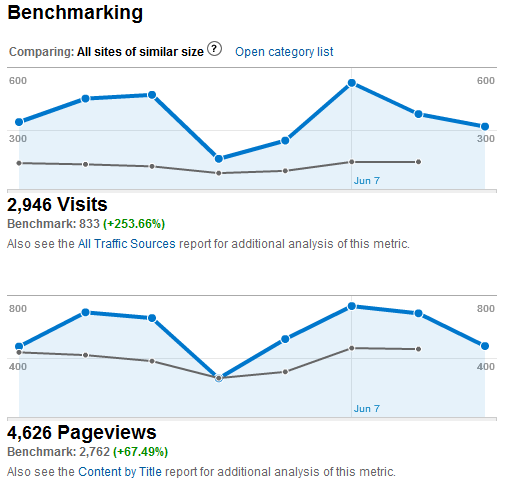
The Google Analytics stats show how overall site traffic increased both just after the launch, and with my mention on Twitter about writing the post you’re reading now. Connect that to the steady ongoing traffic?that the post is still receiving, and it shows that the experiment had, and still has, some good traction.

So, again, positive results – so far, so good.

Takeaways and Future Plans

So what’s the point in all these figures, graphs and information? After all, it’s just an ebook, right? Well, yes and no.

As I mentioned in the original post, I made the ebook an exclusive to Facebook to see how it compared to more traditional offers. The last free ebook I did,?Why Simple Works, was shared via my blog and Slideshare and could also be embedded or sent via email. That saw more than 1,400 eventual downloads, all told. So, a distinct drop in numbers with the Facebook one.

However, the 1,400 downloads for Why Simple Works only made up about 35% of the traffic to the various download options. The stats for 7 Ways to Market Your Business on Facebook saw downloads accounting for almost 77% – more than double the “popular” multi-platform sharing option.

It also saw a 245% increase in platform audience – something the more open sharing of the previous ebook didn’t achieve.

Now, think of this information as a business:

  • 77% active participation in an offer
  • 245% increase in your core audience
  • Jump in web traffic of more than 250%
  • 36% growth in daily user interaction

If this had been a business or non-profit promotion and you had these figures, I think it’s safe to say that it could be viewed as a pretty successful campaign, no?

From a personal viewpoint, I’ll definitely be offering more platform-exclusive content (look out for an ebook on social responsibility within the workplace soon from the SRM Group).

From an experiment point if view, I think it’s something that can be of value to show clients why Facebook can be such a useful platform for promotions and incentives. And that’s immediate value right there.

How about you? Have you offered anything similar? And if you downloaded the ebook, was it worth the “extra step” you had to take to get it, and do you see value in exclusives?

© 2026 Danny Brown - Made with ♥ on Genesis