• Skip to primary navigation
  • Skip to main content
Danny Brown

Danny Brown

podcaster - author - creator

  • About
  • Podcasts
  • Journal

blogging

Does Your Blog Really Need to Provide an RSS Feed Anymore?

Back in 2010, I published a blog post about the choices bloggers gave?when it came to how readers consumed their content.

The gist of the post was simple: should it be via RSS, or email?

My own take was bloggers should offer both (remember, this was at a time when RSS was still the #1 choice for bloggers to distribute their content). In the comments section after the post, the majority of commenters thought email was the better option too.

– I?m with you 100%! The blogs I never, ever want to miss (including yours) are ones I subscribe to via email. In addition to making sure I don?t miss anything this also allows me to read at my leisure and if I get swamped for a week or so I know which posts I still have to read. Michelle Mangen.

– Maybe it?s the Boomer in me, but I only read?on a daily basis?the blogs of those to whom I can subscribe via email, or perhaps on a blog roll. I realize, of course, that I may be missing out on some good reads; but the blogger is missing me as a subscriber. Ken Jacobs.

Even back then, both bloggers and readers were seeing the value of email, and (perhaps) the diminishing return of RSS. The thing is, though, it didn’t seem to matter – Google Reader was king and RSS feeds were the currency of any blog worth its salt.

Man, how times do change.

Alas, Google Reader, I Knew Thee Well

In March 2013, Google announced it was closing down its Reader service. For most content creators who had built a healthy subscriber base via RSS, this came as a bit of a shock.

In Google’s own words, however, perhaps it shouldn’t have been as big a shock.

We know Reader has a devoted following who will be very sad to see it go. We?re sad too.?There are two simple reasons for this: usage of Google Reader has declined, and as a company we?re pouring all of our energy into fewer products. We think that kind of focus will make for a better user experience.

When the company behind the leading RSS solution says use of its product has declined, you know it marks a change in how we, as readers, consume content. Perhaps it’s the other part of the statement that says more, though: “We think that kind of focus will make for a better user experience.”

As a long-time user of Google Reader, both as a provider of content and a consumer of one, the user experience was a major pain in the ass. Yes, you could create folders based on topics and categories, but if you subscribed to a lot of blogs, even that minimal filtering option soon became overrun and clunky.

As content moved into a cleaner, richer experience – both on the web and (increasingly) on mobile – RSS feeds and the way they’re curated became less attractive.

For me, I’d even say RSS feeds are pretty much redundant, and not worth the effort of trying to grow.

Email = Investment, Trust and Loyalty

Think about the one area you spend most of your day, personally and professionally. It doesn’t matter what job you’re in, or what social media channel you prefer over the other, or what smartphone you use – the one thing we all have in common is email.

Our inboxes rule us. Whether it’s getting notifications about a friend’s update on Facebook, or confirming tickets, or replying to a question that can’t wait until you get to the office, our email inbox is still the most-used direct communication tool we use.

It’s one of the reasons I switched my commenting solution (and soon-to-be subscription solution) to Postmatic. If it doesn’t matter where and when people are accessing email, because it’s second nature and easy to do, doesn’t it make sense to use that as your primary content distributor, conversation starter and loyalty builder?

Why would you want to continue using a clunky, increasingly-irrelevant piece of technology like RSS feeds that offer less value and less return for your content investment?

Looking at my own analytics for the last 30 days, I had just under 16,500 sessions (Google’s new name for visitors). Of that, guess how many came via RSS? 10,000? 5,000? 1,000?

Chance would be a fine thing. What I actually got, you can see below.

Danny Brown RSS

A whopping 335 sessions, or just over 2% of all traffic for the 30 day period. Worse still, the bounce rate is atrocious – RSS readers are simply reading the article and leaving my site (when/if they actually visit).

While I’ve never really used my blog as a lead generator (so I’m not particularly bothered about bounce), for any content creator looking to use their blog as a business creator, that bounce rate would be a major stumbling block.

What makes this lack of traction stand out more is when you look at some of the other traffic drivers – in particular, Twitter (which is ironic, given a recent article about Twitter’s own lack of value for traffic).

Even in the image above, you can see automated Twitter feeds (where blog posts are aggregated by RSS-to-Twitter) accounts for almost the same amount of traffic as a dedicated RSS solution like Feedly.

When you dig a little more into the analytics, you can see Twitter actually blitzes RSS out of the water.
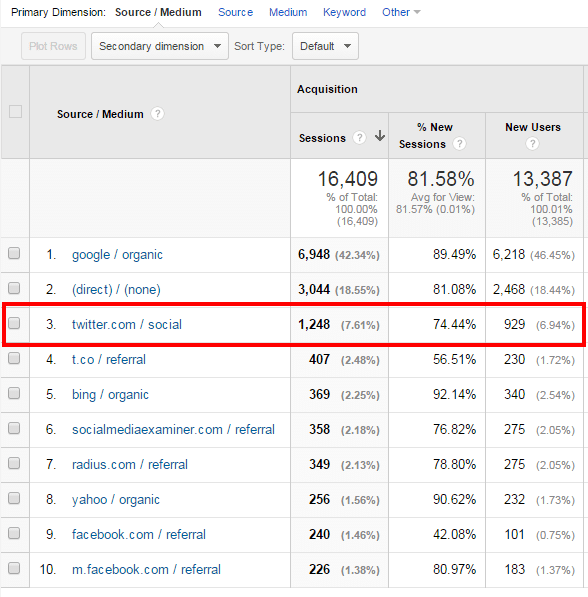
Danny Brown Twitter

Direct traffic from Twitter accounted for almost 1,250 visits – almost 10x the amount from my RSS subscribers. Add in the indirect traffic using Twitter’s link-shortener, and you can see why Twitter is a better RSS solution than actual RSS feeds themselves.

In the direct stats, almost 2,500 of the 3,044 total is from my email subscribers – beginning to see a pattern? If you want quality traffic and trust in your content, RSS is not going to get you it.

RSS = Really So-over-it Syndication

Okay, it’s a play on words for what RSS actually stands for (Really Simple Syndication), but for me personally so-over-it would be a better choice of words.

Anyone can subscribe to an RSS feed. One click of the mouse, done. And (more usually than not) forgotten. When I stopped using my reader account a few years back, I kid you not – I must have had about 500+ blog feeds in there. Do you think I regularly visited them all?

Hell no – as Michelle Mangen mentions in her quote at the beginning of this post, the blogs I wanted to really subscribe to were done by email – and that’s been the way I’ve subscribed for the last 4-5 years.

There are multiple benefits to this:

  • Like I mention, anyone can subscribe by RSS. Doesn’t mean squat. Giving someone your email address, though, and trusting them not to take advantage of that? That’s the kind of investment you want in your content.
  • Email subscribers are more adaptive to change. When I recently changed my email and RSS subscription methods, I shared an update post via both email and RSS. 81% of my email subscribers updated their subscription – 81%. Guess how many RSS subscribers updated their feed? 9% – quite the difference.
  • The best relationships are those one-to-one interactions you get when someone replies to your blog post with an email about how it made them feel. I’ve had some of the most personal and powerful conversations via email after a post has gone live – RSS could never hope to achieve that.
  • When Google Reader closed its doors, I lost 6,500 subscribers overnight. 6,500! Now, given, many of them may not have visited anyway, but you take away 60% of a blog readership overnight and see what happens. Another reason I refocused my energy into email.

Content is changing. How we consume content is also changing. We don’t need “traditional” RSS anymore. We have social channels, as well as sites like This. and Flipboard, to aggregate and syndicate.

But they’re all external, and you’re competing for space with thousands of other like-minded souls. Email, on the other hand – you have these eyeballs, and they’ve chosen you over the competition already.

Now might just be the time you consider dumping that good old blog RSS feed for good or, at the very least, stop promoting it as an option to subscribe (you’ll see that I only offer email subscriptions in the box below this post).

After all, is it really doing you any good?

A version of this post originally appeared on the Wood Street Inc. blog.

52 Content Marketing Experts Share Their Top 100 Content Tips

Content tips

What made you click through to read this post (unless you’re reading this via RSS and already know what’s coming)?

Was it because you’ve read other posts of mine, and trust me to deliver on the premise shared wherever that might be? Was it because someone shared it on Twitter, Facebook, etc., and you trust their shares, so you automatically share too?

Or was it because of the headline, and the easy quick-fix yet often vapid information that headline suggested?

If it was any of the above, you’ve just been suckered – yet we allow ourselves to fall for this kind of click-and-bait trap all the time.

I Clickbait, Therefore I Am

Back in July 2013, leading inbound marketing and analytics company MOZ published an article titled 5 Data Insights Into the Headlines Readers Click.

In it, some interesting – and, to a large degree, sad – stats were shared.

  • On average, 8 out of 10 people will read headline copy, but only 2 out of 10 will read the rest (I wonder how many 8/10’s shared this post based on the headline…).
  • Traffic can vary as much as 500% based on the headline, according to traffic results from viral video site Upworthy.
  • 36% of readers preferred to click headlines with numbers in them, while only 15% would click a “normal” headline.

Sensing a pattern here? For the most part, many readers aren’t even caring what the content may be like – it’s the headline that drives them to a site (or not).

[clickToTweet tweet=”It’s called content for a reason – why are we allowing headlines to destroy it? #content” quote=”It’s called content for a reason – why are we allowing headlines to destroy it?”]

This isn’t really anything new – newspapers have been trying to outdo each other with creative headlines for years, to garner the sale from the rushed commuter over the competitor’s publication.

Headlines

The problem is, the success of headline attraction and clickbaiting isn’t just turning consumers of content into lazy sharers, it’s also turning the content creators into frauds that care only for eyeballs, versus providing the quality content these same eyeballs clicked over for in the first place.

This post could be viewed as a [deliberate] example of that.

But… But… Where Are My 100 Tips and 52 Experts?

Anyone that’s read this blog long enough, or is connected with me anywhere online, will know the contempt I generally have for the majority of list posts.

You know the type – “The Top List of Marketing Blog Top Lists”, “The Ultimate Guide: 50 Ways to Increase [INSERT ANYTHING HERE]”, “The Top 100 Online Web Users Any Web User Should Follow Online”, etc, etc.

Now, don’t get me wrong – some lists do offer value, and are crafted with love and care, and actually share real reasons why these lists exist.

And then there are the rest…

The problem with these lists is that they’re so clearly designed for link-bait reasons and link-bait reasons only, all while being?disguised as a vacuous attempt at offering useful information.

[clickToTweet tweet=”Admit it – most list posts are nothing more than vacuous attempts at popularity contests.” quote=”Admit it – most list posts are nothing more than vacuous attempts at popularity contests”]

It’s not just bloggers desperate for traffic either – it’s so-called reputable publications that are falling into this malaise. You only need to look at the crappy Forbes “Top 50 Social Media Influencers” list that makes the rounds every year (sometimes more frequently).

When the author of these posts admits there’s no real science behind the list, and it’s essentially based on how noisy these “influencers” are online, you know the traffic whores have won.

I’m also not a fan of the term “content marketing”, which regular readers of this blog will know. So, the idea I’d write a post that shares 52 content marketing experts and their 100 top tips is… yeah….

Which brings me back to my opening question.

We Deserve What We Click

If you clicked on this post with no prior knowledge of my content, and whether it’d either be a fit for you or, more importantly, actually deliver on the headline’s promise – why?

  • If it was because of the headline only, how often have you been disappointed by the subsequent content that failed to discuss what the headline promised?
  • If it was because you reshared it from someone whose other content you frequently reshare without reading, don’t you ever wonder what it is you’re recommending to your followers, and how they’ll perceive you if the content is crap?
  • If it was because it somehow ended up in one of the automatic curation tools you use to share content, when did you last vet the content and make sure it was the stuff you wanted to be associated with?

If you recognize any of the reasons above, is that really something you want to continue being known for? Has quality control really disappeared, and now you just want your own shares to be reshared because the title looks sexy, and the more reshares your own shares get will make you an “influencer”?

If so, be careful what you wish for – there’s only so much wool you can pull over peoples’ eyes before they get wise to you.

We frequently complain about the quality of the content on the web today, and how a lot of it sucks compared to “the golden age of blogging” 5+ years ago.

The thing is, if we’re sharing and clicking crappy content filled with lies and false promises, we’re simply reinforcing the value of that crap and its raison d’etre.

Be better than that – your audience deserves more.

An experiment for you – click the tweetable below, and then see how many of your friends/connections retweet it. Then ask them if they read the piece first. See how many fall into the 80/20 headline rule.

[clickToTweet tweet=”This is probably the best list of content marketing tips from experts I’ve read! #content” quote=”This is probably the best list of content marketing tips from experts I’ve read! “]

(And if you really do need to read 100 tips from 52 content marketing experts, you can find that here.)

Your Best Work is You

Best work

If you were asked to give someone a link to your best work when it comes to your content, what link would you share?

For me, some spring to mind, but what?s to say they?re my best work? Perhaps my favourites for whatever reason – but best? I don?t know. And what defines our best work?

Is it the educational post about using the latest social media tool or application?

Is it the blog post about a charity that we?re involved in that hopes to change the world?

Or is it just an ordinary post, talking about nothing in general really?

After all, if you?re just rambling as you would to someone offline, wouldn?t that be your best work for a stranger/potential friend to read because it?s relaxed and honest?

You see, to me, every single thing we share about ourselves through a blog post is our best work.

Whether it?s sharing your expertise with someone who may be less knowledgeable on a certain topic, or recommending other people to read, that?s sharing yourself with people.

Even if you?are just writing about your day, if someone else finds that interesting and stays to read it,?that?s your best work. You?ve helped the day pass quicker for someone, and that?s got to be worthwhile.

So, where would?you recommend us to go?

PS ? If you?re curious, I choose this post.

A Look Under the WordPress Hood at DannyBrown.me

Hybrid comments

Every now and again, I’ll get asked what plugin or solution I’m using on this blog to achieve a certain effect or result.

Because I use self-hosted WordPress to power this blog, it means there’s a crazy amount of add-ons, plugins and other optimization and performance solutions for bloggers to choose from.

While that choice is great, it can also be overwhelming.

Since I’m a self-confessed geek that likes to try out pretty much most things on this blog in the name of experimentation, I’ve used a fair few solutions in the six-plus years I’ve been blogging here.

It’s been a while since I last took a look at what’s underneath, so here’s what’s currently powering my blog, and why you might want to consider it for yours.

To make it easier (in case you’re already really happy with your sharing solution, for example, but looking to get more server speed), I’ve separated them into four main categories.

While some plugins may crossover into other categories, I’ve gathered them into the following areas:

  1. Security
  2. Optimization
  3. Visibility
  4. Growth

The solutions below are a mix of free and premium – what version you use depends on your need. Let’s dig in!

1. Security

While we may want a lot of eyeballs, shares, subscribers, downloads and more from our blogs, we need to make sure we actually have a blog up and running, that’s safe from attacks, and that can be restored if anything happens to it.

While there are various solutions out there, these are the ones I like and currently use.

Anti-Malware and Brute-Force Security by ELI

While WordPress is a great solution for any blogger, it can also be prone to frequent brute force attacks (where hackers try and gain access to your blog by multiple username and password attempts). The Anti-Malware and Brute-Force Security plugin by ELI is a great way to counter these attacks.

Anti-Malware Security and Brute-Force Firewall – WordPress plugin WordPress org English Canada

Features include:

  • Automatic removal of known threats and back-doors
  • Automatic blocking of SoakSoak and other known malware
  • Quick Scan options to give an overview of current threat status
  • Complete scan to look at every part of your WordPress site

This is one of the most comprehensive plugins I’ve used when it comes to brute force protection – definitely recommended.

Check out Anti-Malware and Brute-Force Security by ELI here.

Login Lockdown

Tying into the brute force attack method of trying to access your blog via multiple attempts at guessing your username and password, the Login Lockdown plugin does exactly what it says on the tin, by locking down access to your blog after a set number of attempts.

Login Lockdown

You can:

  • Set the maximum number of attempts to log in before locking down access
  • Set how long a failed attempt is locked out for
  • Hide login error messages
  • Lockout invalid usernames (useful for a blog with limited amounts of users in the backend)

While it’s a pretty simple plugin, it’s effective. And you can’t ask for more than that.

Check out Login Lockdown here.

Monitive

If your content is created for any kind of business value, the uptime of your site is crucial. Heck, even if you’re a personal blogger like me, uptime is still hugely important and something to keep an eye on.

Monitive makes this process easy. Simply create and account and they’ll start monitoring your site’s uptime.

Monitive

Frequency, type of alerts and reports are determined by the plan you’re on, but even the free account’s pretty awesome.

Check out Monitive here.

VaultPress

One of the worst things that can happen to any blogger is to lose his or her content due to a crash, hack, glitch or simple user error. If you have years of content, this loss can be even more painful.

VaultPress is a fantastic solution that not only backs up and restores your site (with real-time back up options), but also protects your themes, plugins and settings into the bargain.

VaultPress

Given that it’s from Automattic, the creators of WordPress.com, it’s almost guaranteed that this will be a great plugin, and so it is.

  • Alternative: iThemes offer an alternative called BackupBuddy. I was using this, but found it was causing load issues due to continuous creations of CRON jobs, so made the switch to VaultPress. More information on that issue can be found here.

Check out VaultPress here.

2. Optimization

Along with security, optimization of your blog should be one of the things you’re constantly tweaking. Google has already advised it will penalize slow sites as well as those that aren’t mobile-friendly.

Apart from your own penalization, though, the user experience – that of your readers – should be top of mind too.

Here are the solutions I use for optimizing my blog.

Akismet

One of the granddaddy’s of the WordPress plugin world, Akismet is probably a mainstay in the majority of WordPress blogs online today when it comes to protecting blogs from comment and trackback spam.

Akismet

It also allows you to see how many comments have been approved by regular commenters, and enables you to bulk clean your comments area from span, keeping your site free of extra load and bulk.

Check out Akismet here.

Anti-Spam

While Akismet does a pretty good job of keeping spam at bay, it can still be beaten by automated scripts that bypass its algorithm. This is where Anti-Spam comes into play.

antispam

It inserts an invisible checkbox, kind of like a captcha, that automated scripts don’t see. This adds an excellent second layer of filtering, and one that only real people will bypass (even though they’re not aware it’s there). This plugin has essentially killed all but the most determined of spammers on my site.

Check out Anti-Spam here.

CDN Linker

One thing that every blogger should be concerned about is site load. Not only is Google looking unfavourably on slow sites, but visitors are more prone to leave a site that doesn’t load in an acceptable time.

CDN Linker is a plugin that makes the connection between your preferred CDN solution (more on that shortly) and your site (even if you’re using a local caching option). It’s lightweight, easy to set up, and effective.

Check out CDN Linker here.

MaxCDN

I’ve mentioned earlier how Google doesn’t look favourably on sites that load slow. A lot of these load issues are caused by sites hosting images and files on their own servers. If they’re not set up for this, cue load issues.

MaxCDN is an excellent solution that does the heavy lifting for you, and lets you just get on with the important stuff like content.

CDN by MaxCDN | Experts in Content Delivery Network Services

I use a hybrid of MaxCDN, CDN Linker, and WP Super Cache to keep my load times to a minimum. Because of the theme design I use (media rich, large featured images), this has made a huge difference in my own blog’s performance, and is well worth the monthly cost to do so.

Check out MaxCDN here.

WangGuard

Run a blog for any decent amount of time and you’ll get your fair share of spam commenters. As well as being a pain in the ass for bloggers, spam commenters (or sploggers) can ruin the experience for other commenters too.

WangGuard counters this by detecting and removing sploggers through a variety of ways – checking for duplicate emails, checking emails against DNS servers, enabling honeypot traps and more. An excellent solution.

Check out WangGuard here.

wpDiscuz WordPress Comments

While?there’s been a lot of talk recently about blog comments dying, I don’t buy into that. Sure, they may be moving more onto social channels, but there’s still life in “traditional blog comments” yet.

A relatively new plugin, wpDiscuz offers a sleek and elegant approach to comments, without all the bells and whistles that other commenting solutions come with.

It also uses native WordPress comments as its starting point, and this makes using wpDiscuz super easy.

  • Simple name and email requirement to leave a comment
  • Ajax powered to stay on-comment as well as utilizing “load more comments” versus pagination
  • Voting up and down options
  • Social sharing options
  • Customizable to fit your theme brand and design
  • In-depth backend to optimize usernames, commenter options, notifications of new discussions and more

I’ve recently started using wpDiscuz after being impressed with it on my wife’s publisher site. Its clean, simple to use, fast, and – most importantly – lets you keep full control of your comments on your own domain.

Note: After having issues with the Ajax loading, as well as mobile commenting, I disabled wpDiscuz. I now use Postmatic, for commenting via email, as well as their own commenting solution, Epoch.

  • Alternative: Previous to wpDiscuz, I’d experimented with a hybrid comment system on Inline Comments and G+ Comments, but have had to disable for now due to a theme incompatibility. Livefyre is also an excellent solution.

Check out wpDiscuz here.

WP Lightbox 2

When bloggers use images on their sites, it can be pretty hard to see the detail, dependent on both how much text is on the image, and the blog’s design (a small main content area will limit the image’s dimensions).

WP Lightbox 2 allows your readers to click on the image, and it’ll expand into a more optimal size (even on mobile). You can also create galleries as well as photo albums, and filter how large the image displays, based on browser screen size.

Check out WP Lightbox 2 here.

WP Smush Pro

Tying back into the optimization combination of MaxCDN, WP Super Cache and CDN Linker, WP Smush Pro helps keep media file sizes down by reducing an image file’s size on upload.

WP Smush Pro

With the option to optimize existing images, and extremely simple set-up, it’s a great way to keep server load down even if you’re not using any other caching or optimization solutions.

Check out WP Smush Pro here.

WP Super Cache

As sites get heavier with load, caching content is a great way to ensure your visitors get to enjoy a speedy site. Caching simply means you’re “pre-loading” saved content, instead of having to load new files on every visit.

WP Super Cache is one of the best, as well as one of the simplest (even though it still has pretty in-depth features if you want them).

  • Legacy cache versus supercache, offering more options on where your content is preloaded from
  • Comment compatibility (comments will still show up right away)
  • Dynamic caching for certain pages
  • Cache rebuild to ensure each new visitor gets optimal load

There are a host of features on WP Super Cache, and it’s pretty easy to set up (with excellent support).

I don’t actually use it as my main caching solution – I leave that to MaxCDN, WP Super Cache and CDN Linker (and I explain here how to do that).

  • Alternatives: One of the most popular caching plugins is W3 Total Cache. From personal experience, I found this too intensive for my needs. A simpler solution is Quick Cache.

Check out WP Super Cache here.

3. Visibility

Of course, it’s all well and good having great security, and optimizing your blog ready for all the traffic that will come your way, knowing they’ll be presented with a safe and optimized blog. Not so fast, Skippy.

Making sure your content is seen is, surprise surprise, pretty key too – and if you think that’s an obvious statement, you’d be wrong, sadly.

Working on the visibility of your blog will be a constant challenge, but doesn’t have to be one you’re not prepared for.

Infinite SEO

There are a lot of blog posts that will tell you SEO is dead and content is the new king. While SEO as a standalone tactic may not be as important as is used to be, it’s still a key part in any successful content plan.

Infinite SEO is a great plugin with a host of features that anyone can use:

Infinite SEO
  • Control over page or post SEO
  • Preview for how your SEO will look in search results
  • mozRank and Page Authority based on external links
  • Intensive sitemap creation and indexing
  • Automatic internal linking for better cross site authority
  • Multisite and BuddyPress integration.

While there are several other SEO plugins around, for me this one beats them all.

  • Alternatives: I’ve previously used the hugely popular WordPress SEO from Yoast, as well as the All-in-One SEO Pack, and both are excellent alternatives to Infinite. Yoast is more involved, and probably better suited to more advanced needs.

Check out Infinite SEO here.

RSS Footer

This is a bit of an older plugin, so you may not want to use it (often older plugins can cause conflicts with later versions of WordPress or, occasionally, a security concern).

However, I’ve used RSS Footer for years with no issue. When used, it adds a simple sentence to your RSS feeds, and shows where the content was first published. Great for more visibility if your content is syndicated, even better to beat content scrapers at theor own game.

  • Alternative: RSS Footer has actually been enveloped into its developer’s SEO plugin (it’s from the same guy that built WordPress SEO). However, you can still download the original plugin on its own if you don’t use WordPress SEO.

Check out RSS Footer here.

Social Warfare

Perhaps the most effective way of getting any content seen is through social sharing, and there are no shortage of excellent solutions around, both free and premium.

I’ve experimented with more than my fair share, and the one I’m impressed with the most currently is Social Warfare.

Social Warfare: Your Ultimate Social Sharing Arsenal

The name alone should tell you this plugin means business.

  • Cached share counts for faster loading
  • Sort posts by social popularity
  • Customize tweets for optimized sharing
  • Optimize images for sharing on Pinterest
  • Optimized images for sharing on Twitter, Facebook, Google+ and LinkedIn
  • Use different meta descriptions for open graph sharing
  • Integrated Sniply Buster plugin to combat the Sniply content hijacking script
  • Multiple design options, including responsive buttons, and sticky share options

As I mention, I’ve used countless sharing plugins and this one has really impressed me. The developers are also great at listening to suggestions and pretty fast with support issues.

  • Alternatives: Two great alternatives to Social Warfare are Flare from Filament Apps, and the Monarch sharing plugin from Elegant Themes. Both offer multiple design options, stats, mobile sharing options and more.

Check out Social Warfare here.

4. Growth

Ironically, this part of blogging is one I never really used to care about. And, to a degree, I still don’t: you won’t see any annoying pop-ups shouting at you to subscribe before you’ve even seen the content, and I don’t use my newsletter to sell anything.

However, as content consumption gets even more fractured, and audience attention dwindles, growing your blog and its community is key to any kind of success and longevity.

Elastic Email

There are a host of email service providers when it comes to blog newsletters – MailChimp and AWeber are probably the two best known.

However, depending on the size of your list, these can get costly, which is why Elastic Email is such an excellent solution.

Elastic Email

While you can use Elastic Email as your newsletter form builder as well as sender, I prefer to use MailPoet for my forms (as shown further down), and Elastic Email for my delivery.

Features are excellent:

  • Easy subscriber cleansing tools
  • Real-time reputation monitoring to show your current status (spammy or trusted)
  • Activity reports
  • Single API to integrate other newsletter services (the way I do it with MailPoet)

Perhaps the best feature of Elastic Email though is the price.

Starting at $0.99 per 1,000 emails, the cost goes down as your email numbers increase. I’m currently only paying $0.39 per 1,000 emails – a small fraction of what I’d pay with other providers. And it’ll only decrease in cost as I continue – result!

Check out Elastic Email here.

Magic Action Box Pro

Look to the bottom of this post, or any other on my blog, and you’ll see only one call-to-action (CTA) – a subscription box for my weekly newsletter.

As I move more into personal content and interactions, the newsletter is perfect for me, and Magic Action Box Pro is perfect for what I need.

Magic Action Box pro
  • Support for any autoresponder service
  • Gated content options
  • Multiple and responsive templates
  • Sales box and sharing box options
  • Simple placement choices

While I don’t use many of the features (gated content and sales-oriented CTAs), what I do use has made a huge difference in email sign-ups. And for something that’s been built to provide that lift, you can’t ask for much more than that.

Check out Magic Action Box Pro here.

MailPoet Newsletters

While it’s all well and good getting new subscribers, if you’re not delivering emails that are appealing, you’re simply turning these new subscribers off.

MailPoet is an excellent email template builder that also comes with analytics around your subscriber actions, multiple list options, the option to implement in widgets and pages, and more. There’s also a WangGuard MailPoet Connector plugin to stop spammy email sign-ups.

MailPoet - A newsletter plugin for WordPress

I moved to MailPoet from Feedblitz?earlier this year and I wish I had done it a hell of a lot sooner. Easy to use, far more design options, and simply a better experience – recommended.

Check out MailPoet here.

Note: As of June 18, I’ve made the full switch to Postmatic for email delivery and comments by email – you can find out more about that here.

Future Plugins and Solutions – And You

Of course, as any blogger will tell you, just as content direction and voice is always in flux, so are the plugins and solutions we use on our blog.

While the options above are my current choice, they’ll be added to very soon with two very cool solutions that take content interaction and discussions in very interesting directions – more info on that soon.

Also, being on self-hosted WordPress, we’re so very lucky to have an amazing community of developers who are always trying to improve every experience – front end, back end, reader, blogger – that to stand still would be foolish (and impossible).

I can’t wait to see what comes next – in the meantime, though, I’d love to hear what you’re using.

Fire away – the comments are below, and all yours!

Blog Comments and Experimentation – Or Why @Livefyre Is Here to Stay

Community conversations

So, if you’re a regular reader of this blog (and thank you!), I think I owe you an apology for any dizziness I may have caused you in the last couple of months.

As a regular visitor, you’ll know that I’ve been experimenting with what comment system to go with – native WordPress (in use for the last couple of weeks), Disqus (in use for about 6 weeks prior to that), or Livefyre (in use again now, and a system I’ve raved about many a time).

The reason for this was simple – user experience here is key. You take the time out of your day to come and spend some time here, when you could be choose from a million other blogs at that given time.

For that, I thank you. And to extend that thanks, if you like, I want to try and make your stay here as enjoyable and user-friendly as I can.

That’s the reason behind choosing the Genesis framework and the Optimal child theme (affiliate links). Since activating them a few months back, folks have been kind enough to comment on the easy navigation, and the responsive design makes it very easy to read on mobile browsers.

That user experience extends into the comments – I want to encourage you to share your thoughts, and extend the conversation beyond the post and with each other.

This is kind of where native WordPress comments falls down, and leaves both Livefyre and Disqus ahead. All you need do is compare a post where there are a lot of comment threads, and you can soon get lost with native WordPress, wondering who’s replying to who.

Not so much Livefyre and Disqus, where you can clearly see the thread and who the conversation is aimed at.

And, for a while, I was thinking of sticking with Disqus as I experimented with the new 2012 version – it’s very slick. Community comments, popular conversations elsewhere and a beautiful interface make it a very tempting platform. And yet…

Here we are, back with Livefyre, and this time it’s for keeps, for a few simple reasons.

Livefyre Support is Awesome

If there’s one area that Livefyre excels at, it’s their customer support and community support team. It must be a culture they have over there – from Jenna Langer to Jeremy Hicks, and current Community Manager supreme Dhara Mistry, Livefyre clearly encourages interaction at a very high level.

While I was experimenting, I had some issues on switching Livefyre back on, due to a minor conflict with Disqus and some WordPress avatars. I also couldn’t fully sync comments over that have been left during my activation of Disqus.

Step up Livefyre, and Dhara and her team of engineers.

Dhara Mistry
Click image to enlarge

They worked way beyond what any support would normally offer and ensured all the glitches were fixed. Not only that, Dhara kept me up-to-date at every touchpoint, and even recommended I hold off until they locked down a fix for my specific needs.

All this while rolling out a brand new version of their commenting system, as well as fielding questions and support tickets from users with Livefyre currently installed on their sites.

This kind of service and constant communication is a huge factor for me when it comes to any business, and the fact Livefyre don’t even charge the majority of its users, yet still offer that kind of support? I’m sold.

Livefyre Is The Natural Evolution of Blog Commenting

As I mentioned earlier, I’ve been a rabid fan of Livefyre since it launched, and was one of the early users of the platform.

I love its real-time chat system as well as the social media integration of conversations from Twitter and Facebook, as well as the ability to share across multiple networks.

But that was Livefyre back then – the recently-released beta version of Livefyre 3 shows you exactly where this platform is heading, and I love it. You want your blog comments to be truly social and interactive? Check out what Livefyre has for you.

Social Comments Integrated

Livefyre social comments
Click image to enlarge

With the previous version of Livefyre, they already had a pretty cool way to bring conversations from Twitter and Facebook into your comments section. If someone tweeted about your post, and added extra commentary, or it was shared on specific Facebook Pages, these would be pulled into the post at the end of the comments.

Now, however, they fall neatly into the comment stream itself, based on timestamp. And, if you reply back via the comment, it goes back to Twitter automatically, to answer the person that shared. Further conversations continue to fall back into your comments – very cool.

Rich Text Editor

Livefyre rich text editor
Click image to enlarge

One of the biggest “gripes” of the previous version of Livefyre was the inability to make your comment more dynamic. While the likes of WordPress and Disqus allowed you to drop HTML in to add bold, italic or other font edits, Livefyre was stuck with its standard font.

Not any more. Now you have a rich text editor that allows you to choose bold font, italic, underscore, insert a hyeprlink, bulleted lists and numbered lists.

Additionally, and one that a lot of commenters and bloggers were asking for, is the ability to edit your comment if you make a mistake. However, this only works if the blogger with admin duties enables this feature on Livefyre.

It may be small changes, but these features make comments more dynamic and highlight the parts that need to be highlighted.

Livefyre Supports Rich Media

Probably one of my favourite new features is the way Livefyre 3 truly turns your comments into a fully-fledged multimedia experience.

Normally, when you leave a comment on other blogs that don’t have Livefyre, and you want to show a video or image, you have to grab the link to YouTube or Flickr, and then the reader of your comment has to click through to see what the video or image is.

Not with Livefyre.

Instead, they keep your readers engaged on your blog by embedding the rich media directly into the comments area.

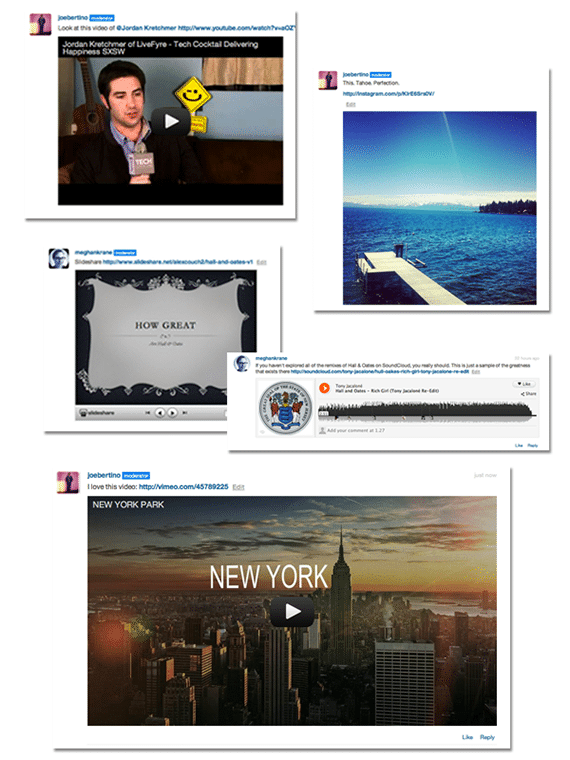
Livefyre rich media embed
Click image to enlarge

Currently supported platforms include YouTube and Vimeo (video), Flickr and Instagram (images), Slideshare (presentations), SoundCloud and Spotify (music), animated GIFs from MySpace and Wikipedia (the articles appear in-stream).

To show this media content, simply grab the URL of its parent page and drop alongside your comments, and Livefyre does the rest. It’s pretty damn cool and can make for a very entertaining comments section.

Livefyre and Multi-Site Admin

One of the new features that came out before the current beta version of Livefyre 3 was the revamped admin area for bloggers.

Livefyre Site Moderation
Click image to enlarge

Now, instead of having to hunt through reams of comments to filter one out, you can search directly by username, IP address, if it was a user logged in via Twitter or Facebook, keywords, and much more.

You can choose to do this while having all your sites open, or just one domain at a time. You can also quickly check if any comments have been filtered into pending or spam, ensuring all comments you want approved are done so.

It’s a slicker version of the previous admin area and a very welcome addition to the product.

So Is Livefyre Perfect?

Is anything? Okay, I know, glib answer and I apologize, because we all know Jessica Alba is perfect… Moving on!

As I mentioned, Livefyre 3 is currently in beta, so the version being used on blogs currently is one that will experience some hiccups as the platform moves into a wider public release.

Some of the current glitches, from my own use and conversations I’ve seen online, include:

  • The SocialSync tagging doesn’t always work the way it should, meaning you can’t tag your friends on Facebook and Twitter (by using the “@” symbol and then typing their name until it appears). For a social commenting system, this is a core part of Livefyre’s appeal.
  • Sometimes it looks like there’s no comment box, whereas it’s just Livefyre rendering. The load time has been improved from the previous Livefyre, but could sill be optimized further.
  • Styling Livefyre to suit your blog design requires CSS, and not every blogger is comfortable with this. The advantage of Disqus in this respect is it inherits the font, style and design from your blog, so should match up every time.
  • It’d be great to see your commenters’ activity across the web without having to click on their profile. A lightbox when hovering over the username would be great, and encourage commenters to visit other blogs in the Livefyre family.

In fairness, the last two are personal choices as opposed to glitches, but I feel they’d make the platform even more complete than it is currently, and its current iteration is pretty damned impressive.

So, Livefyre Is Here to Stay Then?

As I mentioned at the start of the post, if you’ve felt a little dizzy recently with the comment system changes, I apologize. But it’s the last time it should happen.

I’ve been an early supporter of Livefyre and the platform has continued to grow way beyond its potential from its early days. That continues to be the case as new features and slicker processes get added, and it’s definitely my commenting platform of choice.

Mind you, I have to take my hat off to Disqus – they’ve really upped the game with Disqus 2012, and the interface and integration is very slick. Plus, they also sent out a very fun Welcome package of Disqus goodies – thanks, guys!

But, I have to say, Livefyre just feels what a comments system should be – live, interactive, media-rich, socially-enabled and much more. Simply put, it feels like home.

And, as a blogger, that’s all I can ever ask for from a comments system. Here’s to the conversation.

  • « Go to Previous Page
  • Page 1
  • Page 2
  • Page 3
  • Page 4
  • Page 5
  • Page 6
  • Interim pages omitted …
  • Page 13
  • Go to Next Page »
© 2026 Danny Brown - Made with ♥ on Genesis