
• Skip to primary navigation
  • Skip to main content
Danny Brown

Danny Brown

podcaster - author - creator

  • About
  • Podcasts
  • Journal

Customer service

Why AT&T Isn’t Always the Big Bad Wolf

Big bad wolf's houseIf my friends are correct, I’m pretty fortunate that I don’t live in the U.S., have an iPhone and AT&T as my carrier. When I speak to people like?Tim Jahn and Michael Schechter, they mention the crappy coverage and dropped calls they have to suffer on Apple’s baby thanks to the AT&T network, even though the fault may lie as equally with Apple as it does AT&T.

Being in Canada and on a BlackBerry, I guess this is something for me to be grateful for.

Yet it looks like AT&T has been listening to its customers, reading the blogs and social media feeds and actually wants to do something about their reputation. This comes in the shape of a new iPhone app that’s free to download.

Called “Mark the Spot”, the app allows users to report any problems they’re having at that time, from dropped calls to voice and coverage quality. Geo-tagging allows AT&T to pinpoint the exact area at that specific time, and should help them improve both service and coverage.

While it may not result in instantaneous improvements, the very fact that AT&T is actively seeking feedback is encouraging. With social media giving small-to-medium businesses a more level playing field with the big boys, larger companies are finally realizing they can’t ignore their customer bases in the way they used to.

This is evident in the way that Comcast have implemented a?customer care team, led to Dell posting sales figures of $6.5 million thanks to Twitter promotions, and Best Buy has its dedicated?Twelpforce team on hand to help with any issues.

It’s early days, and it may seem ironic that AT&T is using a mobile app to report issues on a mobile service – I’m guessing the reports will still get through in areas of crappy coverage? Yet it does show that they’re beginning to listen more.

And that’s got to be a good thing, yes?

Creative Commons License photo credit:?C.M.

Everyone is a Customer

One of the things we’re always advised to be wary of is that social media puts us in the spotlight 24/7. As businesses, we need to be focused on our customers and their needs, and as customers we now have an “in” to the businesses that provide us our goods and services.
This have been a double-edged sword in many examples, with customers taking out their grievances in very public places whether the grievance was warranted or not. Yet it’s also allowed business to respond to grievances, and be seen to make things right in the same public space as the original complaint. This has led to haters turning into fans, and everybody wins – customer and supplier.

One of the things we’re often advised to be wary of is that social media puts us in the spotlight 24/7. As businesses, we need to always be on and aware that our customers have an “in” to airing their views in a public place.

Wise words. It works both ways, though.

Customers – or potential customers – are also always on when it comes to thinking ahead and making decisions. We check companies out; we see how they position themselves in public; how they react and deal with queries and situations that we, as future customers, might encounter.

Which made this exchange today (highlighted at the end of the post) really stand out.

Reading through the exchange, two things came across. First, whether information is incorrect or not, lambasting a customer (and therefore a stakeholder in your business) never comes across well. Second, would I want to be a customer of a business that responds this way to a point of view (misled or not)?

Since potential customers don’t wear signs over their heads that say they may be interested in our products or services, we can’t tell who is and who isn’t just a passing visitor. Especially online, where there’s no physical store to walk into and grab a salesperson to talk to.

So, if everyone is a (potential) customer, how are you presenting yourself?

Everyone is a Customer

View more presentations from Danny Brown.

Are You Abusing Your Social Media Voice?

49/365We’re told (and tell our clients) that one of the key benefits of social media is that it’s allowing a channel to be opened between customers and business, and vice versa. But is this new openness simply leading to abuse of the system?
Are people now using this new voice they have to bypass proper channels and cause as much havoc as they can, purely because they have the ability to?

Take a look at Doug Meacham’s recent experience with Best Buy. Doug’s post covers everything in full, but the gist is that he was upset at the price difference between store and online and decided to take it up on Twitter with Best Buy’s Chief Marketing Officer, Barry Judge. The resulting exchange and Doug’s unhappiness with that is the basis of his blog post.

In the comments, there are two clear camps – one for Doug and his approach and one against. I’m swaying toward the latter.

It’s not that I don’t think customers shouldn’t have a voice and be able to air concerns. One of my old jobs was working with the Director of British Telecom in the U.K. and resolving high level complaints, and I’m a huge advocate of businesses listening to and conversing with their customers.

But there are ways to do that, and I don’t think Doug’s approach was the right one for a couple of reasons.

Problem Resolved

Looking at the story, Doug is unhappy that a Best Buy product is priced differently in-store from online. Yet Best Buy’s website has a disclaimer that reads:

“Online prices and selection generally match our retail stores, but may vary.”

So although there was quite a difference in the price (probably due to a simple error), they didn’t have to be the same. However, as Doug mentions, he brought this to the store salesperson’s attention and the price difference was overridden. So in that respect, his issue was dealt with.

Channel Surfing

However, Doug decides that he wants to bring this to Best Buy’s attention – fair enough, and it may just help other customers not have to pay the higher price of the product. Doug’s method was to tweet the CMO of Best Buy and that led to even more issues.

This is where I feel we need to question just how much people are “abusing” (for lack of a better word) social media and the conversations it allows.

Without knowing Best Buy’s procedure, the normal channels for a customer complaint/issue would be – Customer Service, Supervisor, escalated call, Manager and then some form of high level complaints team if none of the previous roads worked.

Why take it to the CMO? Because he or she is responsible for the marketing strategy of Best Buy’s products and offers? Does this warrant the question about a price difference? I don’t think it does.

I’m kind of surprised Doug took his issue to the CMO. Doug has an immense amount of experience in retailing customer service and I would have assumed he’d take his points to either @BestBuy or one of the many other?Best Buy Twitter account(s) if he wanted to ask more questions.

It’s the questioning of the CMO (and the accusatory tone of Doug’s points) that has me wondering about social media’s role in customer service. Sure, Barry’s response could have been more helpful but should he have had to respond in the first place?

Chris Brogan writes a complementary piece to Doug’s post about how we’re “always on”. While this is true, there has to be some sense kept from the customer’s point of view. Just because social media allows you to tap into a higher level of employee doesn’t automatically mean you should.

Or does it? Does social media mean there’s no such thing as customer service procedure and everyone is open to any and every question? Or are people using that new power inappropriately? Where’s the common ground?

Creative Commons License photo credit: Jennifer Pickens

Personal Superheroes

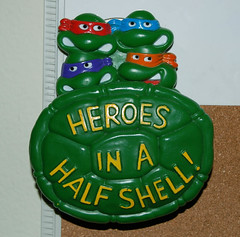
Subterranean MutantsAre you a hero to someone? Do you make your business superheroes to every one of your customers, or treat them as heroes? Going that extra mile can make all the difference.
I found that out last week when two people who I already respected immensely joined the ranks of superheroes.

Michael Schechter, someone I’ve connected with through Twitter yet never met personally, is a superhero. As some of you might know, I recently won a tagline competition where the prize was a Nintendo Wii. I thought it’d be a nice idea to donate it to the local sick kids hospital when it arrives later this week.

Michael knew what I was doing, so he sent me some of his own Wii games that were gathering dust at his home. As an additional gesture, he also included three pearl bracelets and a pearl necklace for my wife as a thank you for me helping him out on his blog earlier this year. (Michael is Director of Retail Marketing at Honora Pearls).

He didn’t have to; I was happy to help. But his gesture made him an instant superhero.

John Haydon is another guy I’ve connected with on Twitter, through the 12for12k charity challenge. John has come onboard and used his non-profit experience and networks to gather bloggers that have written amazing posts for our charities. His help has been a Godsend at helping to spread the word.

Last week, I received a little Thank You card from John in the mail, thanking me for getting him involved with 12for12k. Even though it’s me that should be thanking him for all he’s doing. And he also mentioned to say Hi to my wife and hoped she was well. John is a superhero.

Even though I know both Michael and John already, that kind of thinking would immediately make me keen to recommend them to anyone. Michael didn’t need to offer games and he certainly didn’t need to send my wife pearls, and John didn’t need to offer that personal touch.

But the fact they did makes me confident anyone using either of them will always receive amazing service.

How’s your superhero status? Do you wear your cape with pride or does it need some new threads?

Creative Commons License photo credit: Zeetz Jones

Choosing Bus Stops

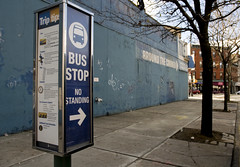
B65 bus stop
Image by threecee via Flickr

Yesterday I mentioned that I see myself as a chartered bus driver, and this blog as the bus with you as the passengers. I wanted to let you know that without passengers, buses don’t really have a need for existence, so your travels with me are important.

I want to expand on that a little and look at you and the buses you drive, and how you can help your own passengers.

Everyone Is On a Journey.

Some will always be passengers, happy to be along for the ride and meeting new passengers along the way.

There’s absolutely nothing wrong with this, and the interaction you gain from fellow passengers makes the journey even more interesting. Yet for every passenger, there’s also a bus driver – so how can you make your bus the one people want to travel on?

Be a Sales Person.

It might seem that a bus driver only has the one job – getting you to your destination – but there’s a lot more going on behind the scenes. He (or she, although I’ll use “he” just for easier use, if that’s okay) has to be the public face of the company he works for. He has to offer a positive view of the company at all times, and ensure that passengers stay with his service and not try someone else.

Be the sales person for your company. It doesn’t matter what your role in the business is – CEO, director, customer service or mail-room guy, every single thing you do reflects on your employers. If you give off a positive vibe, that will come across to the people you deal with every day, either in public or cross-company.

Times are hard enough as it is, without businesses crumbling from within – help make it the place you’d buy from and the positive knock-on effects can be long-term.

Safety First.

A bus driver has to make sure his passengers arrive safely. While they are on his bus, their well-being is paramount. He may have had a crappy day so far, or he may be going through personal issues, but they have to take a back seat while his passengers are traveling with him.

If you’re a business owner, look after your employees. Not just their physical well-being (although this is important) but their mental well-being as well. Be the approachable boss that really cares about how his workers are feeling, and have an open-door policy at all times. If you’re too busy at a given time, make the time later to speak with someone – and stick to it.

Time you have plenty of – happy employees are harder to come by. Make yourself available and keep an eye in your mirror at all times.

Be a Mind Reader.

To ensure his passengers are safely delivered to their destination, a bus driver has to be aware of his surroundings, both inside the bus and on the roads it’s traveling on. Other vehicles pulling out suddenly; red lights being jumped; pedestrians stepping off the sidewalk; how his passengers are interacting with each other – a bus driver needs to be aware of all this and more as he goes about his job. Mind reading becomes second nature.

Learn to read minds as well. If you’re running a business, monitor the tactics of your competitors and learn to gauge what their next move will be. Converse with your customers to plan ahead for the next three months, six months, a year even – keep abreast of what they want to help you get to where you want to be.

If you’re an employee, learn how your company works and what makes your leaders tick. Be pro-active at making their job easier, which in turn makes your job easier, which in itself makes the company more attractive and encourages success. Even in your personal life, be aware of those around you and where they want to be – knowing that will let you help then get there sooner, and you with it.

There are many kinds of bus drivers, just as there are many kinds of passengers. Which one you want to be is up to you, and there truly is no right or wrong.The one thing that does connect everyone is the journey itself.

How will you travel this year?

  • « Go to Previous Page
  • Page 1
  • Page 2
  • Page 3
  • Go to Next Page »
© 2026 Danny Brown - Made with ♥ on Genesis