• Skip to primary navigation
  • Skip to main content
Danny Brown

Danny Brown

podcaster - author - creator

  • About
  • Podcasts
  • Journal

Online Communities

Introduce Yourself

23,29-duoprism stereographic closeupOne of the things I’ve always said about this blog is that it’s as much yours as it is mine – community is everything.

I may be the bus driver, but you’re the passengers that make the journey so enjoyable.

So, just to cement our community that little bit more, I’d like to get to know you better. For the community to get to know you better. So here’s the deal:

  1. If you had to choose one blog post to offer everyone a view of who you are, what would it be?
  2. Why this post?
  3. If you don’t blog, where else can we find you online? Do you mind sharing and connecting?
  4. Tell us one thing about you that might surprise us.

That’s it. But here’s another quick favour to ask. If someone shares a blog with us, let’s make sure we visit it. And if we like it, let’s make sure we subscribe. After all, isn’t that what our community is all about?

Over to you – the comments are yours. Tell us about yourself. I’m going to get comfortable so I can enjoy getting to know you.

Creative Commons License photo credit: Ethan Hein

Find Your Online Home at Zooity

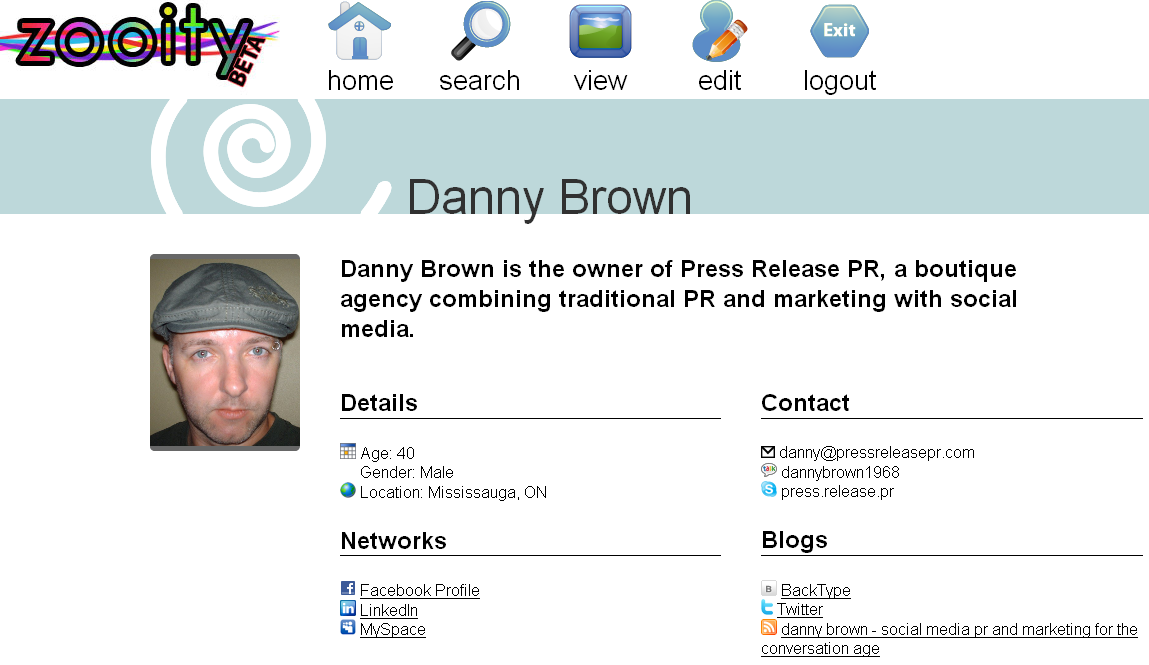
I recently received an email about a new service that’s just been launched. Still in beta, Zooity offers users a one-place stop to share all your online ID’s and networks.

dannybrown-zooity

Now, instead of trying to remember where you are and trying to get all that info to someone who asks, it’s all in front of you. Signing up is easy and then it’s just a matter of updating your account with your networks.

While similar ideas have been done – MyBlogLog, for example – what I like about Zooity is that it offers less popular networks that other sites often leave out. It also breaks them down into niches and sub-genres, so you have video, music, social bookmarking, blogs and more. You can also customize a network if it’s not on Zooity and add it yourself.

There are a couple of things that could improve. If you’re checking a link and hit the back button, it appears to duplicate the entry. Also, it looks minimalistic at the minute. This may be the design plan and if so, fair enough – yet it’d be nice to be able to customize your page a little.

Still, these are very basic quibbles on what’s an otherwise cool little service. When you take into account that Zooity creator James Cross is only 19, then it’s even more impressive and something well worth checking out.

If you enjoyed this post, please consider leaving a comment and subscribe to my RSS feed or via email to ensure you can enjoy the latest updates.

Picture Perfect (Or The Power Of The Avatar)

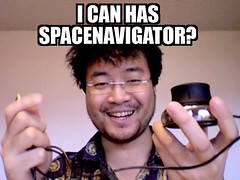
I CAN HAS SPACENAVIGATOR?There’s a saying that a picture paints a thousand words – but can it also create a thousand questions?

For anyone that’s connected to me on Twitter or Facebook, you’ll have probably noticed that my profile avatar for both sites is blacked out.

Far from being the results of a broken browser, it’s blacked out for a reason (the basic gist is a week-long protest at planned Internet laws in New Zealand). It’s led to questions why it’s blacked out, which has led to more knowledge about the cause it’s in support of – so, that’s good, right?

Not necessarily, it would seem.

One of the reactions my avatar received today was the suggestion of a principle-based unfollow on Twitter because my face wasn’t on show. Ari Herzog, someone I have shared numerous great conversations with, mentioned that I wasn’t being transparent or authentic. My avatar being black meant I was hiding. Does an avatar say all that?

One look at my Twitter profile shows you all the main information you need to know. Name, company, what I do, contact details, blog, website – basically the works. So that should cover the transparency angle. As far as authenticity goes, I’d hope that this would be down to people’s opinions through their interactions with me, rather than an avatar.

But maybe I’m wrong. Maybe the real power is in the avatar? Certainly, my blacked out one has raised many questions so people obviously notice any changes. So what’s your take?

Is the power in the picture, or the words behind the picture?

Creative Commons License photo credit: Torley

Is BubbleTweet The Coolest Twitter App Yet?

Now and again you come across something that’s just so cool you wonder why no-one did it earlier. Tonight I found one, thanks to Kevin Sherman – bubbletweet.

bubbletweet

Allowing you to record a video snippet and then have it displayed on your Twitter page for any new followers or visitors to see, bubbletweet is simple and fun – always a good combination.

It also has a lot of potential for both personal and corporate branding. Imagine being able to tell followers your latest news or information, but instead of tweeting it you can say it?

It also offers a further personal touch to the already social Twitter experience – giving your followers a look into who the person behind the bio is.

Since bubbletweet uses a custom URL to host your video message on, the best way to use it is as a link from your blog, website or email signature. Once your visitors have seen the video and the bubble window closes, it then reverts to your normal Twitter URL so you control its use.

I’ve seen this application used on blogs before, but not Twitter. It’s a great little tool and I recommend you check it out, as well as?Kevin’s Twitter profile for an example as well as other apps he’s created, while I disappear to record my own message. Look forward to seeing yours.

Accentuate The Positives

Amusing Ourselves to Death
Image via Wikipedia

Can you remember when television was called the root of all evil? How it was blamed for desensitizing kids and breaking up the family fibre? American author and cultural critic Neil Postman wrote a book about it in 1985, called Amusing Ourselves to Death.

Postman’s argument was that television lessened the educational growth of people, as well as dumbed down arguments, by going for entertainment and images over political discourse and more serious issues.

While there’s no denying that television can be one distraction too many at times, there’s also no doubting its educational uses as well – National Geographic and The History Channel being just two examples.

Jump forward a little more than twenty years, and there’s a new target – the Internet.

It’s being blamed for everything from turning kids into zombies to the disappearance of social skills in the “real world”. But is it really that bad?

Hey Teacher, Leave These Kids Alone.

Far from turning kids into online-addicted mindless zombies, a new study shows that the Internet-savvy youth of today are far more creative than we were. The Digital Youth Research report, funded by the MacArthur Foundation, uses social network giant MySpace as an example. Just creating a MySpace page and customizing it shows a level of creativity and basic programming skills beyond most offline equivalents.

Of course, this report isn’t on the front pages of traditional media for one simple reason – it offers a positive view of the very medium that sells newspapers when the headlines are screaming negatives. If the report had said the Internet and social networking was hurting our kids’ education, you can be sure it would have been a lead story with quotes from “experts” all too willing to lend their view.

But you know something? We’re just as bad at times.

Pot. Kettle. Black.

One of the foremost sayings about social media is how it’s bringing people together. Opening up doors that had previously been locked, and offering help and encouragement to anyone that needs it. Simply put, the caring medium. But it’s not always like that, is it?

How can it be when bloggers are vociferously attacked for writing a sponsored post? Or when people take being “unfriended” by someone so seriously that they decide to investigate to almost stalker-like proportions? Add in the antagonistic comments that bloggers receive for their points of view, and you have to wonder if we really are that social.

So here’s what we need to do.

Accentuate the Positives.

It’s all too easy to be negative about something. By our very nature, human beings are happiest when we’re complaining. We love it when someone jumps the queue so we can open up on them, or our heroes make a mistake so we can bring them down.

Let’s stop this. Now.

Instead, let’s celebrate the good that social media can offer and concentrate on making that the norm, as opposed to the excuse. Let’s tell everyone about the positive thing that happened to us today because of social media.

Here’s an example. Yesterday, I met with a potential new client that found me through Twitter. His company is in the same city as me, so we met up for coffee and discussed a potential project. And even if I don’t win that project, the product he wants me to promote is so good I’ll be using it myself anyway. Without Twitter, he wouldn’t have been aware of me, and I would have been missing out on a great application.

That’s just one example from one person. I’m sure you have tons of examples of your own.

The question is – are you sharing them?

If you enjoyed this post, please consider leaving a comment and subscribe to my RSS feed or via email to ensure you can enjoy the latest post(s).

Reblog this post [with Zemanta]
  • « Go to Previous Page
  • Page 1
  • Page 2
  • Page 3
  • Go to Next Page »
© 2026 Danny Brown - Made with ♥ on Genesis