• Skip to primary navigation
  • Skip to main content
Danny Brown

Danny Brown

podcaster - author - creator

  • About
  • Podcasts
  • Journal

social media experts

Milk Cartons and Plastic Ninjas

I’m a fairly resourceful guy. Don’t get me wrong – I’m no Chuck Norris, but I’d like to think I’m pretty good at working a way around a problem. Just give me a little time and I’ll work out a way. May not be the right one, but if it’s workable then that’s all I need.

Which is why I get frustrated when simple things turn out to be anything but.

Take milk cartons, for example. Almost 100 years old now, they still have the same basic design flaw that the very first ones did – the cardboard spout that the milk comes out of when you pull the flaps apart. Not only can they be a pain to open without spillage, once you’ve managed to open the carton then the fun’s just beginning.

If you’re like me, sometimes you just like to drink from the carton when you’re really thirsty. (And no, it’s not gross to drink from the carton!). Trying to do that, however, without getting milk all down your top is second only to sneezing with your eyes open for levels of impossibility. Strike one against consumer friendliness.

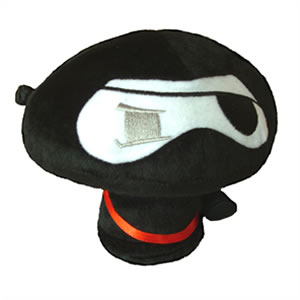
Then you have the plastic ninjas. You know when you buy a new pair of scissors, or a carving knife, and they come enveloped in that tough plastic to stop you accidentally cutting yourself when opening? What they don’t tell you is that you don’t get a chance to cut yourself because they’re impossible to get into in the first place! You need another knife or pair of scissors to open the new ones – doesn’t that seem just a little counter-productive?

So why do we make ourselves like milk cartons and plastic ninjas when it comes to social media?

I read a great blog post today by Lisa Hoffmann. In it she suggested that the reason so many companies aren’t getting into social media is because we’re scaring them away. Yes, the people that evangelize most about social media could be the ones responsible for stunting its growth.

We’re doing this by pretending to be experts when there’s still so much to learn. We do this by telling businesses their approach to social media is rubbish and they should follow our lead. After all, we’re the social media experts and we know best.

Except we’re not and we don’t.

We may know what’s best for our needs, but until we get to know about a business we don’t know about theirs. So why do we jump straight in and say to business owners, “Get a Twitter account now. Join Friendfeed. Start Digging. You’re nothing if you’re not on Facebook.”

Instead of telling businesses what they will do with us, shouldn’t we be saying what they can do? Show them what’s available and what each benefit is, as opposed to join this or sign up for that or else you’re missing out?

Yes, businesses need to get into social media and begin building their community. But unless they’re able to do it the way that is right for them and not simply just right for us, then they’ll continue to be disappointed with the results. And frustrated.

Much like trying to deal with milk cartons and plastic ninjas.

You Know You’re NOT a Social Media Guru When…

This post comes from Susan Murphy. It’s a nice follow-on from my post about what makes a social media guru.

Like Danny, people who brag about the fact that they are social media ?experts? or ?gurus? often irk me. Calling yourself an expert or a guru does not automatically make you one.

After all, guru status is a lot to live up to. Imagine having to spend every day on the top of a mountain, prophesying about the awesome wonders of social media, keeping your believers continuously captivated, as they hang on your every word.

That’s a lot of pressure!

I thought it might be amusing (well, for me, anyway) to put together a list, in the style of “You Know You’re a Redneck When…” by Jeff Foxworthy. So, Danny has kindly provided me with a forum to do that (Thanks Danny!). Here goes…

You know you’re NOT a social media guru when…

  • Your Twitter profile description says “Social Media Expert Guy” but your profile picture is of you with no shirt on.
  • Your blog’s About page would win the Buzzword Bingo jackpot every time.
  • Your “Areas of Expertise” list is 3 pages long.
  • You regularly throw flaming Tweets out at anyone and everyone who “Qwits” you.
  • You think that the best way to “reach out” to your public is to send mass unsolicited emails about your new startup/podcast/e-book/insert-product-here.
  • Your signal to noise ratio is equivalent to trying to listen to a Norah Jones song on your iPod during a Limp Bizkit concert.
  • All of your online profiles talk about your expertise in social media but your blog is about the crazy antics of your 12 cats.
  • Your “10 Things You Must Do to Get Into Social Media” list mentions Facebook, Flickr and Twitter in at least 9 of the steps.

The reality is, those that call themselves gurus ultimately seem less credible in the eyes of others. This often becomes apparent once their followers start to ask them to do real work. Suddenly, they are unable to live up to the high expectations they’ve created. Like not being able to provide any real, tangible value. Or, not being able to back up their claims or expertise.

The point is, these people call themselves experts expecting that the title alone will make them experts. If what they are really after is that elusive “guru” status, they will probably never get it.

However, by engaging with people on a human level, building their audience by making genuine connections and, perhaps most importantly, being open to continuous learning and growth, they will more than likely have other people singing their praises before long (and with much less effort, I might add). In the end, it’s not about being the best at social media; it’s about just being genuinely involved in social media.

It’s when others start to call you an expert and a guru that you’ll know you’re doing something right.

* Susan Murphy is a partner at Jester Creative Inc, a new media production company based in Ottawa, Ontario. She blogs about social media and life in general at Suzemuse. Susan can be found on Twitter as @SuzeMuse.


So What is a Social Media Guru, Exactly?

I’m tired. Not in the physical sense (although I will admit to some late nights recently working on a particularly in-depth client project).

No, I’m tired of all the “social media gurus” that have suddenly appeared from nowhere. Now I don’t want that to be misconstrued, nor do I want it to sound as if I’m disrespecting anyone – that’s not the intention.

Instead, I’m tired of looking at someone’s Twitter profile, or blog bio or similar, and finding the description “social media guru” or “social media expert”. I’m not saying that they’re not a guru or expert – but is that really for someone to decide by themself? And when did they decide that they are a social media guru or expert?

It probably wouldn’t be so obvious (and therefore so visual to me) if social media wasn’t still such a new medium that everyone is still learning about as we go along. There are so many facets to it, so many different windows that we can look through and see a different view each time, that it’s pretty much impossible to class yourself as a social media guru, or expert.

Even in other mediums or industries, can you really class yourself as an expert or guru?

For example, I own a boutique PR agency that specializes in search engine optimized press releases and social media PR. Yet I wouldn’t say I’m a PR or social media expert. I have expertise in these areas, and I’d like to think that I offer an informative outlook on both as well.

Yet that doesn’t mean I’m a guru or expert.

Social media in particular changes so fast that no-one can keep up with everything that’s happening. Even the guys that could truly be classified as social media gurus would struggle to know all the ins and outs of the latest applications, tools and similar.

And that’s the difference – they don’t proclaim themselves as social media gurus. Take a look at Chris Brogan, or Brian Solis. Both leaders in the field of social media and PR respectively, and sharing their wealth of knowledge and experience with anyone that wishes it. Yet neither of them describe themselves as a guru, or expert. And that’s why I respect and acknowledge them as the most accurate description of “gurus”.

To me, a guru or expert becomes one from people’s views of them. Recommendations to go to a person because of the help and knowledge that will be forthcoming. After all, you wouldn’t recommend your friend to someone whose view you didn’t respect, right? Or who couldn’t offer your friend something valuable?

As I said, I’m not meaning this post to be in any way disrespectful. I just feel that to be known as a guru, you need to prove it. And earn it. Self-classification doesn’t quite count.

© 2026 Danny Brown - Made with ♥ on Genesis