• Skip to primary navigation
  • Skip to main content
Danny Brown

Danny Brown

podcaster - author - creator

  • About
  • Podcasts
  • Journal

guest posts

There Are 24 Usable Hours in Every Day – How Are You Using Them?

Oblivious

This is a guest post by Jaclyn Aurore, a New Adult fiction author who – in the name of full transparency – also just happens to be my wife.?

Well, it?s been a little while since my last personal blog post. Not bad by my standards?

I bared my soul on that post, and I was hesitant to write again. What could I possibly say?

But then it occurred to me.

Time Management

I am a wife, mother, dog-lover, author, analyst, publisher, editor, and now beauty consultant. I am also learning to drive, taking classes, hosting parties, managing websites, blogging more (or trying to), working out, and finding time for old hobbies like reading (for fun, not work).

When I took on this new business endeavour (becoming a Mary Kay Beauty Consultant – now Senior Consultant, woot woot!), the first thing my husband asked was: What will you give up in order to make the time?

My answer was simple: Nothing.

Why should I give up anything? I want to be the woman who does it all, quite simply because I can.

When people ask me how I do it, I usually say, ?I don?t sleep.?

But the truth is: time management.

Why Do We Need to Fill Free Moments?

I?ll just keep bolding that. It deserves to be right on out there multiple times over. Truthfully, it?s more than time management, it?s multitasking. I don?t rest.

When I have a free moment, I fill it with something. While my kids are eating dinner, I am cooking for my husband (he comes home later, so I cook for him separately). While I?m eating my lunch, I?m reading or writing.

To quote one of my favourite movies (bonus points for anyone who guesses it):

There are 24 usable hours in every day.

I?ve done this for so long now that it?s second nature.

The other day, I had an epiphany. Why do I need to fill free moments? Why can?t I just live them?

[clickToTweet tweet=”Why do we need to fill free moments? Why can?t we just live them? #life” quote=”Why do we need to fill free moments? Why can?t we just live them? “]

Here?s how it happened. I was doing a driving lesson, and while waiting for my instructor to set up pylons, I had a moment to spare. There I was, sitting in a parked car with the engine off. Alone and silent. This would be an excellent time to check my email or my text messages even, but I purposely left my cell phone at home.

All I could do was wait.

In the five minutes, I tapped the wheel, fiddled my thumbs, and hummed a little. I felt antsy. It felt like I was wasting time. To calm myself, I closed my eyes and focused on sounds. I heard birds chirping, wind blowing against the car, and the sound of traffic faintly in the distance? and then nothing.

Silence. My thoughts stopped, my breaths were there but silent, chaos ended. For one brief moment, I had peace and zen.

It was glorious.

In order to be successful in all the things I do, I need to manage my time wisely. Yes, there are 24 useable hours in every day, but I can make time for five minutes of peaceful silence? and so should you.

Try it. See if it doesn?t make the rest of your day more enjoyable!

A version of this post originally appeared on Jaclyn’s blog.

Jaclyn AuroreAbout the author:?Jaclyn Aurore is the author of?The Starsville Saga (Starting Over, Standing Up, Giving In, Hanging On, Leaving Behind), and has recently published the stand alone fantasy,?My Life Without Me.?Among the other hats she wears, her favourite are that of??wife? and ?mother?.?When she?s not redecorating her home in Ontario, Canada,?Jaclyn can be found?at Williams Coffee Pub, caffeinated beverage?in hand, working on her next novel.?You can learn more about Jaclyn and her books on?her website?and?her Facebook Page.

Give And Ye Shall Receive: Mentoring, Creativity and Innovation

Mentoring

This is a guest post by?health and wellness strategist and digital health pioneer Liz Scherer.

When you hear the word ?mentor,? what is the first image that comes to mind? Is it a middle-aged man in a suit, briefcase on a table in front of him and a Mont Blanc pen in hand?

Pretty pass?, eh?

Venture capitalist and Paypal co-founder Peter Thiel would agree. In an interview conducted late last year, he says that mentors no longer offer much in the way of value, at least not in the tech start up world.

Thiel adds that entrepreneurs? focus should be on ?doing new things, not copying existing models? and that substantive interest in a particular field is the key to learning, creative thinking and identifying new ways or approaches.

For all intents and purposes then, a mentor would be best described as an individual with both feet firmly planted in yesterday?s innovation and without the ability to drive and effect tomorrow?s change.

Let?s also take a look at what social scientists have to say.

The Conceptualization Belief

One theory in particular supports Thiel?s points, stating that change and innovation occur in ?conceptual? leaps and bounds (Kuhn and Hacking, 2012; Olivero 2014) and do not necessarily spring from information that has been collected over a long time period.

An alternate theory — one that I gravitate toward — suggests that when a team (think: two people in the mentor/mentee relationship) ?jells? i.e. when individuals ?click? around concepts or strategies, their commonality in creating something new or in solving a problem can be likened to a attaining the metaphysical or at least a higher level of existence (Novak 1976; Olivero 2014).

In simpler terms, inspiration springs from the ?click,? leading to brainstorming, an exchange of ideas and information and an open mind that promotes creative thought and strategy. This may ring truer when the two individuals forming a particular team do not bring the same set of skills to the table.

My personal experience as both a mentee and a mentor derives from two related initiatives in my life.

Giving to Get, Getting to Give

Last fall, I started a new business and recruited a group of advisors ? both in and out of my specific field ? to guide processes and strategies, challenge my thinking and spur creative development.

In turn, over the past several months I have been lending my time to two incubators that work with healthcare tech startups: 1776DC and Village Capital. My mentoring role is focused on helping these entrepreneurs hone and finesse an element in their pitches that is often missing or ignored: the story.

As a long-time professional writer and journalist, I inherently understand that storyline is often the key to grabbing and retaining an audience.

As humans we all have stories to tell and it is these stories that forge relationships, perpetuate family histories and define our personal fabrics. In business mentoring, the goal of focusing on the story is to help guide entrepreneurs so that they place the correct cart before the horse, i.e. their content.

The trajectory is simple: focus on the story, create the content around that story and insure that the messaging is consistent across the various platforms where that story dwells. Thereafter, we work closely together to identify, create and promote the deeper connections that ultimately inspire investors or customers to ignite the offerings, whether that ignition entails A or B round funding that will catapult them to success.

Mentoring – A Four Letter Word?

The value of the mentoring doesn?t stop there.

Not only am I inspired by the entrepreneur?s passions, but, I am also better able to tap into and ignite my personal creativity in an uncluttered fashion. The ?click? goes two ways, leading me, in a mentoring role, to a higher level of existence, and a refinement of my own storyline.

Is mentor a four letter word in the world of tech startups or does it offer an opportunity to transcend the mundane/been there-done that and promote innovative thought and creativity?

I don’t believe it is. If anything, through mentoring, my ?carbon copy? becomes firmly planted both in the here and now and beyond, and my story gains a few new transformative threads.

Isn’t that value worth having?

Liz SchererAbout the author:?Liz Scherer is a health and wellness strategist and digital health pioneer with a knack for helping businesses solve marketing, communications and development challenges. When she?s not running Evolution Strategy Group, you can find her mentoring startups at 1776DC and Village Capital or writing about women?s health and gender inequity issues on Medium. Connect with Liz on Twitter, Facebook, LinkedIn or at LizScherer.Co.

How to Build the Trust You Need for an Engaged Community

Trust

This is a guest post by Martin Edwards.

Building an online community takes time.

You’ve worked hard, you’ve built a good-sized following, and the likes are growing nicely.

But something?s not right.

You post links to your content regularly and even pay for ads to keep the likes building.

But no one is visiting your sales pages.

Signups on the email list are sluggish.

You?re tweeting your heart out but no one seems to notice.

Why doesn?t your ?community? seem to care about your brand?

What You Have is Not a ?Community?

Social media can help you build a huge collection of people around your brand.? You?re plugged into the global market, after all. What you?re hoping for is a crowd of devoted fans who will share your message with the world.

People can be quite obliging with the like button in return for a free T-shirt, but they may well be wearing your competitor?s T-shirt tomorrow.

You can get followers. You just follow a bunch of people and they?ll follow you back. You?re impressed with the number of key influencers with a Klout score to die for in your network.

So why isn?t anyone even sharing your content?

It?s your ?community.? You built it; you own it; so why can?t you influence it to do your bidding?

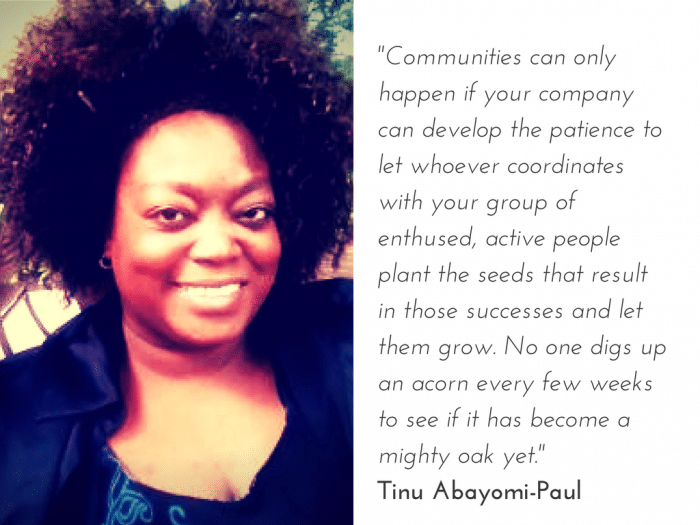
Tinu Abayomi-Paul?s recent post The Value and Meaning of Community in Marketing explained why attempting to command a community is fraught with pitfalls.

Tinu on community

Real people can be cynical, critical, capricious and fickle.

One foot wrong and it falls apart.

The fact is, in the cold light of day, you can?t own a community.

What you have probably isn?t even a community.

Likes and follows do not a community make!

The Crucial Insight That Holds the Key to Influence

To influence your community, you must build trusting relationships with the influential leaders of other communities.

Your community is not just your immediate fans. It?s far more than that. Understanding what actually creates a community will help you share your message several layers deep into the social ecosystem.

Think network rather than broadcast.

Just before you go rushing off to grab the latest Klout scores of everyone you know, you must understand how the complex trust structure of community decision making holds the key to influencing them.

Online Communities are Complicated

When we look at online communities, we tend to be looking at interest groups that are led by an authority.

The members of a community refer to authorities when they make decisions.? They calculate the level of trust they hold against the risk from the consequences of getting the wrong advice.

When trust exceeds risk, these authorities will be influential.

In the world of social media, these interest groups can be created at a moment?s notice by a trending hashtag for instance.? An authority may be influential for a few days when the conditions are right, but as the context changes, attention moves elsewhere.? Perhaps a development reveals an ulterior motive.

Trying to pin down this complex, constantly shifting pattern is a challenge.

An authority only becomes an influencer if they can create the desired action.

The ?Paths of Influence? That Lead to Your Sales Funnel

So identifying influencers is not just a matter of looking for authorities with a large number of followers. You must study the deeper structure of their trust community.

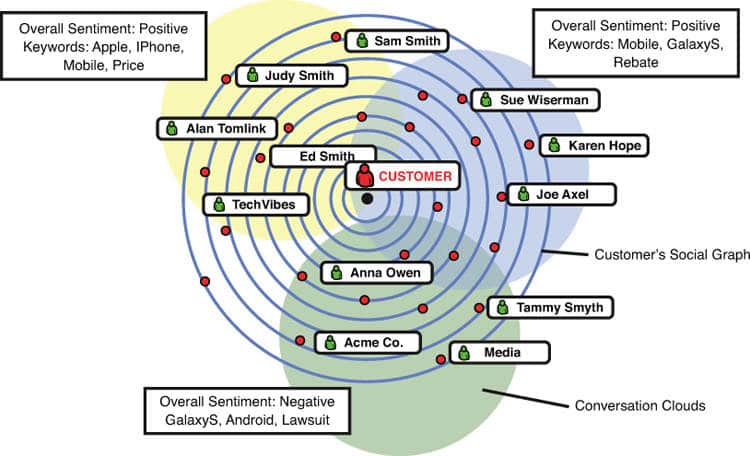
Customer influence and advocacy

For a large campaign, you could analyze the conversations around a particular buying decision and try to target only those who are open to influence. With current Big Data analysis tools, this is feasible if expensive and a tad intrusive.

As a more sociable alternative, you can look at the behavior of your audience. Those that engage with their audience and share your messages may well have the desired influence further down the path. There will be several people who overhear a discussion, read a post and put in an order or they may just re-share your message. You are revealing these paths of influence by testing your community?s reactions to various stimuli.

An influential leader may be a useful starting point, but the real influencers will almost certainly be further along the path of influence.

Wouldn?t it be nice to create these paths rather than having to find them?

The Secret Sauce That Creates Paths of Influence

In our social media connected world, the way we do business is changing rapidly.? You can make thousands of connections and build them into trusting relationships. You can present your brand to the world and make it easy for people to buy. You remove as many of the disruptors from the sales funnel as you can.? At the end of the day though, you can’t possibly cover all the bases.

Fortunately there is a way of amplifying your efforts so that the people who want to buy can put their hands up, the ones that want to share have the support and motivation they need and you get a community to work with.

Teamwork!

Talk to people, engage and collaborate.

That is what the social bit in social media is all about.

People like to test their trust bonds in safer waters. Every opportunity you get to prove that you and those around you can be trusted, the stronger those bonds will be.

The following are a few examples that will help you get people joining in:

  • Start a Twitter #tag group, set up a blog to go with it and have set times for participation.? The blog will help crystallize the best contributions and provide topics for discussion. Get people together to share their knowledge. To see an example drop in for a virtual coffee at #elevensestime sometime.
  • Invite specific people to write guest posts for your blog; they will bring all the people they know to read, comment and share.
  • Set up some collaborative games ? Firepole Marketing recently mounted a successful scavenger hunt that encouraged entrepreneurs to cooperate on many of the challenges. It was a free and public learning experience and really consolidated their community.
  • Publish interviews with some of the people who are most active in the communities you want to work with, and set up a Google hangout once a week to discuss a live issue.

All of these activities will build the trust that establishes your authority, but more importantly they will build the authority of the people around you.? These are the ones with the right attitude. These won?t be the big shot celebs — they?ll be too busy being awesome elsewhere.

No, these are the people who engage with their communities.

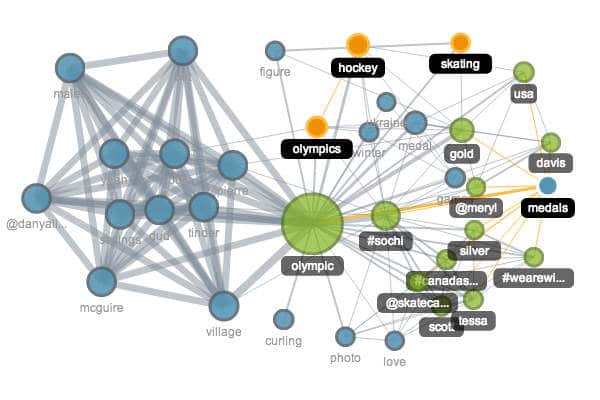
Data visualizerThey won?t necessarily be in the market to buy your product, but they will share your branded content if it covers an area of interest they are comfortable with.

Publish or share a wide range of content and these people will come to you.

Make it easy for anyone who has an interest in your content to get to the edge of your sales funnel and your community will do the rest.

So Let?s Get Together and Build That Community

Community spirit is a wonderful thing. There?s a world full of examples of people working together to make a difference. Some are genuinely altruistic; others sponsored by brands for the publicity but still doing a service to the community.

It?s up to us to decide what we are comfortable with.

It?s easy to be cynical.

People may doubt your motives as the brand at the center of an initiative, but authentic collaboration and a willingness to share the risk by engaging with your audience will win your community?s affection and trust.

People may say,

Real marketing is about targets and ROI.

or,

There isn?t the budget for this sort of approach.

This is true. It?s going to be tough to measure in the short term.

The real value of collaborating with a trusting community will, like a fine wine, take time to be appreciated.

And just like a fine wine, it is well worth the wait!

Martin EdwardsAbout the author: Martin Edwards is a web developer and social media consultant with The Canonbury Consultancy, helping writers, entrepreneurs and start-ups build lean & agile businesses using the wealth of low-cost tools that are now available online. You can get to know more about Martin at his blog MartinSocially.com and on Twitter, G+, and LinkedIn.

image: Kurt Qvist

The Assumption of Dumbing Down the Message

Who cares

The Starsville Saga by Jaclyn Aurore

This is a guest post from my wife Jacki. She’s the author of Starting Over and Standing Up, the first two books in the Starsville Saga. A version of this post originally appeared on her blog, but I wanted to share it here as I feel the question of definition, and the assumptions we make when it comes to dumbing down our own messages, transfer well to business and marketing in general, as well as our own blog communities.

Starting Over and Standing Up, the first two books in the Starsville Saga,?are currently listed in the Young Adult (YA) genre.

As the saga progresses, the characters get older and deal with more mature things. The last book in the saga?will be in the adult genre, meant for ages 18+.

I?m not sure how the audience will react to that, but I wrote my characters the way I thought I should.

They go from junior high, to high school, to university and adulthood. I hope my audience will grow with them.

I?ve been told that Starting Over and Standing Up should be in mixed genres for the following reasons:

  1. The main character is a child.
  2. The characters have dark back stories that are too deep for young adults to understand.

I tend to disagree with both of these things.

First, the main character starts telling her story at the age of 13, but the books take place over the course of four years. Second, I believe that there is nothing too deep for the YA audience to understand. Sadly, too many people can relate to these dark issues.

YA is one of the genres I like to read for its simplicity. It doesn?t take the author 300 pages to describe the sunset. The sunset is what it is, and for that I?m happy. In general though, I find there are three types of YA authors:

  1. The authors that dumb down content for their YA readers.
  2. The authors that dumb down vocabulary for their YA readers.
  3. The good authors.

Maybe Starting Over and Standing Up deal with some darker issues, but I?m not going to dumb it down. I?m also not going to write condescendingly.

I write the way I speak. So whether you are 14 years old or 40 years old, my language will remain consistent. Minus the profanity.

I hope that’s okay with you.

Young adult fiction writer Jaclyn AuroreAbout the author: Jaclyn Aurore is the author of young adult fiction?books?The Starsville Saga:?Starting Over,?Standing Up,?Giving In,?Hanging On,?Leaving Behind, and the stand alone fantasy,?My Life Without Me.?Her books have been described as ?Wonderfully human?, ?Evokes the awkwardness of teenage life perfectly?, ?Heart-wrenching and heartwarming at the same time?, ?Twilight without the vampires?, and ?Nothing at all like Twilight?. You can read more from Jaclyn on her official website.

The Commoditization of Expertise and Why You Should Never Trust a Guru

Trust and gurus

Trust and gurus

This is a guest post by Ryan Hanley.

The Internet is a canvas for Creativity…

Using the Online tools of today’s age, thought-leaders the World may never have otherwise known are given the opportunity to?paint their picture of success.

It’s amazing really…

But for as much as I love the Internet and the possibility for greatness it presents, there is a dark pattern forming that troubles me deeply. ?This may not be news for those of you that’ve been in the blogging game longer than myself… But its systemic and horrifying none the less… A true Internet nightmare.

The black plague of idea…

The rape of creativity…

The death of original thought…

The Commoditization of Expertise!

Everyone’s an Expert

So what’s this scourge of the Internet?

What could be so horrible that I would give it such a dramatic intro? Here it is…

Online… Everyone’s an expert. All you need is the most basic computer skills and an Internet connection and anyone can become an instant expert in the Online world.

How??

Easy… You call yourself a Guru.

That’s it.

Read a couple A-List bloggers like?Danny Brown?or?Marcus Sheridan,?regurgitate a few of their concepts, throw the word Guru on your About Page and BOOM… You’re an expert.

It’s that easy.

Now the truth is your blog will suck. ?But some people will find you and read your writing and consider you a thought-creator… then a dog will be kicked, a baby’s candy will be stolen and?an Angel will lose its wings.

Well maybe that last bit is an?exaggeration?but certainly all the rest.

The result is the Commoditization of the Expertise. ?A few great minds creating ideas and concepts that get chopped up and spit out over and over and over again… ?Their ideas, thoughts and creativity exploited by a thousand hacks trying to capitalize on a knowledge thirty public.

For a visual, picture the Pits of Hell scene from the movie Constantine?(yes… I’m an unashamed Keanu Reeves fan), now hold that image except replace the demons with bloggers and the lost souls with content.

Gruesome…

Why is the Commodization of Expertise a problem?

Over time it’s hard to discern the Expert from the Hack…? Marinate on that thought for a couple minutes.

Never Trust a Guru

In my very humble opinion… Guru is a terrible term.

I put Guru in the same bucket as Rockstar and Ninja. ?The first person to call themselves a social media Ninja was wickedly awesome and creative… everyone else since then is simply lame.

So my advice…?Don’t trust the Guru, trust the person.

“Ryan… A Guru is a Person?!”

Technically… Yes. ?But really they’re not. ?People who pump themselves as a Guru or Rockstar or Ninja are trying to play a roll. ?Guru is a costume… Guru is a character…

Guru is a front that attempts to tap into your inner desire for inspiration and success…

…and that makes a Guru dangerous.

The Guru calls themselves a Guru because they?re own content isn’t interesting enough or original enough or inspiring enough for people to see them as a Guru.

So they brand themselves Guru and instantly become an expert Online

Why Expertise Commoditizing Gurus are Bad for us All

(If this were my blog and not a Guest Post I’d call this section “The Rub”, but it’s not, so I won’t, but I guess I kinda did anyways)

Right now you’re probably thinking to yourself:

“Ryan… Don’t hate the player, hate the game.”

or

“Ryan… You’re drinking some Hater-Aid”

But the truth is I have no intention of playing the Guru game and I have no idea what Hater-Aid is.

What I do know is?Expertise should be Celebrated.

We all know about Malcom Gladwell and the 10,000 hours thing, right? ?Basically, in his book Outliers, Malcom Gladwell?(Google him if you?re not familiar)?theorizes that it takes a person 10,000 hours of practice to master a task.

10,000 hours is a lot…

What I want… What purpose of writing this post was when I first started is to provide a simple and sincere warning to those of you that thirst for knowledge Online.

Beware the Guru.

Don’t let the commoditization of expertise cloud your judgment when putting faith in a resource.

There are dedicated, inspiring individuals who’ve put in the time, who’ve done the work and deserve the title Guru.

Celebrate their Expertise.? Learn from them.? Allow their thoughts to help you shape your thoughts so you too can Succeed Online!

Thank you and Good luck,

Ryan H.

Ryan HanleyAbout the author: If you found value in this article, I encourage you to connect with Ryan on Twitter at @RyanHanley_Com or visit his website to read more about Content Warfare – Win the Battle for Attention Online. You can also subscribe to Ryan?s free newsletter, How to Blog Your Business.

  • Page 1
  • Page 2
  • Page 3
  • Interim pages omitted …
  • Page 8
  • Go to Next Page »
© 2025 Danny Brown - Made with ♥ on Genesis